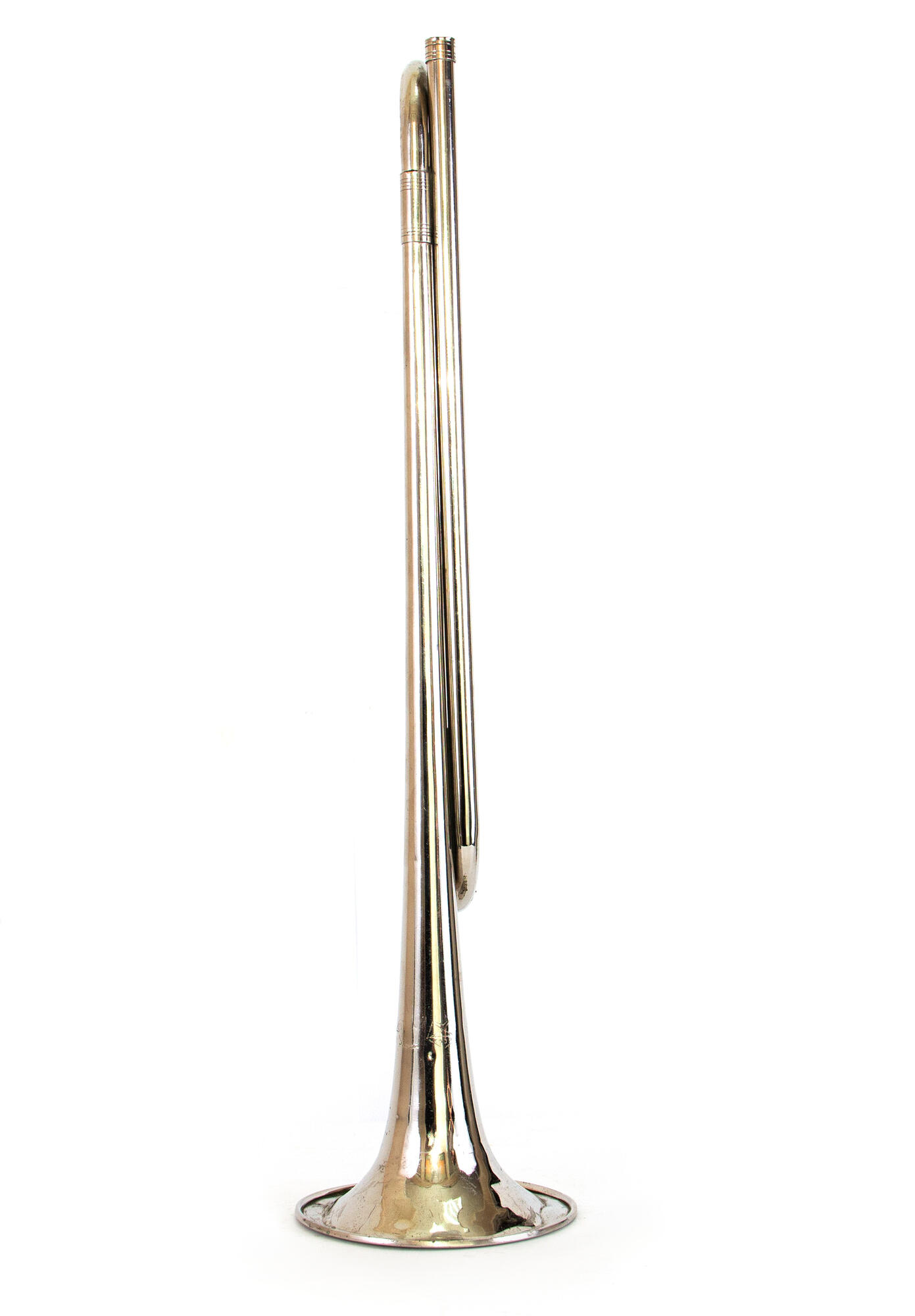


A bugle is one of the oldest and simplest wind instruments, the origins of which can be traced back to the signaling hunting horn. In ancient times, such instruments were made from animal horns, but over time this material was substituted with the more sonorous metal — copper and brass. From the hunting grounds, the horn found its way to the roads, where it was used for warning pedestrians of incoming vehicles. In England, the bugle took root in the infantry, gradually replacing the flute.
In pioneer organizations of different countries, there was an image of a young hero-trumpeter, sacrificing his life for a better future. It was this image that the bugler symbolically represented. The reason for replacing the trumpet with the bugle was rather pragmatic. Unlike the trumpet, playing the bugle did not require much musical skill and almost anyone could learn to play it if given some time.
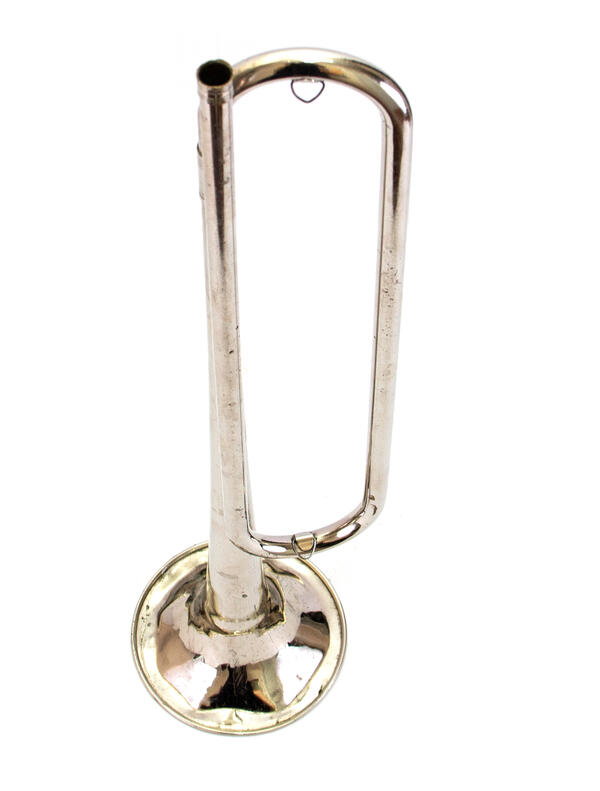
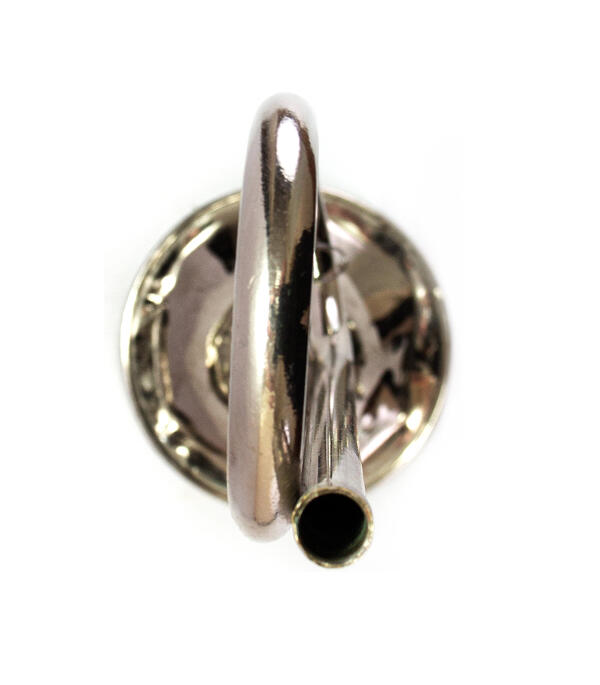
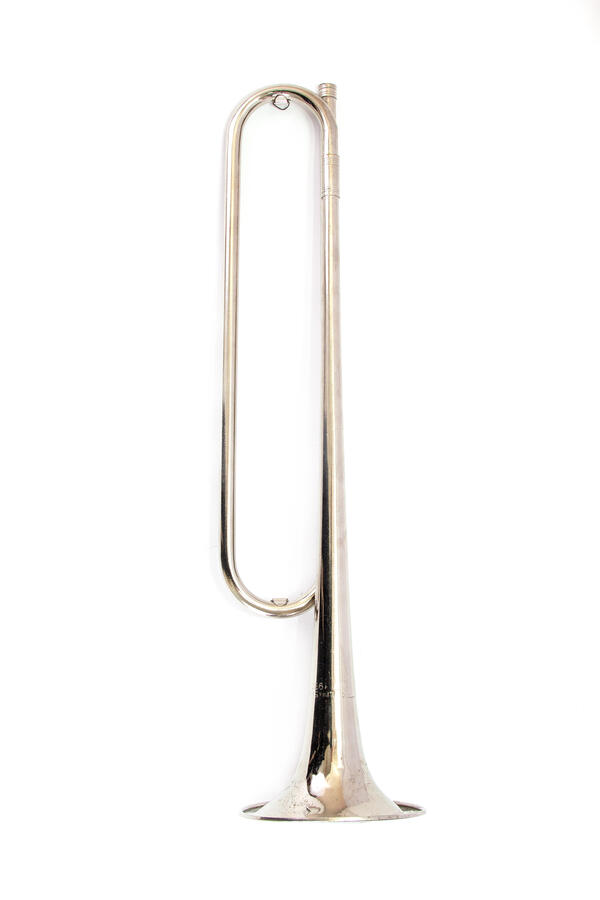
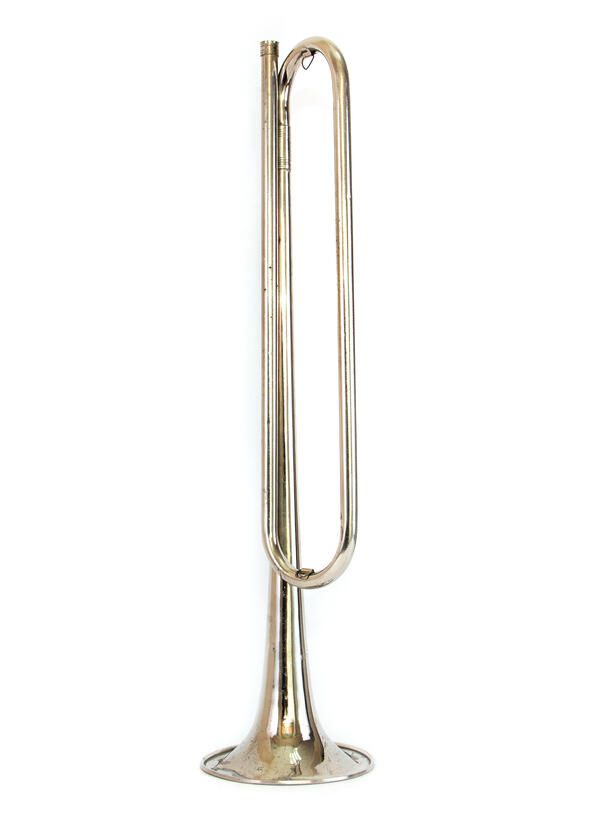
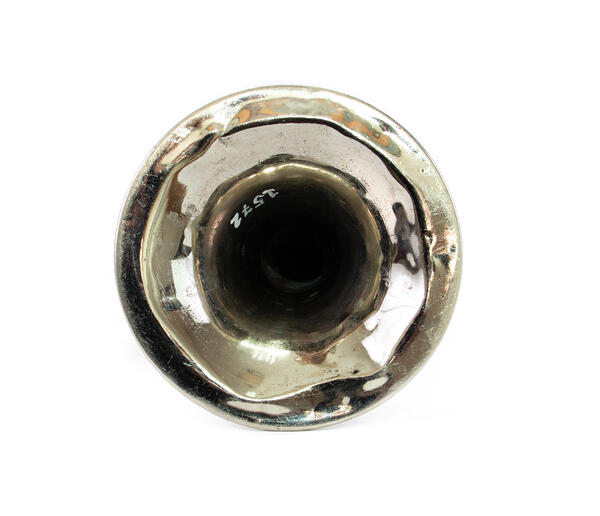
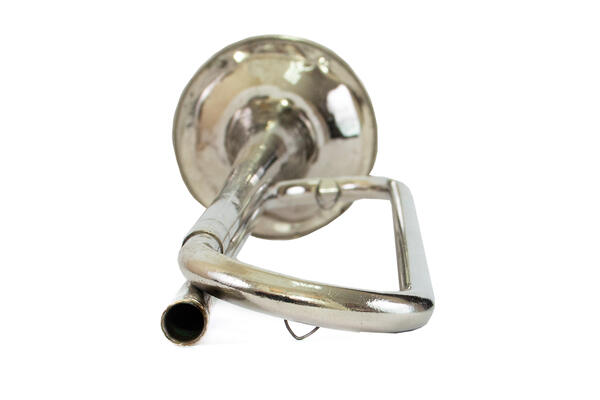
This instrument can be described as a brass tube, bent into a loop one and a half or two times, and expanding to the bell at the last third. The mouthpiece completes the bugle — as a rule, only this part could be made of plastic, not metal. Being very similar to the trumpet in appearance, the bugle has no valve mechanism, and can only extract four main notes: C (do), G (sol), higher C (upper do) and higher E (upper mi).
In pioneer detachments and camps, the positions of bugler and drummer were honorary and elective. The bugler’s repertoire included a number of recognizable signals, including several marches (for marching, for greeting, for pioneers). The bugle signaled when it was time to wake-up, go to bed and gather for the lineup; the raising and lowering of the flag as well as award ceremonies were accompanied by the sound of this instrument; a separate melody was played to call up the counselors.
The pioneer’s bugle was traditionally decorated with a pennant. At first, the pennant was simply a red piece of cloth, which the pioneers themselves could decorate as they saw fit. Later, this cloth was complemented with a gold fringe and inscriptions “To fight for the cause of the Communist Party of the Soviet Union” and “Always ready!”, as well as the image of the pioneer badge.
With the introduction of radio nodes, recordings of bugle
signals were played through loudspeakers, and the instrument took an honorable
place in the pioneer room as a symbolic exhibit.