On 10 January 1943, Soviet troops began Operation “Ring” to eliminate the encircled enemy group. The encirclement ring was getting tighter and tighter on all directions. From the west the forces of the 21st and 65th Armies were advancing on the enemy, and the 62nd Army units were advancing towards them. On 26 January, in the morning, parts of the 21st Army joined on the north-western slope of Mamaev Kurgan with the advancing from Stalingrad units of the 62nd Army. According to Vasiliy Chuikov: “The soldiers had tears of joy in their eyes”. The enemy in the city was divided into two groups: southern, in the centre of the city, and northern, in the factory area. This meant that victory was not long away. On 31 January, the southern group was forced to stop pointless resistance. On the same day surrendered and the commander of the 6th Army Friedrich Paulus, the day before produced in General Field Marshals, along with generals and staff officers. Northern group of troops under the command of General Karl Strecker capitulated on 2 February. The hostilities ceased. Thus, the Battle of Stalingrad ended with the victory of the Soviet troops.
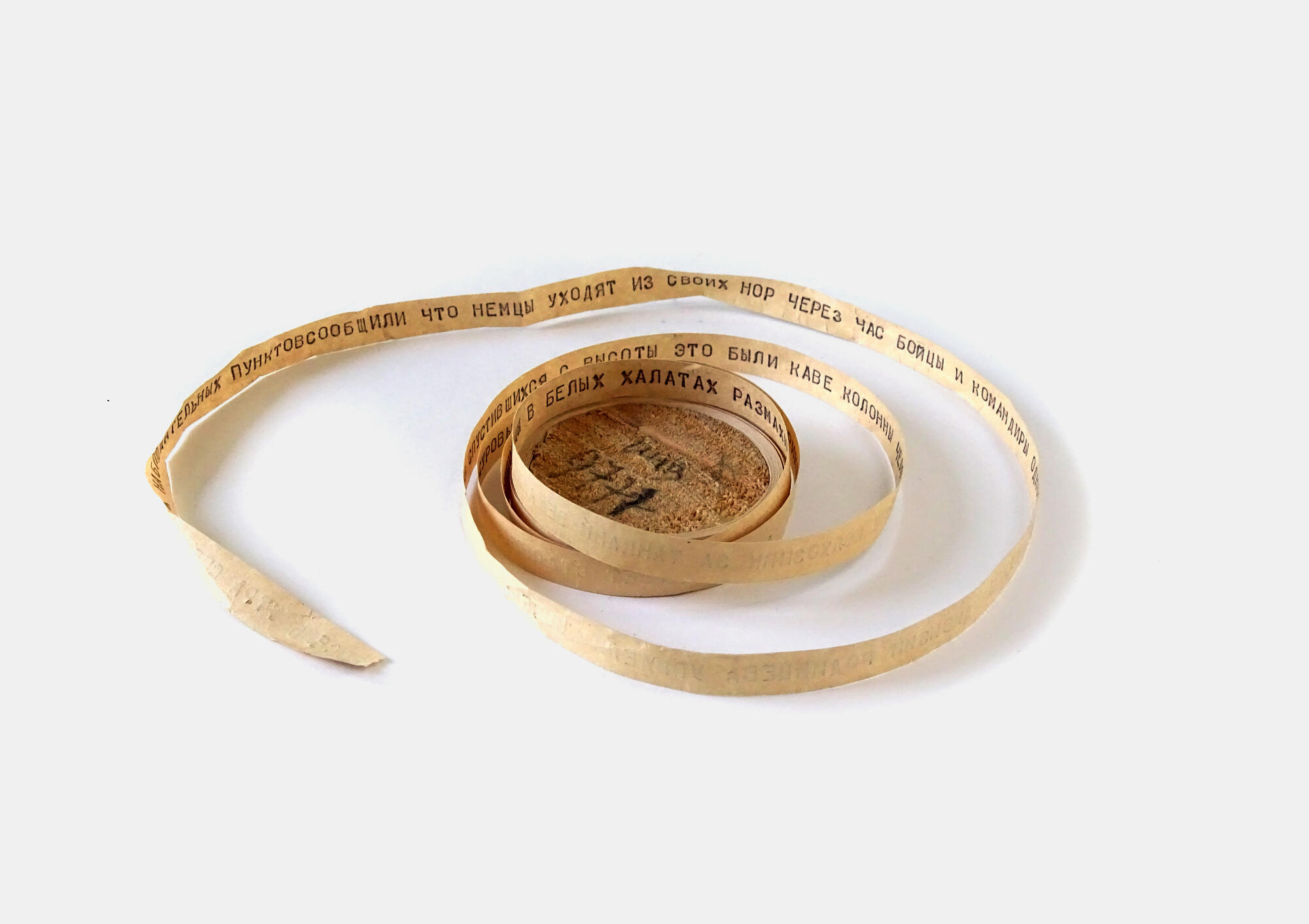


Telegraphic tape
Creation period
January 26, 1943
Place of сreation
Stalingrad, USSR
Dimensions
tape reel diameter – 6 cm, width – 1 cm
Technique
paper, print
Collection
0
Open in app#1

Telegraphic tape
#2
#3
Volgograd Regional Museum of Local Lore
read morehide
Telegraphic tape
Creation period
January 26, 1943
Place of сreation
Stalingrad, USSR
Dimensions
tape reel diameter – 6 cm, width – 1 cm
Technique
paper, print
Collection
0
 Point your smartphone camera to open in the app
Open in app
Share