Hunting has always been one of the main activities on the territory of Baikal Siberia. In winter hunters took food that did not weigh a lot, took up little space, but at the same time, was highly nourishing. Women in Prilenye cooked the hunter’s bread for their husbands, which was exactly like this.
This bread was unleavened; yeast, leaven, baking soda and other raising agents were not used. No water was added to the dough, so the bread was light, porous and dry. It did not freeze in the cold, did not become moldy and could be stored for a long time in taiga conditions.
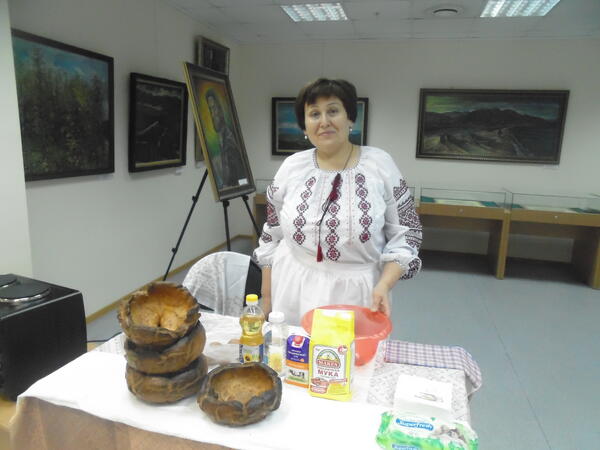
The baking process was treated as a ritual: “cooks had to wear clean clothes, they prayed and then started working.” The main distinguishing feature of the hunter’s bread was its shape. The dough was poured into a bowl — and the loaf took on its form, resembling an empty bowl. Therefore, hunter’s bread had another name — the bread bowl (blyudochnik in Russian). The unusual shape made it possible to stack the loafs one into another, which helped to save space in the hunter’s luggage.
This bread was unleavened; yeast, leaven, baking soda and other raising agents were not used. No water was added to the dough, so the bread was light, porous and dry. It did not freeze in the cold, did not become moldy and could be stored for a long time in taiga conditions.
The baking process was treated as a ritual: “cooks had to wear clean clothes, they prayed and then started working.” The main distinguishing feature of the hunter’s bread was its shape. The dough was poured into a bowl — and the loaf took on its form, resembling an empty bowl. Therefore, hunter’s bread had another name — the bread bowl (blyudochnik in Russian). The unusual shape made it possible to stack the loafs one into another, which helped to save space in the hunter’s luggage.