

The Dobroye clay toy is a unique phenomenon of folk culture. This craft had evolved throughout the 19th century. The main activity in the village of Dobroye was pottery, and potters made toys for entertainment.
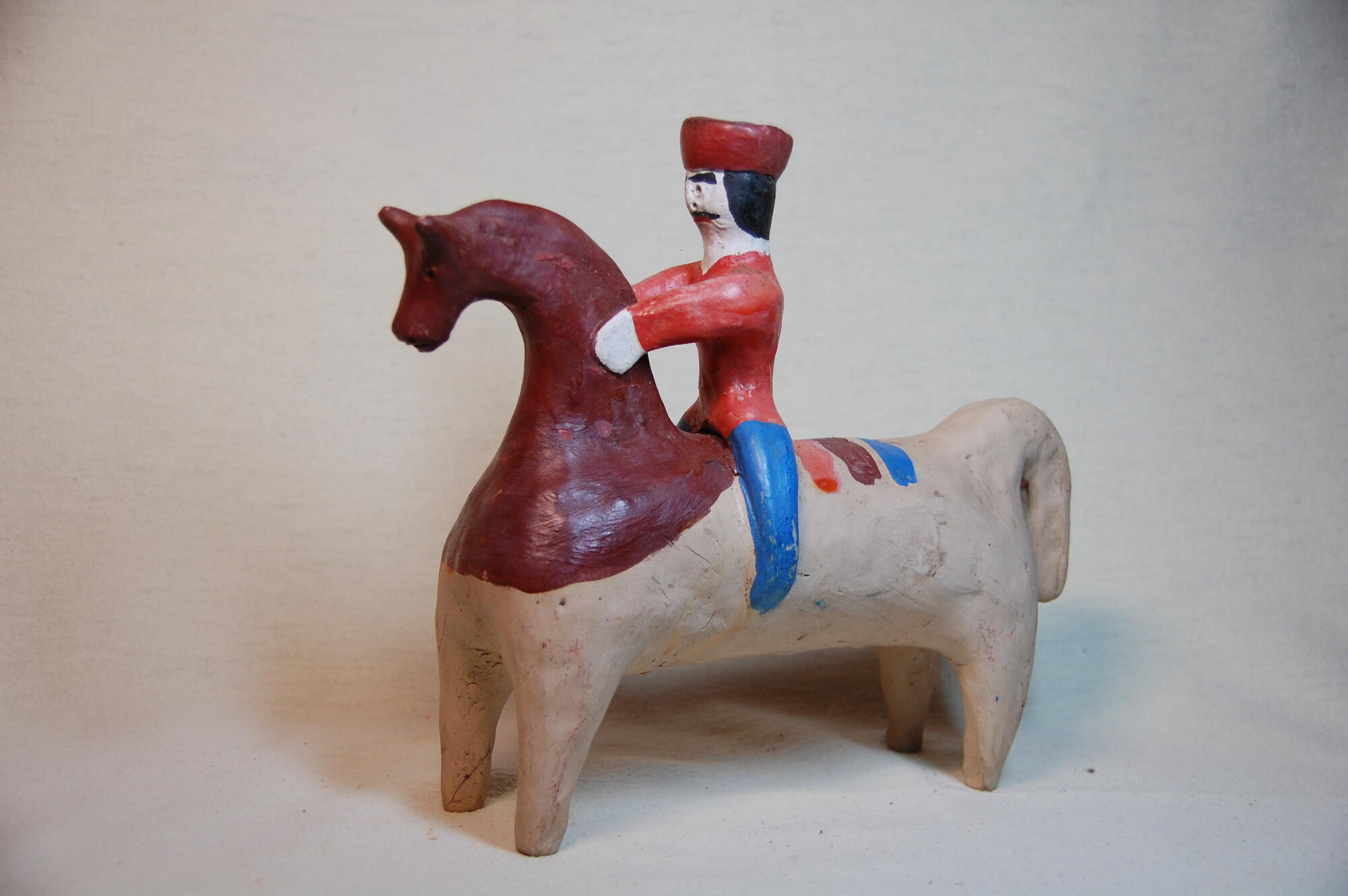
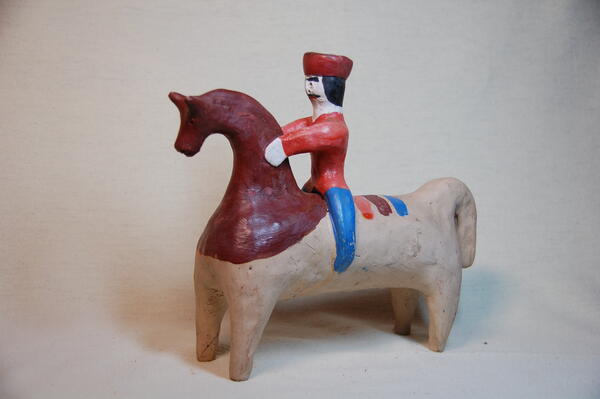
Dobroye toys can be conventionally divided into two groups. The first group was strongly influenced by the Romanovo craft, which was located nearby and was widely known — these are hollow and solid whistles in the form of birds and animals. They are elongated horizontally and painted like Romanovo toys — the head is painted in one color and three multi-colored stripes are put across the toy’s back. Another group includes pottery-type toys — a woman and a man in costumes typical of these places.
A distinctive example of folk plastic art is the “lady” of Dobroye. At the base of her skirt is an inverted shot glass, the figurine’s arms are made from its stem. The head and details are sculpted additionally. The lady is sometimes depicted with a child, a bird, a dog, as well as a handbag, a handkerchief or other elements.
Today, this craft has disappeared. The teachers of the Lipetsk Pedagogical University, the employees of the Culture and Folk Art Center, as well as the staff of the City Museum of Decorative, Applied and Folk Art are trying to preserve the traditions.
Dobroye toys can be conventionally divided into two groups. The first group was strongly influenced by the Romanovo craft, which was located nearby and was widely known — these are hollow and solid whistles in the form of birds and animals. They are elongated horizontally and painted like Romanovo toys — the head is painted in one color and three multi-colored stripes are put across the toy’s back. Another group includes pottery-type toys — a woman and a man in costumes typical of these places.
A distinctive example of folk plastic art is the “lady” of Dobroye. At the base of her skirt is an inverted shot glass, the figurine’s arms are made from its stem. The head and details are sculpted additionally. The lady is sometimes depicted with a child, a bird, a dog, as well as a handbag, a handkerchief or other elements.
Today, this craft has disappeared. The teachers of the Lipetsk Pedagogical University, the employees of the Culture and Folk Art Center, as well as the staff of the City Museum of Decorative, Applied and Folk Art are trying to preserve the traditions.