#5
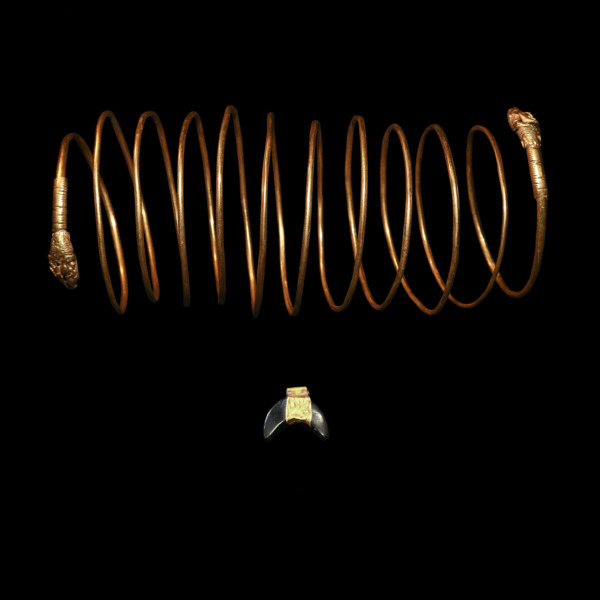
Spiral bracelet, Crescent-shaped pendant made of lignite (jet) with a gold plate
#7
#8
#9
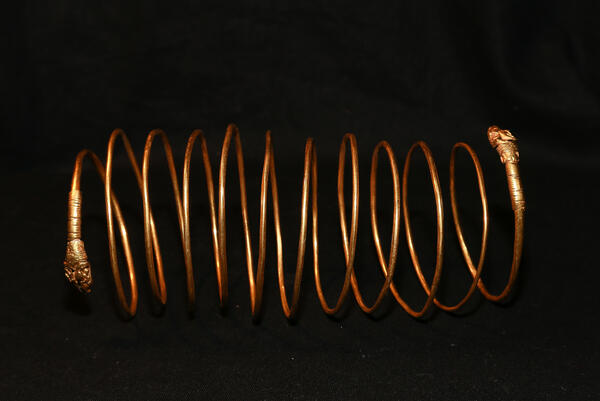
The bracelet from the Astrakhan Museum Reserve collection was found in the ChYOrny YAr village in the Astrakhan region in 1970. It was made of a spiral wire. Its ends are transformed into the small bricks decorated with ram heads. It is not known whether the number of turns made any sense. Such bracelets were often worn by the Sarmatians on the forearm.
The Sarmatian things of the early period were often decorated with symbolical images of animals, both as single animals and multi-figurine compositions. Sometimes ancient craftsmen decorated objects only with the heads of animals, as our case is. Each animal had its own mystical interpretation that underlaid their portraying as meek, angry with rage or hunting. The ram was interpreted as ‘a symbol of heavenly grace’ in the Iranian myths. Also, there were ancient beliefs that the man soul set out to the afterlife by riding a ram. This is probably why this animal was so often depicted on ritual dishes.
The nomads actively traded with the ancient colonies of the Northern Black Sea region, which contributed to the wealth accumulation and social stratification. The wealthier Sarmatians had more sophisticated clothes; their jewelry were fine and elegant. The jewelry were often made from precious metals and stones, while ordinary nomads were content with plain materials such as bronze, glass and others. In the early Sarmatian period, women started wearing long dresses. Scientists understood the fact since archaeologists found rich beaded trims for hems and sleeves in the burials dated from the 4th century BC. Before that, women’s clothes was more or less the same as the men’s: the women rode horses and cared about own comfort. The women’s and men’s clothes items were especially similar among the SavromAtss and Sarmatians. Herodotus wrote that Sarmatian women ‘were hunting either with their husbands or alone, went to war and was wearing the same clothes as men.’
In 2005, the spiral bracelet and other valuable archaeological finds from the Astrakhan Museum Reserve collection were exhibited at the Astrakhan Steppe Treasures show at the National Museum of the Palazzo Venezia in Rome.
The Sarmatian things of the early period were often decorated with symbolical images of animals, both as single animals and multi-figurine compositions. Sometimes ancient craftsmen decorated objects only with the heads of animals, as our case is. Each animal had its own mystical interpretation that underlaid their portraying as meek, angry with rage or hunting. The ram was interpreted as ‘a symbol of heavenly grace’ in the Iranian myths. Also, there were ancient beliefs that the man soul set out to the afterlife by riding a ram. This is probably why this animal was so often depicted on ritual dishes.
The nomads actively traded with the ancient colonies of the Northern Black Sea region, which contributed to the wealth accumulation and social stratification. The wealthier Sarmatians had more sophisticated clothes; their jewelry were fine and elegant. The jewelry were often made from precious metals and stones, while ordinary nomads were content with plain materials such as bronze, glass and others. In the early Sarmatian period, women started wearing long dresses. Scientists understood the fact since archaeologists found rich beaded trims for hems and sleeves in the burials dated from the 4th century BC. Before that, women’s clothes was more or less the same as the men’s: the women rode horses and cared about own comfort. The women’s and men’s clothes items were especially similar among the SavromAtss and Sarmatians. Herodotus wrote that Sarmatian women ‘were hunting either with their husbands or alone, went to war and was wearing the same clothes as men.’
In 2005, the spiral bracelet and other valuable archaeological finds from the Astrakhan Museum Reserve collection were exhibited at the Astrakhan Steppe Treasures show at the National Museum of the Palazzo Venezia in Rome.
#10
Date: IV–III centuries BC
Technique: forging, embossing, soldering
Dimensions: Diameter — 6,8 cm
Collection: Precious metals
Copyright: State budgetary institution of culture of the Astrakhan region ‘Astrakhan Museum-Reserve’
Goskatalog Number: 17112895
Technique: forging, embossing, soldering
Dimensions: Diameter — 6,8 cm
Collection: Precious metals
Copyright: State budgetary institution of culture of the Astrakhan region ‘Astrakhan Museum-Reserve’
Goskatalog Number: 17112895
#6
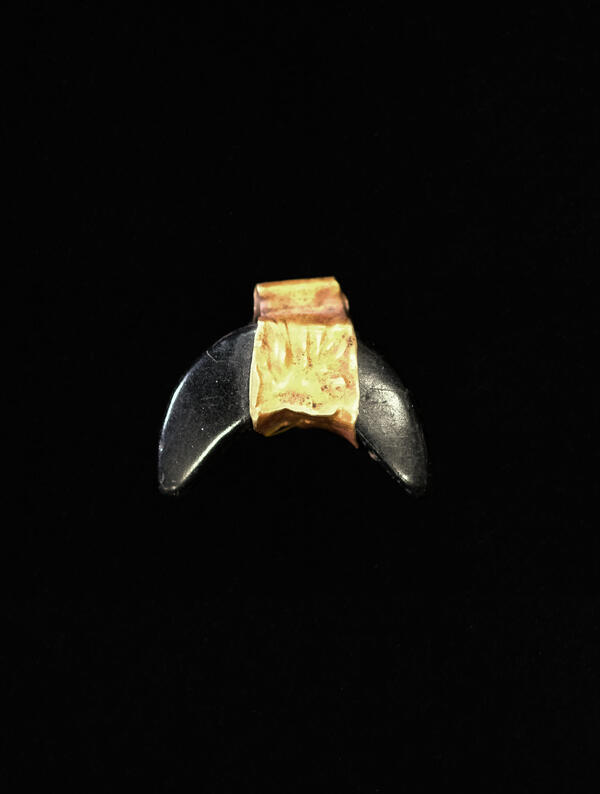
Crescent-shaped pendant made of lignite (jet) with a gold plate
#11
#12
The crescent-shaped pendant made of jet — black stone — with a gold plate was found in a woman’s burial. The Sarmatians did not leave any significant monuments and structures to get an idea of all the features of their life, traditions, social structure. The Scythian-Sarmatian antiquities are revealed to us only through the burial mounds. Nomads have always valued gold and not only as a precious metal. According to the ideas of the Sarmatians, the gold served for communications with the gods and spirits of their clans. That is why sacred vessels, weapons, jewelry and household items made of gold were necessarily present in the burials of the Sarmatian kings and the aristocracy.
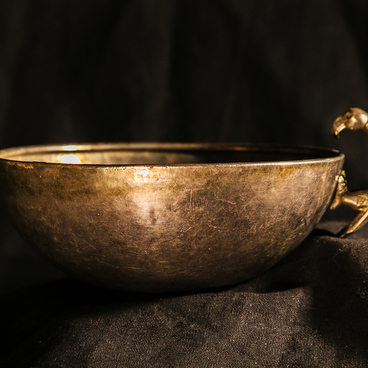
The burial in which the bead from our collection was found belonged to a noble Sarmatian woman of high rank. This is confirmed by the many valuable items discovered there: a large number of beads, two pendants lined with gold foil and a black-glazed Greek bowl with a low drip pan. The bottom of the bowl is decorated inside with a pattern of four rows of notches around four palmettos plant ornaments in the form of palm branches. The bowl was made in Attica in 330–300 BC.
In addition, a Greek amphora stamped with a two-line symbol was found in the burial. The amphora was made in Heraclea of Pontus in the 340s–330s BC. The name of the craftsman is indicated on his symbol as Dionysius. In general, similar stamped images have been dated since the second half of the 4th century BC.
Heraclea of Pontic in those days was one of the most active trade counterparties in the Black Sea region. Amphoras were brought from there. Heracles wine of the late 4th century BC was especially famous even outside the Black Sea basin. It was mentioned by the ancient Greek philosopher Theophrastus, who praised such qualities of wine as strength and aroma.
In 2005, the pendant made of black jet and other precious items were exhibited at the Astrakhan Steppe Treasures show at the National Museum of the Palazzo Venezia in Rome.
The burial in which the bead from our collection was found belonged to a noble Sarmatian woman of high rank. This is confirmed by the many valuable items discovered there: a large number of beads, two pendants lined with gold foil and a black-glazed Greek bowl with a low drip pan. The bottom of the bowl is decorated inside with a pattern of four rows of notches around four palmettos plant ornaments in the form of palm branches. The bowl was made in Attica in 330–300 BC.
In addition, a Greek amphora stamped with a two-line symbol was found in the burial. The amphora was made in Heraclea of Pontus in the 340s–330s BC. The name of the craftsman is indicated on his symbol as Dionysius. In general, similar stamped images have been dated since the second half of the 4th century BC.
Heraclea of Pontic in those days was one of the most active trade counterparties in the Black Sea region. Amphoras were brought from there. Heracles wine of the late 4th century BC was especially famous even outside the Black Sea basin. It was mentioned by the ancient Greek philosopher Theophrastus, who praised such qualities of wine as strength and aroma.
In 2005, the pendant made of black jet and other precious items were exhibited at the Astrakhan Steppe Treasures show at the National Museum of the Palazzo Venezia in Rome.
#13
Date: III century BC
Technique: forging, grinding
Dimensions: 2×2,5 cm
Collection: Precious metals
Copyright: State budgetary institution of culture of the Astrakhan region “Astrakhan Museum-Reserve”
Goskatalog Number: 17112941
Technique: forging, grinding
Dimensions: 2×2,5 cm
Collection: Precious metals
Copyright: State budgetary institution of culture of the Astrakhan region “Astrakhan Museum-Reserve”
Goskatalog Number: 17112941
read morehide
00:00
00:00
1x
Spiral bracelet and crescent-shaped pendant
Collection
Exhibition
1
 Point your smartphone camera to open in the app
Open in app
Share