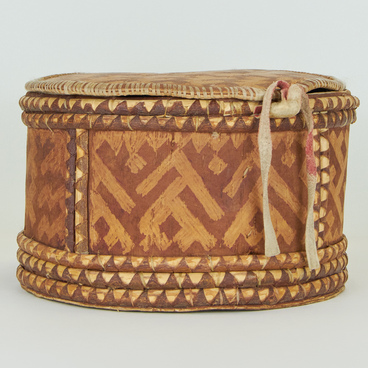
People have been using tobacco since time immemorial. It is a product with a rich and interesting history. It was brought as a gift to monarchs and banned on pain of death, considered a panacea for diseases and a deadly poison, but regardless of use-case and belief, tobacco has always been a valuable and expensive product. One needed to follow certain storage guidelines to keep it fresh. The tobacco container had to be sealed tight to keep its contents from spoiling. Tobacco was sorted into small containers, as it was believed that it lost its potency in large ones. Tobacco intended for daily use was put into even smaller containers. In Russia, such boxes were called “tabakerki” — snuffboxes. They were made from various materials: metal, wood, porcelain, crystal, amber, bone, horn.
Snuffboxes played an important role in the field of politics — courts exchanged them as diplomatic gifts. One could be awarded for military victories or services to the arts. A snuffbox with a portrait of the monarch was one of the highest awards one could get, followed by boxes with the imperial monogram as close second. In the middle in the mid-18th century Russia, such “bestowed” snuffboxes with portraits of royal figures played the role of very high awards, sometimes more significant than orders. Snuffboxes were used not only for storing tobacco and demonstrating their owner’s high status — they were also used to exchange messages between lovers.
Making a snuffbox from horn required special abilities and precision not to mention such things as an idea, image and shape for the future product. Cow horns were used as raw material for such snuffboxes. Horns were softened in water for several hours, and then shaped in a vice. At the end of this stage the desired design of the future snuffbox was determined. When the raw materials were dry, the craftsman set to work, and at the customer’s request or of the craftsman’s own volition, the horns could take on the form of a tulip, bird or fish’s head.
The exhibit is a fragment of a
hollow cow’s horn in the form of a curved truncated circular cone of black and
beige color. It has a smooth surface with two small holes for a lace closer to
the narrowed end of the horn — the lid and the lace are missing. Magnificent
horn snuffboxes were used to decorate men’s festive belts. On ordinary days, they carried
less valuable snuffboxes.