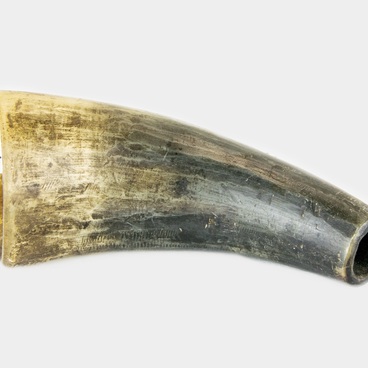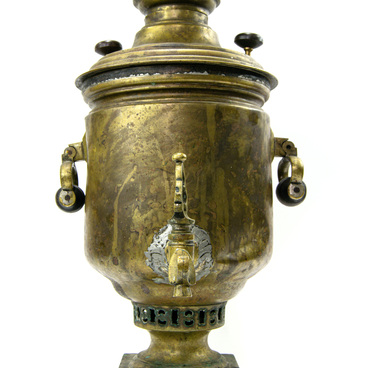


The colloquial name for this metal vessel is “flyaga” (flask). It came from the German “flasche” which was altered to make it sound more in tune with the Russian language. Since prehistoric times, people have been coming up with ways of taking food and water supplies on their travels. And if one could survive several days without food, doing so without water was almost impossible. The oldest water flask was found by archaeologists — it was more than 60,000 years old. Early travel flasks were made from anything that could contain liquids. The very first ones were made from so-called bottle gourds. Leather wineskins, or flasks made from animal stomachs, were popular in colder climates.
The first metal flasks appeared in ancient Greece. Rich people had flasks made of silver, while the rest could afford only those made of copper or bronze, however, they were still very expensive. The first mass-produced flasks were made of leather and wood but with the advent of regular armies, they gradually gave way to glass vessels, and then to flasks made of aluminum. In 1862, the tsarist command conducted an interesting experiment: a batch of 5,000 glass flasks was produced, most of them went to the Caucasian troops and unfortunately, they turned out to be too fragile.
The first Soviet non-corrosive metal flask was developed in 1923 and it was made of aluminum. It had a volume of 0.75 liters. Each soldier of the regular army was equipped with a flask, for which each country developed its own standard.
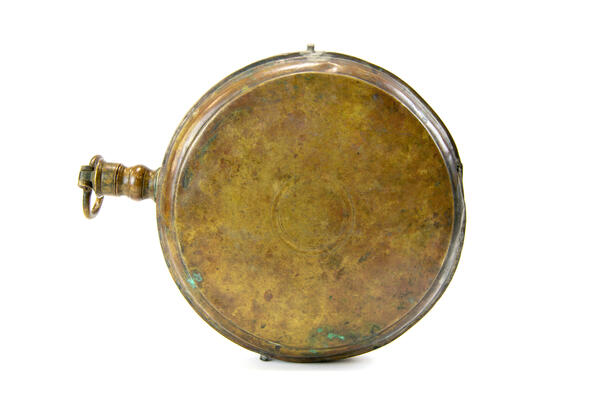
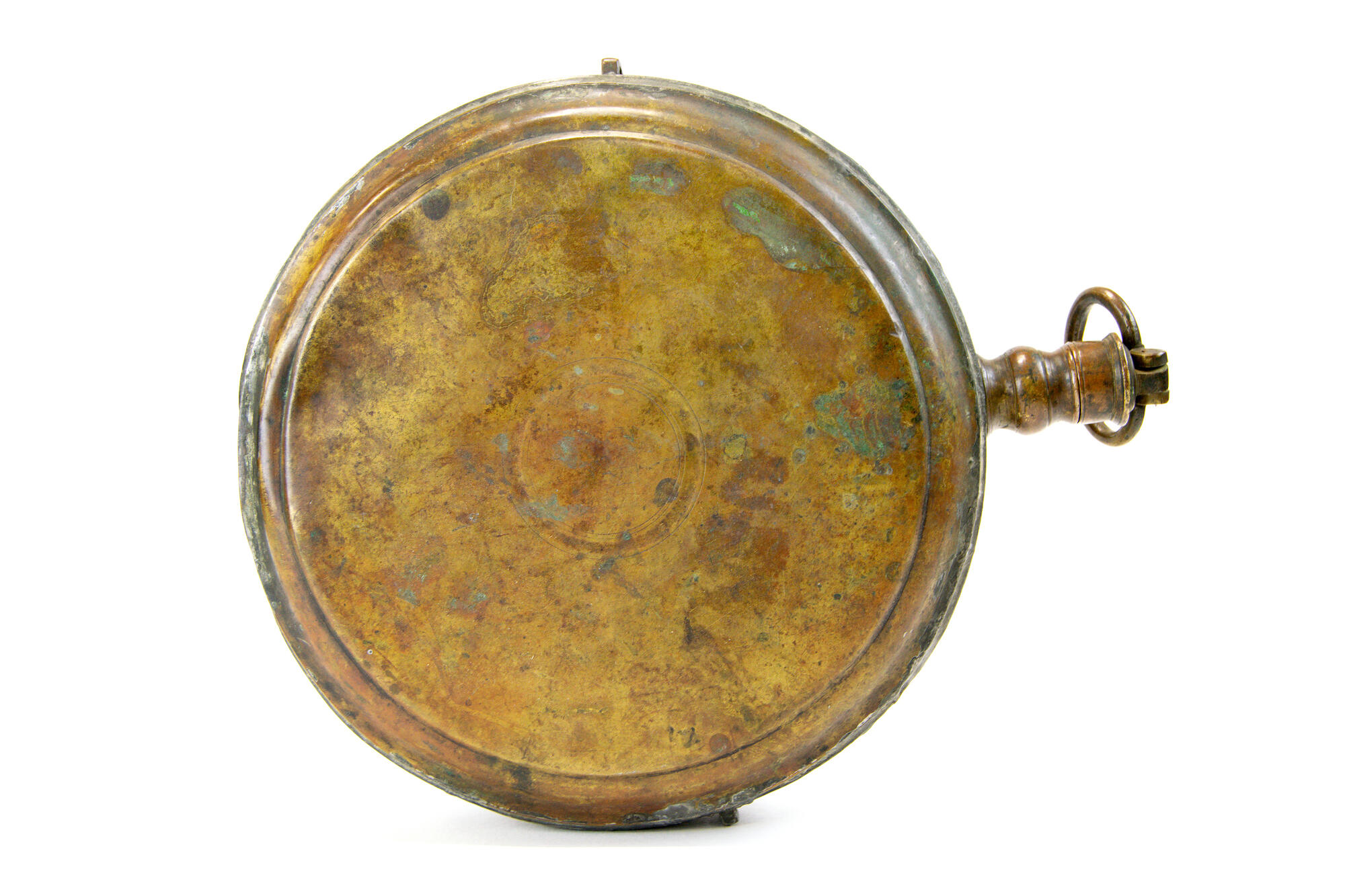
The exhibit is a particular
type of an army flask made of copper that was used by local residents as a
vessel for water; its volume is five liters. It has round walls and a
ribbon-shaped sidewall, a narrow curved neck with a screw cap, which has a
round loop for hanging. There are minor dents on the body and some places are
coated in patina. The flask was donated to the museum in 1995.