In Russia, wooden religious statues became widespread in the 16th century. Moscow became the center of religious sculpture. During the second half of the 17th century, Simon Ushakov, a famous icon painter and head of the Armory, added sculpture to his list of “seven liberal arts.”
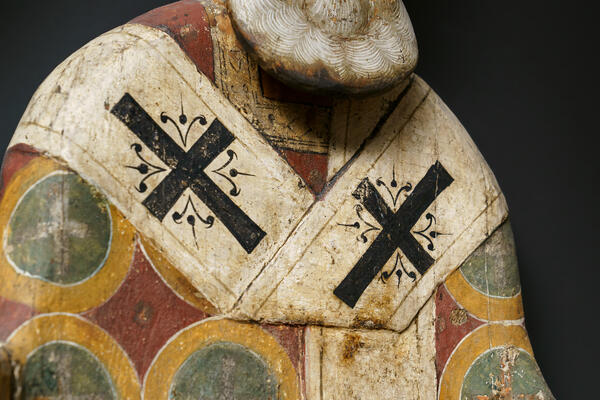
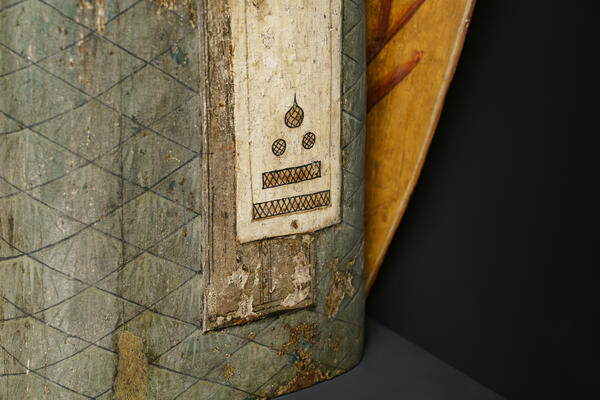
Early Russian religious statues were rather flat and did not intend to reflect the actual volume of figures. Pictorial means were actively used in such works.
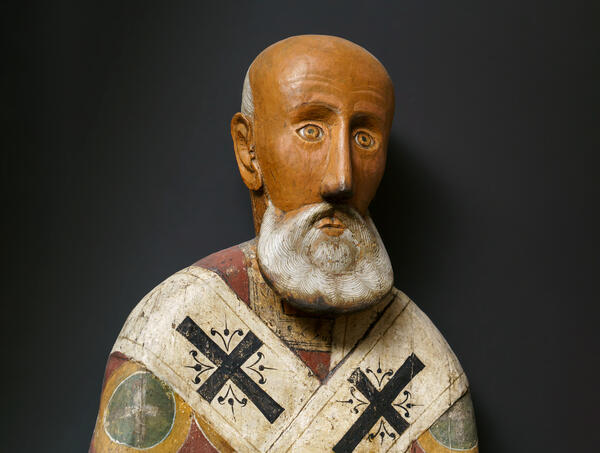
Statues of Saint Nicholas of Mozhaisk were very common in medieval Russian culture. The tradition can be traced back to the famous wooden statue created in the town of Mozhaisk in the late 14th century. Now it is kept in the State Tretyakov Gallery in Moscow. In later sources, this image is associated with a legendary event when Mozhaisk was saved from the Tatars by Saint Nicholas who appeared to the citizens and put the enemy to flight.
There are also earlier texts concerning the development of the Mozhaisk image. According to literary sources, during his trip to Palestine, Saint Nicholas came to a town where Christians lived. When the town was attacked, Saint Nicholas started praying to God. Hidden behind a cloud, He appeared before the citizens and encouraged them to resist the enemies, “armed with the Cross.”
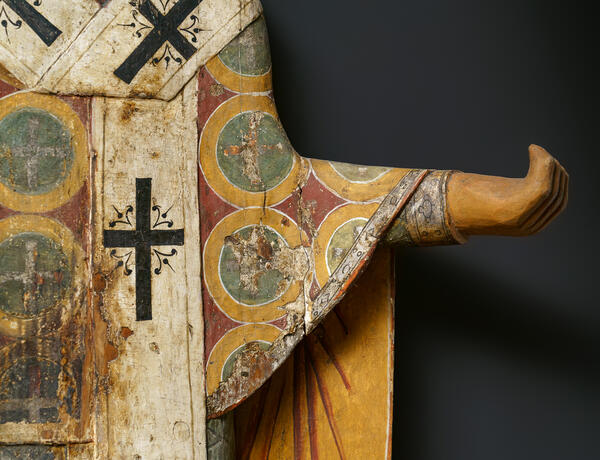
The saint’s attributes — the city and the sword — were carved separately and attached to the statue’s hands. This is why, in many cases, they have not been preserved. According to the New Testament, the sword in the saint’s right hand represents not only a physical weapon that helps fight external enemies but also the Word of God. It can “strike the enemies of Orthodoxy with greater force than any two-edged sword.” The city or church in his left hand could symbolize either the earthly Church or the New Jerusalem. Later, this symbol became interpreted as a specific church that housed the statue and was protected by the patron saint as a powerful defender for all parishioners.
The Mozhaisk version was also widespread. During
the periods of frequent enemy raids, this image would become particularly
relevant and popular.