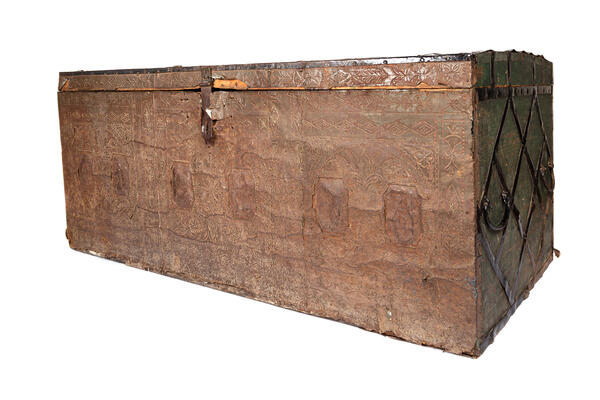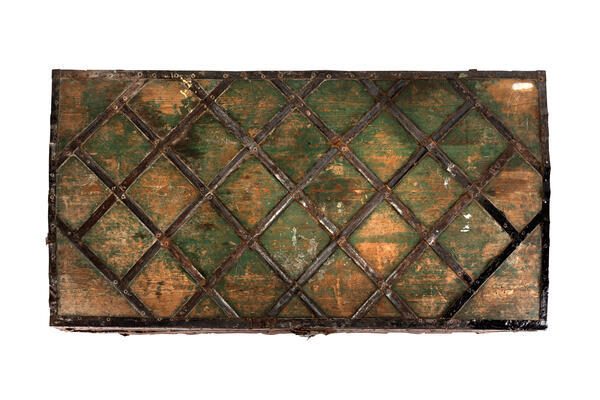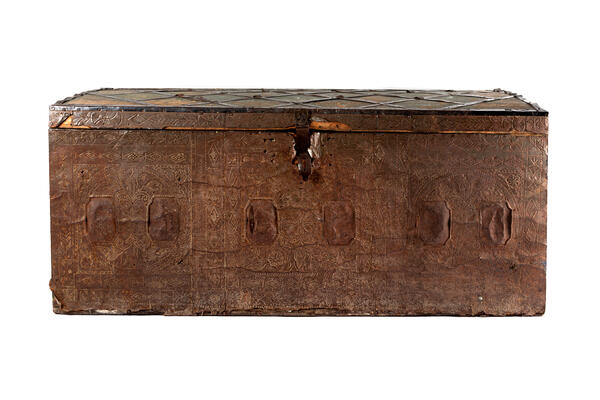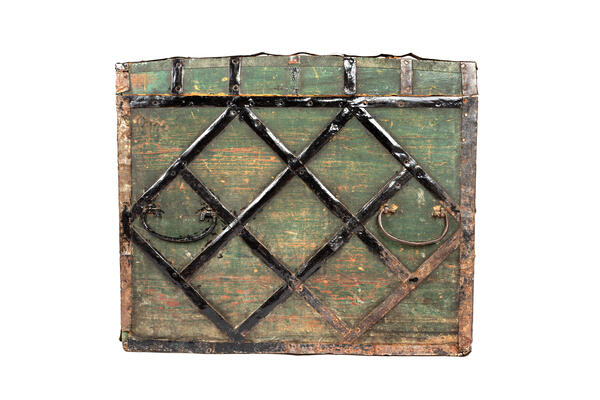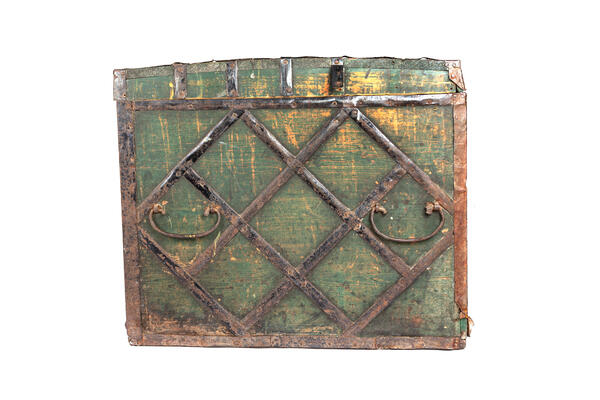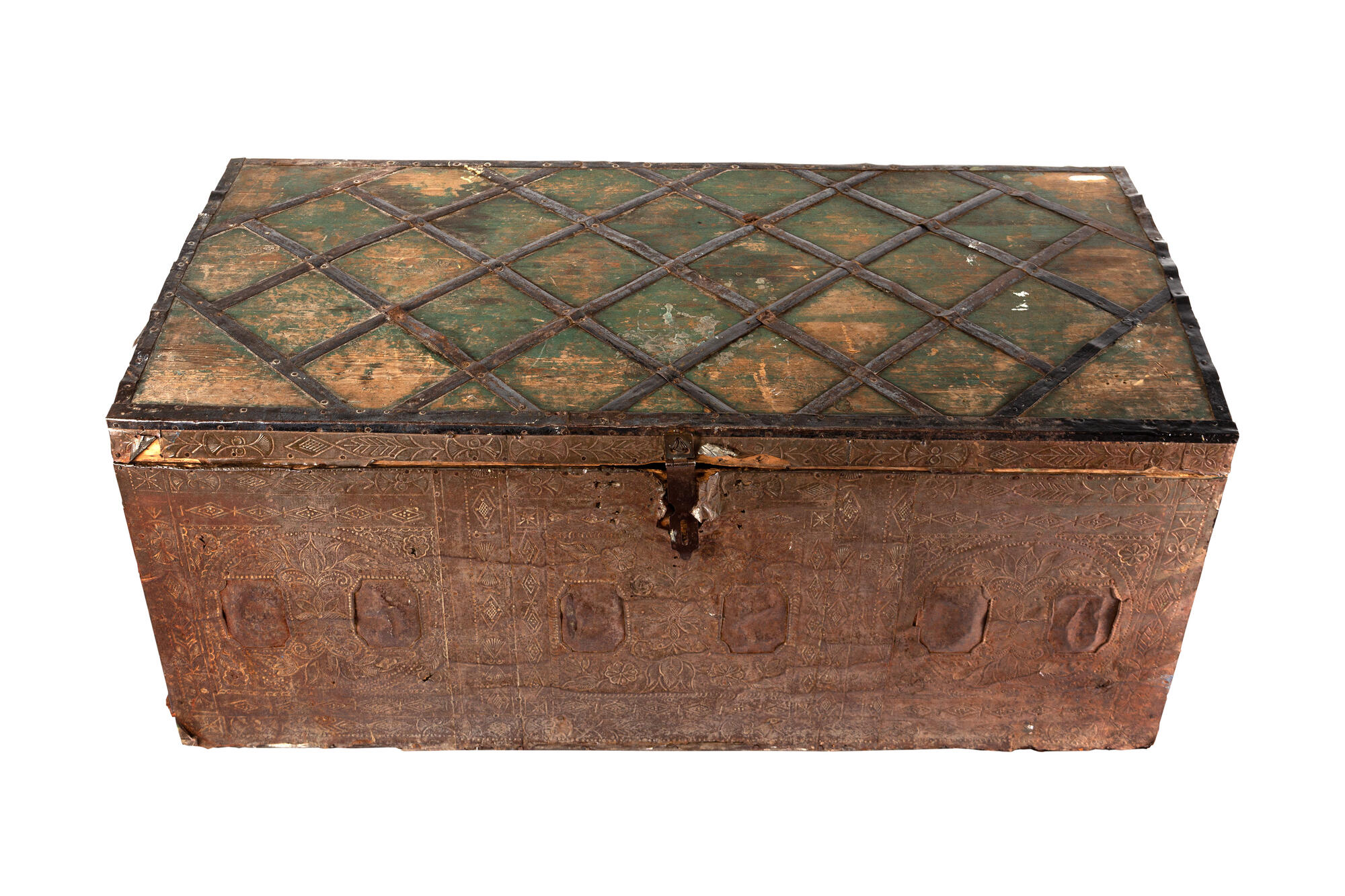


Various containers for storing clothes and household utensils have long existed in Russian villages. They had different names: ukladka, skrynya, korob, kubel (“big bucket”, box). A chest was the most reputable storage furniture and an integral part of the peasant hut interior in the 18th–19th centuries.
Wealthy families could afford to have a chest for each adult family member. A separate chest was purchased for a dowry. Documents and family heirlooms were kept in a small, particularly valuable one. Families with less income were content with just one — not only did it store clothes but served as a place to sleep.
Chests (the Russian word “sunduk” — chest — came from the Turkic “sandyk” — jewelry box) were made of flat pine, cedar, spruce, lime, oak or aspen boards, adjusted so tightly that no amount of air could get in. The lid was made hinged, domed, convex or with a beveled “headrest”, so the owner could put such a chest under their head at night, to protect it from being stolen.
Chests often featured various special compartments, secret narrow and long drawers for storing small things, removable trays for crumpled fabrics, musical locks (Ural “ringing locks” became popular in the 18thcentury). The body of the chest was usually bound with strips of tin on the outside and on the inside it was laid with paper or upholstered with fabric.
Chests varied in size, and during transportation they were put one into another like a matryoshka doll. Such sets had very descriptive names: three-piece, five-piece, six-piece, seven-piece.
Chests were made by a whole team of artisans: carpenters, locksmiths and painters. In a year, a craftsman made 150–200 blanks, which were called “golyo”, “belyo” or “rubashka”.
Each center of chest production adhered to its own traditions. In some regions, chests were upholstered in tin with hammered ornaments and recesses with polished tin mirrors. In others, they were decorated with a narrative or ornamental (with flowers, birds and wreaths, like that of a tray) painting. A special printed pattern etched with nitric acid and vitriol was called “frosty”. The masters of the town of Veliky Ustyug decorated their chests with strips of ornamental sheet metal, under which they placed colored mica.