The problem of removing creases from clothes has occupied people’s minds since ancient times. The oldest ancestor of the modern iron is considered to be an Aztec “set” of two flat cobblestones heated in the sun: clothes were spread out on one and pressed down with the second.
The ancient Greeks used hot metal rods to get rid of rough folds, and the Romans “knocked out” wrinkles with heated metal hammers. In ancient China of the 3rd century BC, basins with hot sand or coals, weighing about 10 kilograms, were used for this purpose. In the Middle Ages, there were ironing appliances that resembled frying pans with coal, which would often fly out and burn the fabric during ironing. In Russia, damp homespun cloth was rolled out with a rubel.
In Russia, an iron as a special device was first mentioned in a document from 1636, where it was reported that the blacksmith Ivashka Trofimov received five altyns (a unit of currency) and “for that money he made a cast iron iron” for the royal chambers.
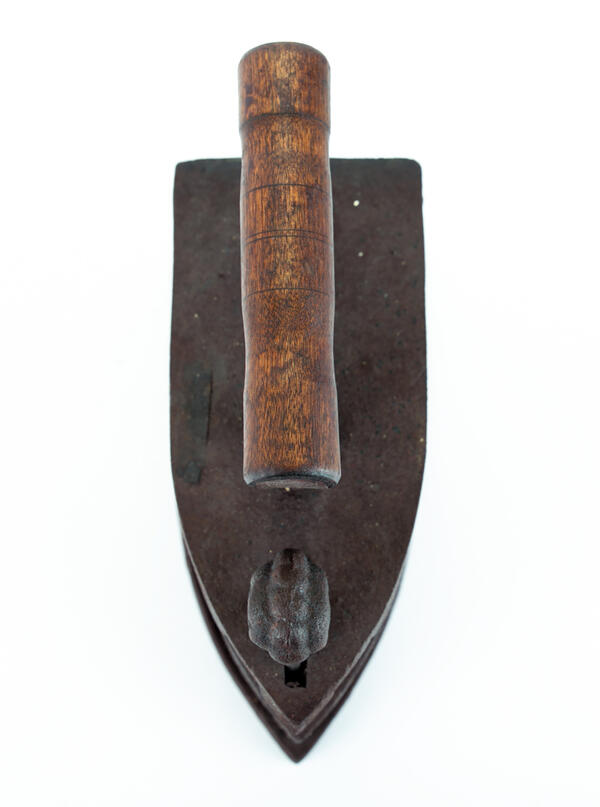
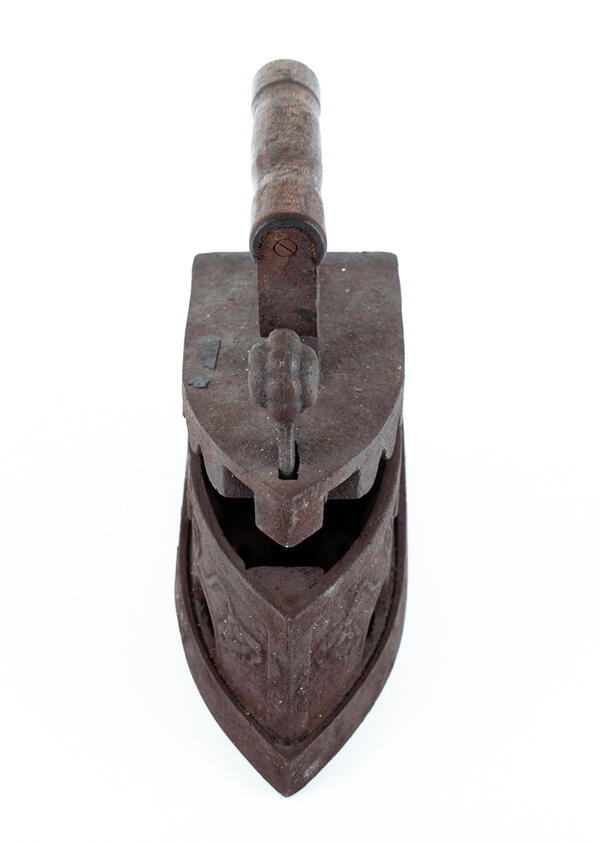
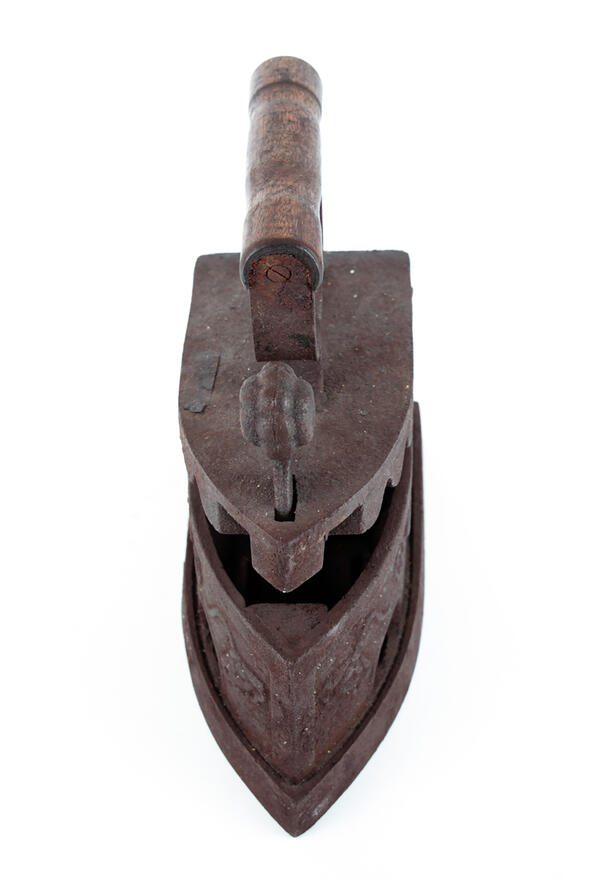
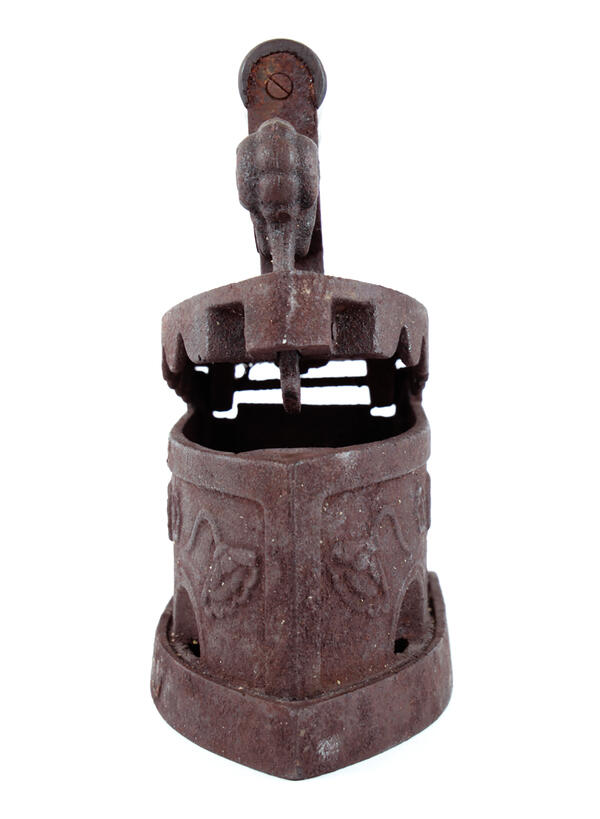
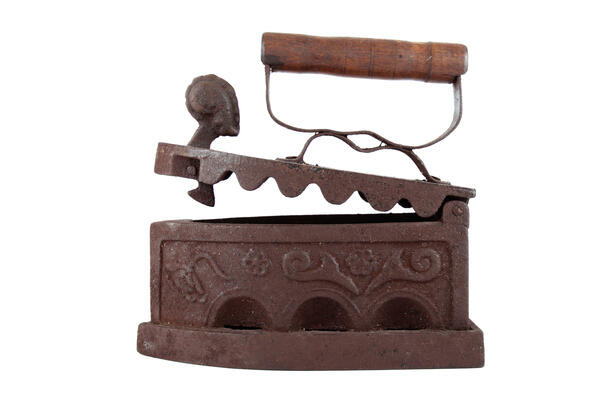
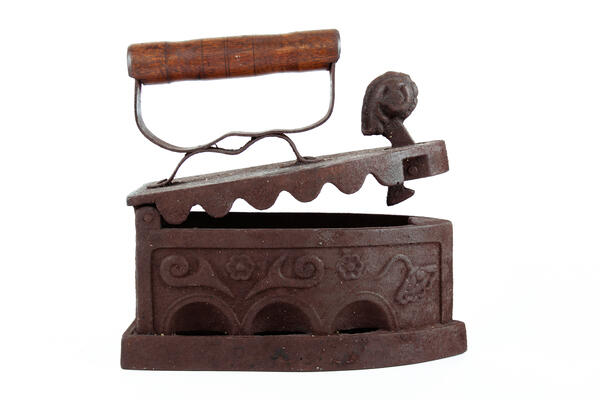
The body of such an iron was filled with hot coals and closed with a lid with a lock. The lower part of the sides of the iron and along the edge of the lid featured holes for air circulation. To keep the coals in a hot, smoldering state, they were blown through these holes or the iron was swung, forcing air inside. Some time later, instead of coals, people began placing a red-hot piece of cast iron into the iron. The handle of the iron was made of wood to avoid burning the hands.
The historian Yevgeny Kryukov claims that the first charcoal irons served many purposes, but were rarely used for ironing clothes. With their help people “poisoned cockroaches, mice and frogs, and banished evil spirits”. People would put the iron on their lower back if it felt sore and used it as a press for making sauerkraut.
During the rule of Peter the Great, irons of intricate shapes (in the form of whales, lions and ships) and made of solid cast iron, bronze and iron came into use. They were heated on fire and the people using them wore gloves, because the handle was heated along with the body of this device. Over time, removable handles which were attached to an already heated iron appeared. Such an iron was suitable for coarser fabrics — collars, cuffs and lace were ironed with special small irons.
In the 18th century, brass irons were produced at the Demidovsky and other foundries and were quite expensive: a product weighing only one pound cost a whole ruble.