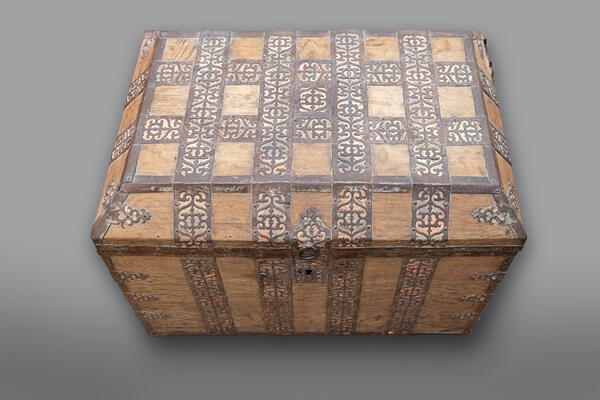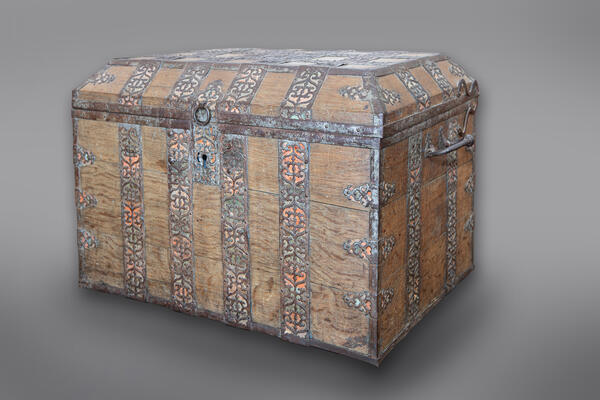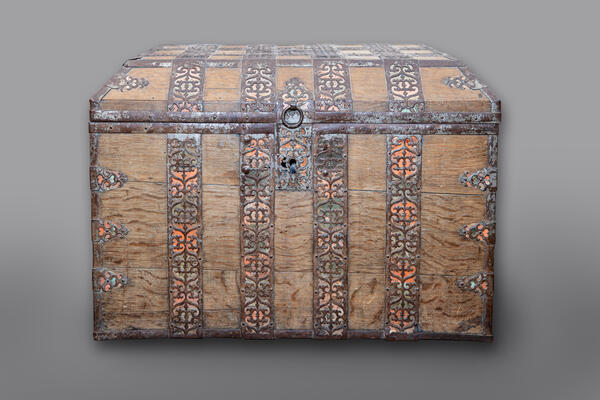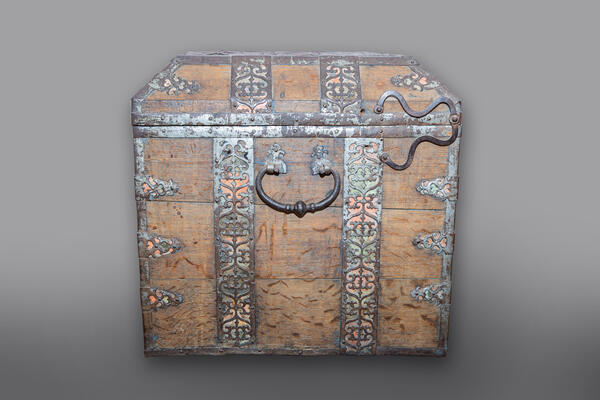


The Russian word “sunduk” (“chest”) is of Turkic origin. It appeared in Russian lands only in the second half of the 16th century. In Russian, different words were used to designate a box in which some things were stored: a trunk, a case, a crate, a hamper, and others.
This type of furniture has been known since ancient Egypt. The first chests were carved out from a single piece of wood. Then the technology became more complicated and changed, the manufacture and decoration of chests began to require increasingly more skill and artistic taste.
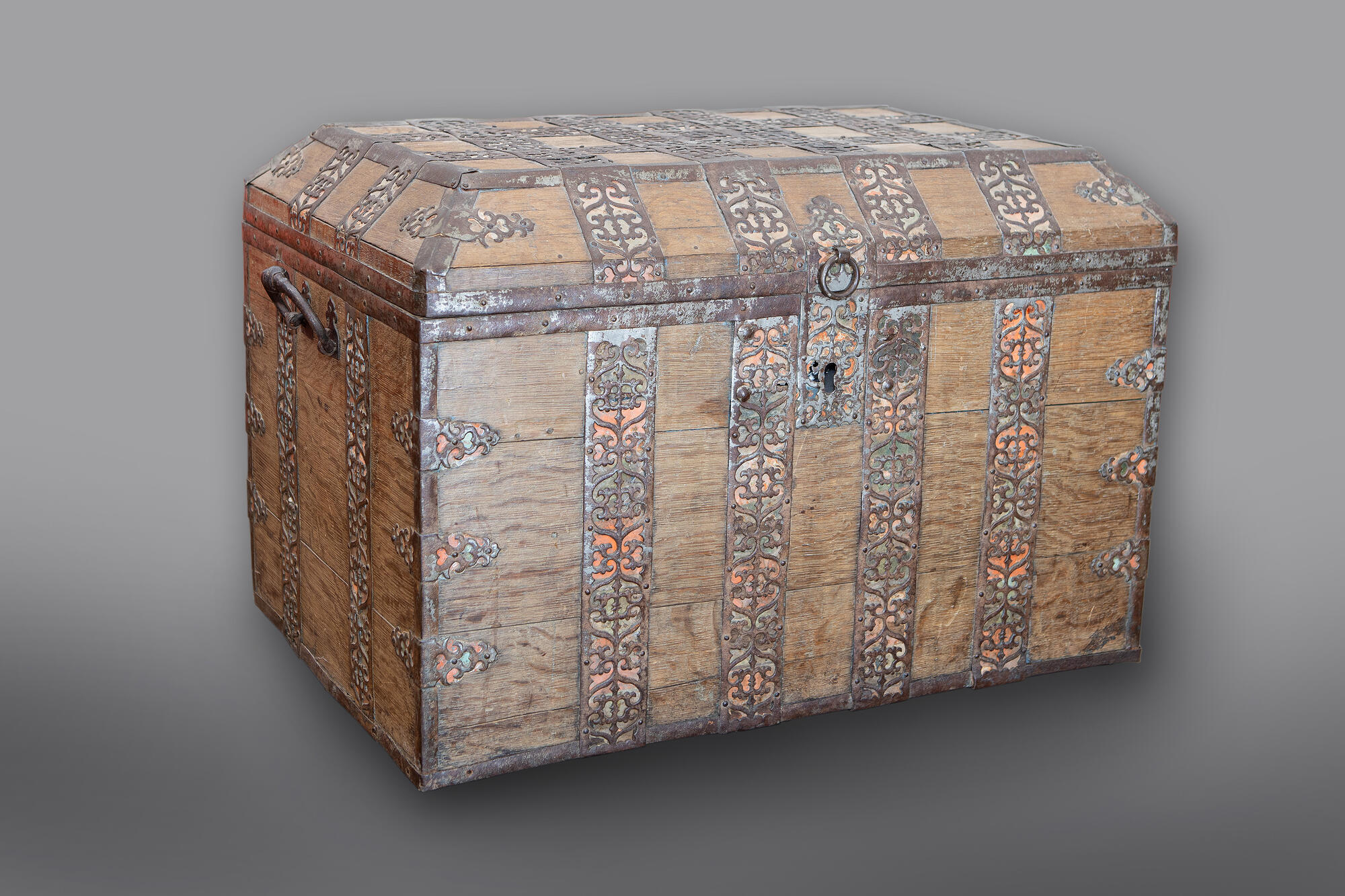
There were chests in the homes of people of very different social backgrounds. They were made from hardwoods, and special preference was given to oak. To make the chests stronger, they were pulled together with strips of iron. Such chests were not cheap, since the metal itself was quite expensive.
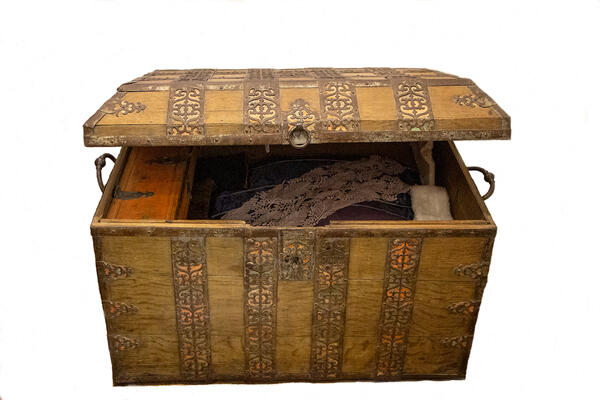
In the 17th and 18th centuries, chests with openwork iron decorations came into fashion. These decorations were usually lined with colored paper or mica. Such chests were regarded as luxury goods. Only by the 19th century, when more metal was available and the methods of its processing improved, forged chests with a similar design became a mass phenomenon.
Artisans decorated chests not only with iron, but also with painting and carving. They used hinged or built-in locks. Later, they began to make small compartments inside the chests for storing valuables — another key was often required to open those compartments.
Large chests were placed under the benches and against the walls, while others were placed on the benches. Large chests served as furniture, they were covered with fabric and people would sit on top. According to the 16th–century sources, a chest could be used during feasts instead of a table, and the food and drinks could be served on its lid.
An artisan who made such items was called a “larechnik” (from the Russian word “larets” meaning “chest”). Sometimes the same name was used to refer to a merchant who traded in these products. The main centers for the production of chests with artistic iron decoration were Veliky Ustyug, Kholmogory, and Moscow. Each craftsman had his own secrets in making chests.
This type of furniture has been known since ancient Egypt. The first chests were carved out from a single piece of wood. Then the technology became more complicated and changed, the manufacture and decoration of chests began to require increasingly more skill and artistic taste.
There were chests in the homes of people of very different social backgrounds. They were made from hardwoods, and special preference was given to oak. To make the chests stronger, they were pulled together with strips of iron. Such chests were not cheap, since the metal itself was quite expensive.
In the 17th and 18th centuries, chests with openwork iron decorations came into fashion. These decorations were usually lined with colored paper or mica. Such chests were regarded as luxury goods. Only by the 19th century, when more metal was available and the methods of its processing improved, forged chests with a similar design became a mass phenomenon.
Artisans decorated chests not only with iron, but also with painting and carving. They used hinged or built-in locks. Later, they began to make small compartments inside the chests for storing valuables — another key was often required to open those compartments.
Large chests were placed under the benches and against the walls, while others were placed on the benches. Large chests served as furniture, they were covered with fabric and people would sit on top. According to the 16th–century sources, a chest could be used during feasts instead of a table, and the food and drinks could be served on its lid.
An artisan who made such items was called a “larechnik” (from the Russian word “larets” meaning “chest”). Sometimes the same name was used to refer to a merchant who traded in these products. The main centers for the production of chests with artistic iron decoration were Veliky Ustyug, Kholmogory, and Moscow. Each craftsman had his own secrets in making chests.