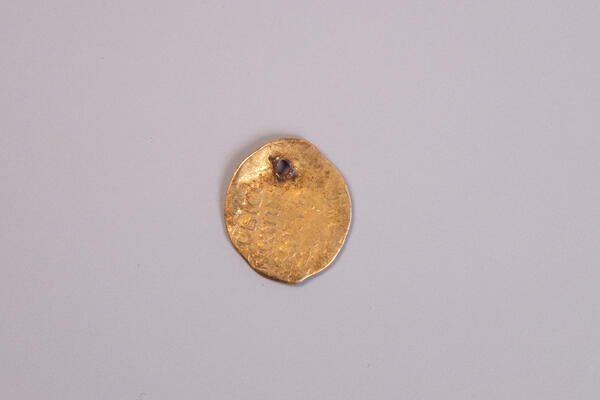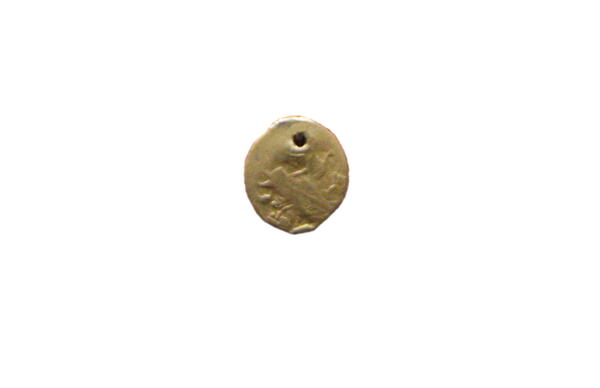
The minting of gold coins began on the territory of the Muscovite state under Tsar Ivan III. A Hungarian gold coin, which was also called Ugric, was taken as a sample. It was a political decision that had a symbolical character. Such coins were not a means of payment and acted as a reward for military valor.
During the Time of Troubles, gold coins were minted since there was an acute shortage of silver in the treasury. In 1610, Tsar Vasily Shuisky was forced to start issuing coins from this precious metal in order to pay salaries to the army. At that time, the names of the coins were the same as those of silver coins.
One gold kopeck was equal to 10 silver coins, and one gold denga was equal to 5 similar silver coins. The minting of gold coins continued after the overthrow of Vasily Shuisky. The Seven Boyars invited the Polish prince Vladislav to rule. The Poles continued to issue gold kopecks, but already in 1613, silver coins began to be minted again. Gold coins began to be used exclusively as awards.
The custom to use gold coins as awards reached its peak under Aleksey Mikhailovich, the second Russian tsar from the Romanov dynasty. Military officers received award kopecks and money. When it was believed that the entire army had contributed to the victory, such distributions could be large-scale. Officers of lower ranks received gilded silver kopecks and money. The military sewed gold coins on a hat or sleeve as a badge of distinction.
In 1654, a large batch of gold coins was minted specifically for the Zaporozhian Army of Bogdan Khmelnitsky. Gold coins of various denominations were also minted under Fyodor Alekseevich, they were also not a means of payment and were exclusively used for awarding. They were given, among others, to the participants of the Crimean campaigns of 1687 and 1689 under the leadership of Vasily Vasilyevich Golitsyn during the regency of Princess Sofia Alekseevna. Gold coins were also made during the ascension to the throne. According to tradition, gold kopecks were sprinkled over a new tsar when he was leaving the Assumption Cathedral after he was anointed a king.
During the Time of Troubles, gold coins were minted since there was an acute shortage of silver in the treasury. In 1610, Tsar Vasily Shuisky was forced to start issuing coins from this precious metal in order to pay salaries to the army. At that time, the names of the coins were the same as those of silver coins.
One gold kopeck was equal to 10 silver coins, and one gold denga was equal to 5 similar silver coins. The minting of gold coins continued after the overthrow of Vasily Shuisky. The Seven Boyars invited the Polish prince Vladislav to rule. The Poles continued to issue gold kopecks, but already in 1613, silver coins began to be minted again. Gold coins began to be used exclusively as awards.
The custom to use gold coins as awards reached its peak under Aleksey Mikhailovich, the second Russian tsar from the Romanov dynasty. Military officers received award kopecks and money. When it was believed that the entire army had contributed to the victory, such distributions could be large-scale. Officers of lower ranks received gilded silver kopecks and money. The military sewed gold coins on a hat or sleeve as a badge of distinction.
In 1654, a large batch of gold coins was minted specifically for the Zaporozhian Army of Bogdan Khmelnitsky. Gold coins of various denominations were also minted under Fyodor Alekseevich, they were also not a means of payment and were exclusively used for awarding. They were given, among others, to the participants of the Crimean campaigns of 1687 and 1689 under the leadership of Vasily Vasilyevich Golitsyn during the regency of Princess Sofia Alekseevna. Gold coins were also made during the ascension to the throne. According to tradition, gold kopecks were sprinkled over a new tsar when he was leaving the Assumption Cathedral after he was anointed a king.