In the history of mankind trunks, caskets, boxes, chests, lockers and other containers that serve to store essential household items have been known since time immemorial.
Diverse in shape and size, they also varied in purpose. Some of them were used to store clothes and linen, paper and writing implements, while others were used to keep documents, money and valuables away from prying eyes.
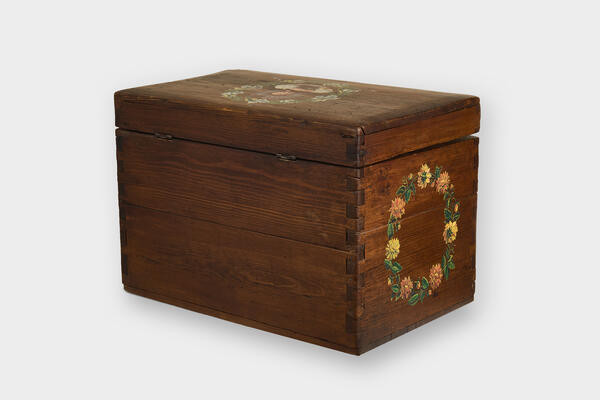
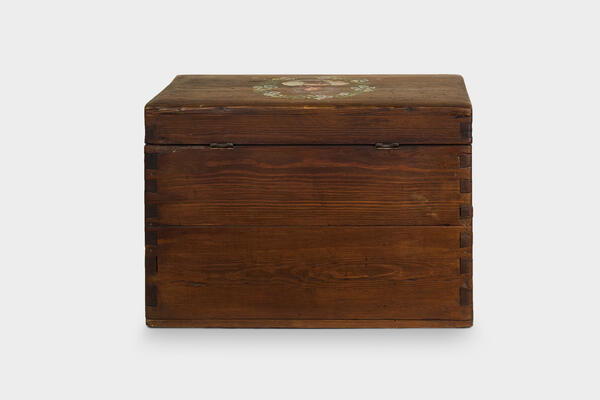
The museum’s exhibition presents a chest made of thin boards that are joined together by a tongue-and-groove, with one piece containing a ridge that joins with a groove on the other piece. This reliable construction provides long-term use and looks neat.
This is the kind of chests that Astrakhan ladies took with them on river cruises. Travels from Astrakhan to the towns, which were situated in the upper reaches of the Volga, were very long. In the second half of the 19th century, it took almost two weeks to get from Astrakhan to Nizhny Novgorod, and a little faster in the opposite direction, given the flow of the river. In the early 20th century, the duration of cruises got shorter, but the journey still took a long time.
When traveling, passengers needed plenty of stuff for a comfortable journey. Unlike travel chests, where clothes, groceries, dishes and books were stored, small chests were usually used to carry toiletries, personal hygiene items, cosmetics and correspondence.
At home, such a chest was also essential. In the girls’ rooms, it was an indispensable attribute of the interior and was used primarily for keeping needlework.
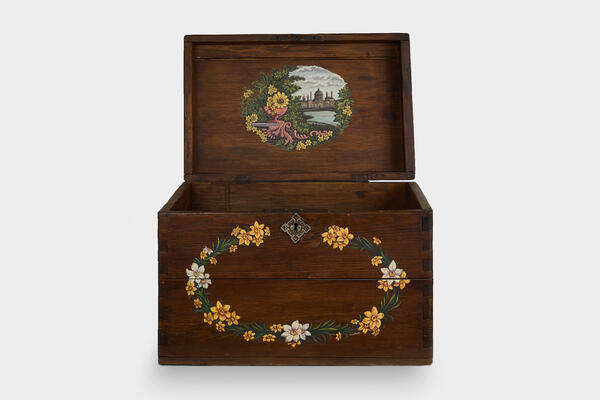
The museum’s chest has a hinged lid. It is made of
wood and was later decorated with paintings. There is an internal lock on the
front, which suggests that it may have been used for long journeys. The
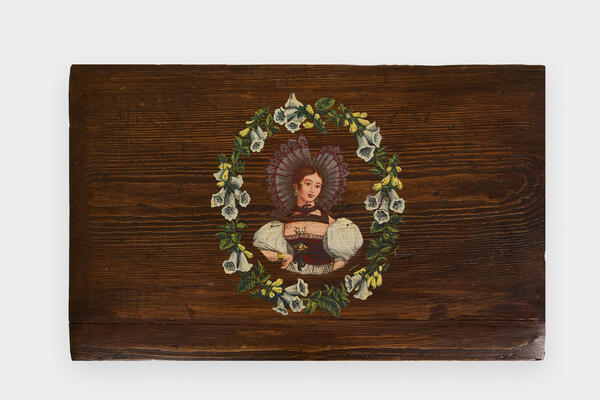
paintings on the outside of the lid and the sides were made to order by the
Astrakhan artist Maxim Romanovich Sabirov based on the works of the French
watercolorist Achille Jacques-Jean-Marie Devéria in 2011.