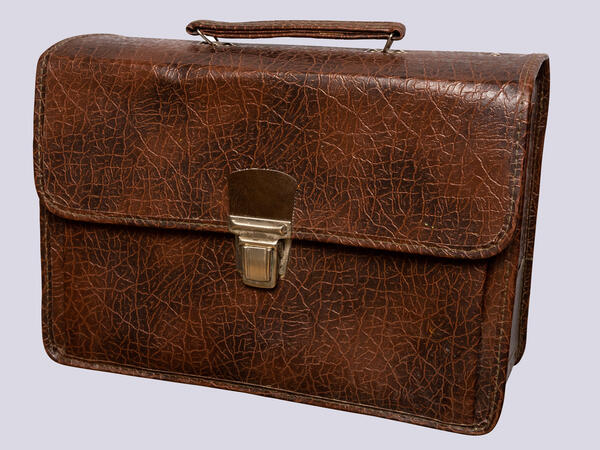
The bag of the head counter of the 1979 All-Union Population Census was transferred to the museum by the head of the Severodvinsk Department of Statistics, which organized the census itself in the city. The 1979 All-Union Population Census was conducted over a week and was aimed at collecting data on the size and composition of the country’s population. From January 17 to January 24, 1979, enumerators walked around the living quarters, conducted a survey of the townspeople and recorded their answers in the census forms.
In Severodvinsk, 400 enumerators were trained to organize the census. During the day, everyone had to go around a considerable number of apartments, so the bag was sewn specifically to store a large number of papers.
The population aged 10 and over was surveyed. The census questionnaire included sixteen questions about age, nationality, education, family composition. New questions have been added and the wording of some has been refined. Marital status was considered in more detail in the program of this census. It was required to give not just a monosyllabic answer whether a person is married or not, as in the 1970 census, but also to indicate the marital status: married, never married, widower (widow), divorced. This was due to the need to clarify information about the family structure of the population, since in the results of previous censuses, there were less married men than married women, by about 30%.
The 1979 census showed that Severodvinsk is one of the youngest cities in the country. Out of 202,445 residents, only 7% of Severodvinsk residents have reached retirement age. Able-bodied citizens were 66% (134 thousand people). The working orientation of the city was confirmed by the answers to the question about education. 78% of all surveyed residents of the city had higher and secondary education, 17% — elementary and only 5% did not answer this question. In the general composition of the townspeople, women and men were almost equal. More than 60% of those surveyed (over 16 years old) were married. The census made it possible to show the characteristics of Severodvinsk, a young industrial city of the North.
In Severodvinsk, 400 enumerators were trained to organize the census. During the day, everyone had to go around a considerable number of apartments, so the bag was sewn specifically to store a large number of papers.
The population aged 10 and over was surveyed. The census questionnaire included sixteen questions about age, nationality, education, family composition. New questions have been added and the wording of some has been refined. Marital status was considered in more detail in the program of this census. It was required to give not just a monosyllabic answer whether a person is married or not, as in the 1970 census, but also to indicate the marital status: married, never married, widower (widow), divorced. This was due to the need to clarify information about the family structure of the population, since in the results of previous censuses, there were less married men than married women, by about 30%.
The 1979 census showed that Severodvinsk is one of the youngest cities in the country. Out of 202,445 residents, only 7% of Severodvinsk residents have reached retirement age. Able-bodied citizens were 66% (134 thousand people). The working orientation of the city was confirmed by the answers to the question about education. 78% of all surveyed residents of the city had higher and secondary education, 17% — elementary and only 5% did not answer this question. In the general composition of the townspeople, women and men were almost equal. More than 60% of those surveyed (over 16 years old) were married. The census made it possible to show the characteristics of Severodvinsk, a young industrial city of the North.