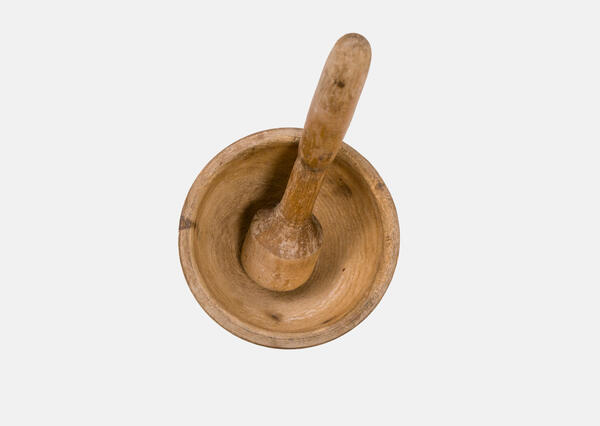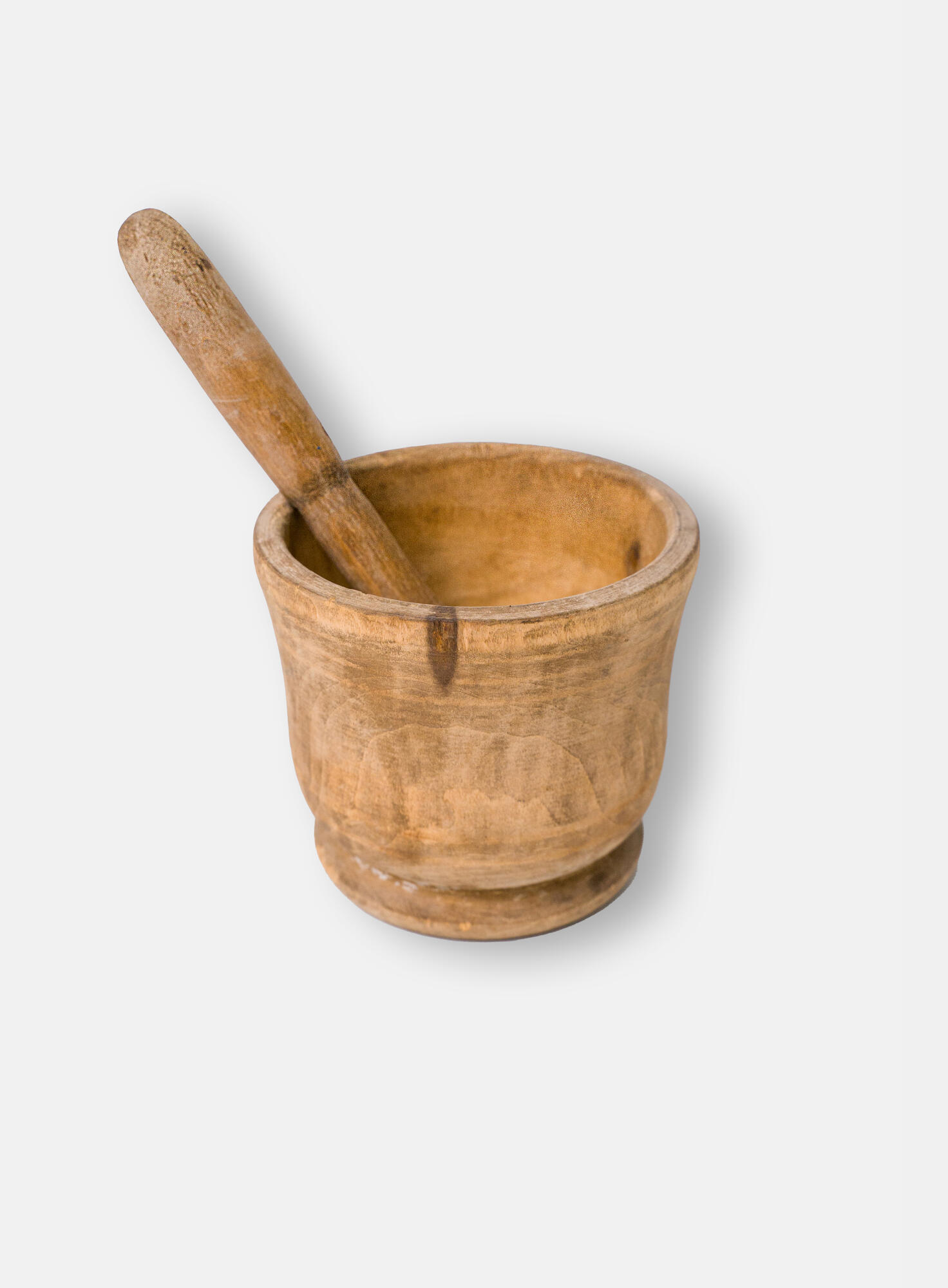


A stone mortar with a pestle is one of the oldest tools, widely used since the Stone Age, dating back to at least 8,000 years BC. A mortar is used for grinding grain and other things. The museum presents a wooden mortar of the late 19th — early 20th century.
The word “stupa” (mortar) comes from the word “to step” as in moving one foot from place to place. “Pest” (pestle) was also known by the names courant, pekhtal, pekhtilo, boyok, kiy, kiek, tolkach. Mortars were made of hardwood, metal, ceramics or hard stone, such as granite. The working surfaces were never polished or covered with glaze or varnish (except for agate mortars used in laboratories) to avoid slipping of the pestle and the processed contents.
The mortar is never filled with more than 5% of its total volume to ensure easy pounding. There are two ways of processing contents: pounding and rubbing. When pounding, the product is subjected to repeated pressure or impact. Rubbing is a combination of constant pressure of the pestle with circular movements on the mortar. For example, to finely grind black pepper, it is first pounded and then rubbed.
Every housekeeper had several sets of mortars and pestles, and each of them had their use cases. For grains, the mortar had to be from 60 to 70 centimeters deep, for potatoes — 70 centimeters, salt — 25 centimeters, for hemp and flaxseed — 37 centimeters. There was also a mortar for tobacco which was only used by men, while the rest were considered exclusively women’s household items.
The process of preparing grain for cooking was very laborious. First, the grains were peeled from the husk using a mortar and pestle. When millet or buckwheat dropped the husk by about 95%, the grains were poured into a bucket and taken outside. A cloth was spread on the ground, and grain was separated from the husk by the wind. Peeled grains were collected in dishes and rinsed with water. Only when all this was done, the grains were ready to be cooked. The amount of grains crushed was equal to how much porridge could be made in two weeks since crushed cereals stored for prolonged periods of time tended to go rancid.