The Adyghe (Circassians) were distinguished by the neatness of their clothes and the cleanliness of their homes. A trait mentioned in travelers’ memoirs.
In his “Notes on a trip to the southern governorates of the Russian Empire in 1793 and 1794”, German and Russian encyclopedic scientist, naturalist and traveler Peter Simon Pallas, recalled:


Iron with a stand
Creation period
the mid-20th century
Place of сreation
the USSR
Dimensions
20x9,5x8 cm
Technique
stamping
Collection
Exhibition
0
Open in app#2
#3
Extreme cleanliness is maintained in the settlements and dwellings of Circassians [Adyghe]. This virtue is also observed in their food and clothing.
#4
Ethnographer, folklorist and art critic, Khan-Girey in “Notes on Circassia” said:
#5
Note that it is frowned upon among Circassians to dress too lavishly, which is why they try to flaunt their taste rather than luxury; cleanliness and neatness is preferred over pomp.
#6
The
English poet Edmond Spencer in his “Journey to Circassia” remarked:
#8
Cleanliness is considered a virtue among Circassians.
#9
The Adyghe Museum of Local Lore presents an iron with a stand, which was given to the museum in 1997 by Gish Nafset from Pchegatlukai village in the Teuchezhsky district of the Republic of Adygea. There are several similar irons in the museum’s collection, however, this is the only one with a stand.
An old charcoal iron is a rather unusual device. It has a wooden handle for convenience. Its shape is just like one seen in modern irons — narrowed on one side. It is made of metal. It uses coals to produce heat. To iron all the laundry, coals needed to be kept burning. It is no surprise that regulating the temperature of such an iron is very difficult. Such irons were not very convenient and safe: sparks and small embers flew out of the iron every now and then, leaving scorch marks and holes on clothes. Such irons were also used as mousetraps.
Large irons made of cast-iron could weigh up to 10 kilograms and were intended for ironing coarse fabrics. To iron fine fabrics and small details of clothing — cuffs, collars, lace — small irons, the size of only half a palm, were used. At first, only wealthy families could afford irons, and housewives often put an iron on display along with a samovar before the guests arrived. #10
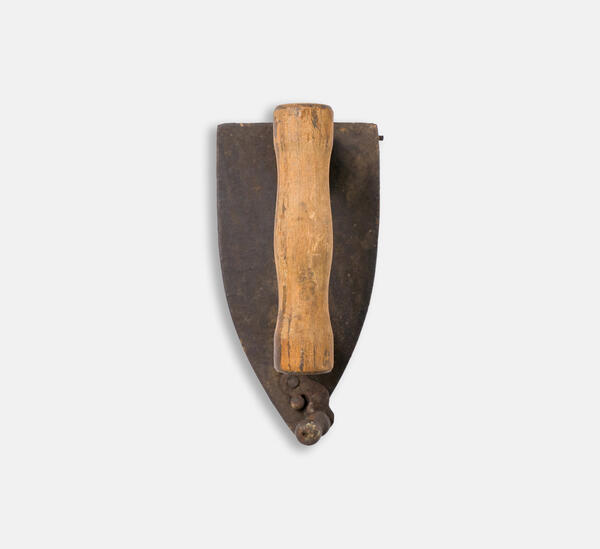
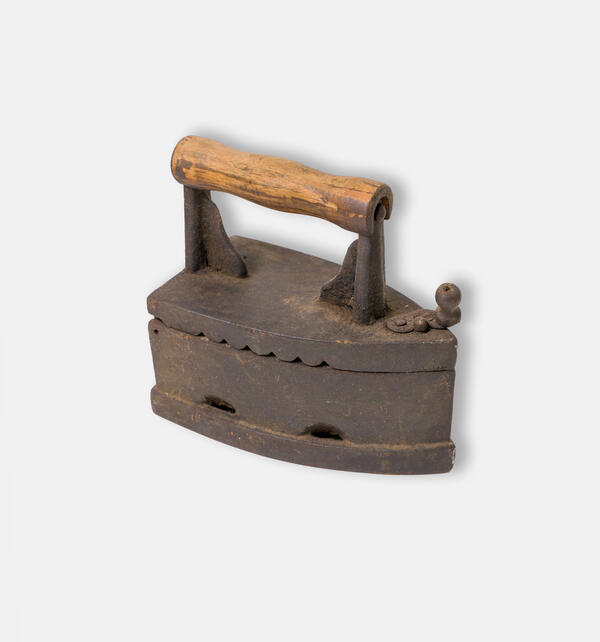
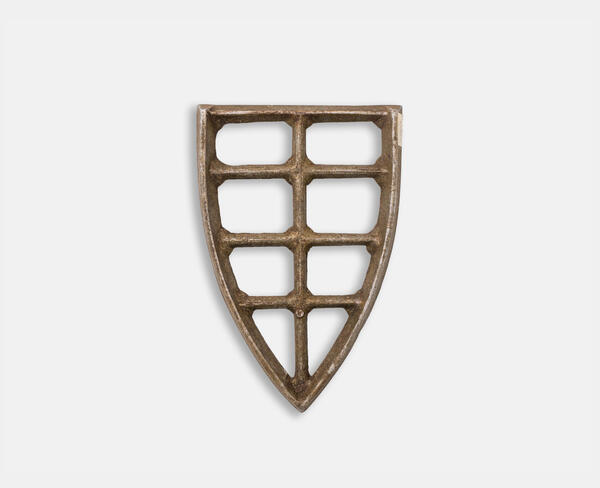
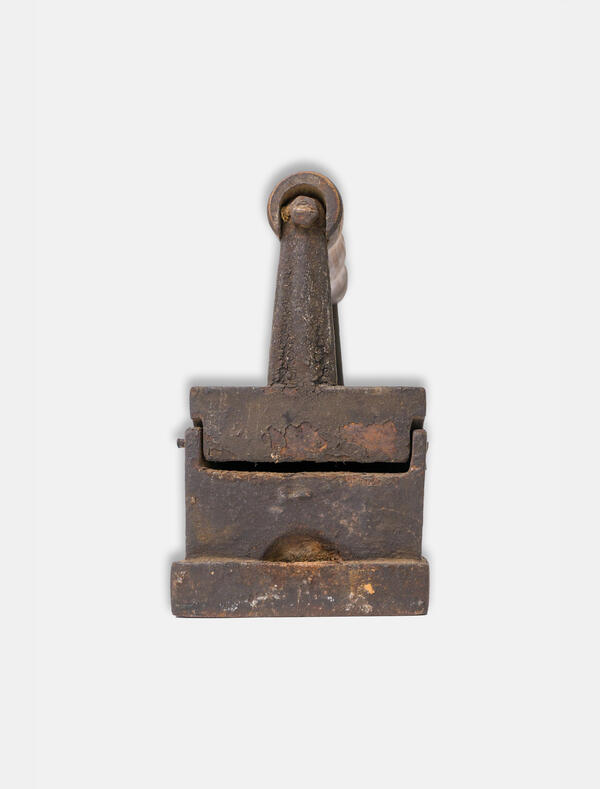
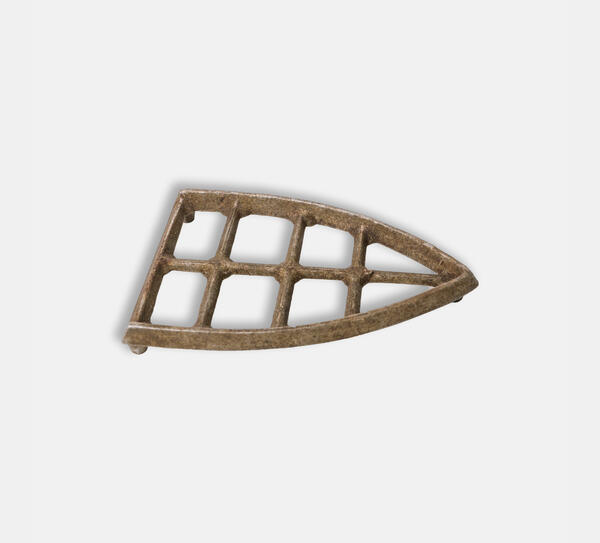
Iron with a stand
#7
Ministry of Culture of the Russian Federation
read morehide
00:00
00:00
1x
Iron with a stand
Creation period
the mid-20th century
Place of сreation
the USSR
Dimensions
20x9,5x8 cm
Technique
stamping
Collection
Exhibition
0
 Point your smartphone camera to open in the app
Open in app
Share

