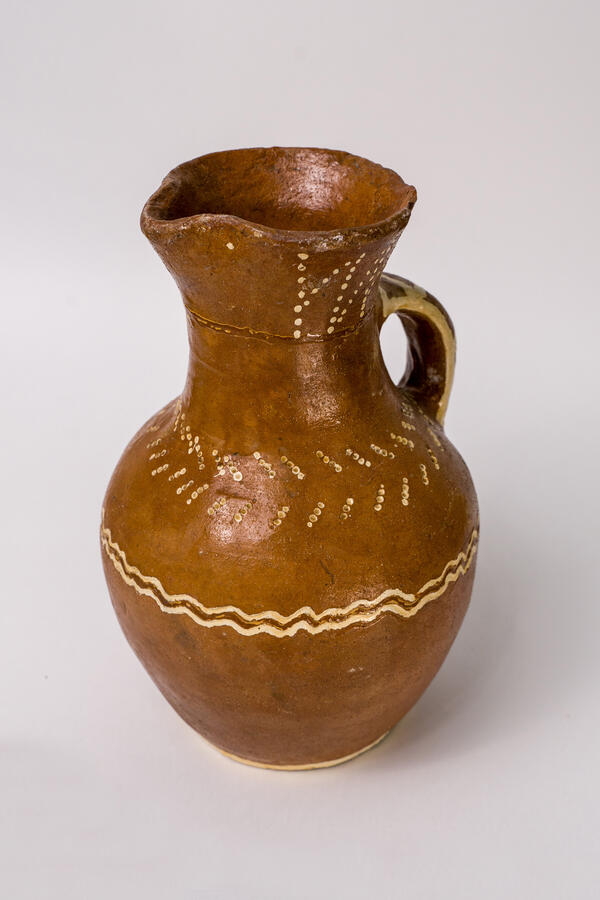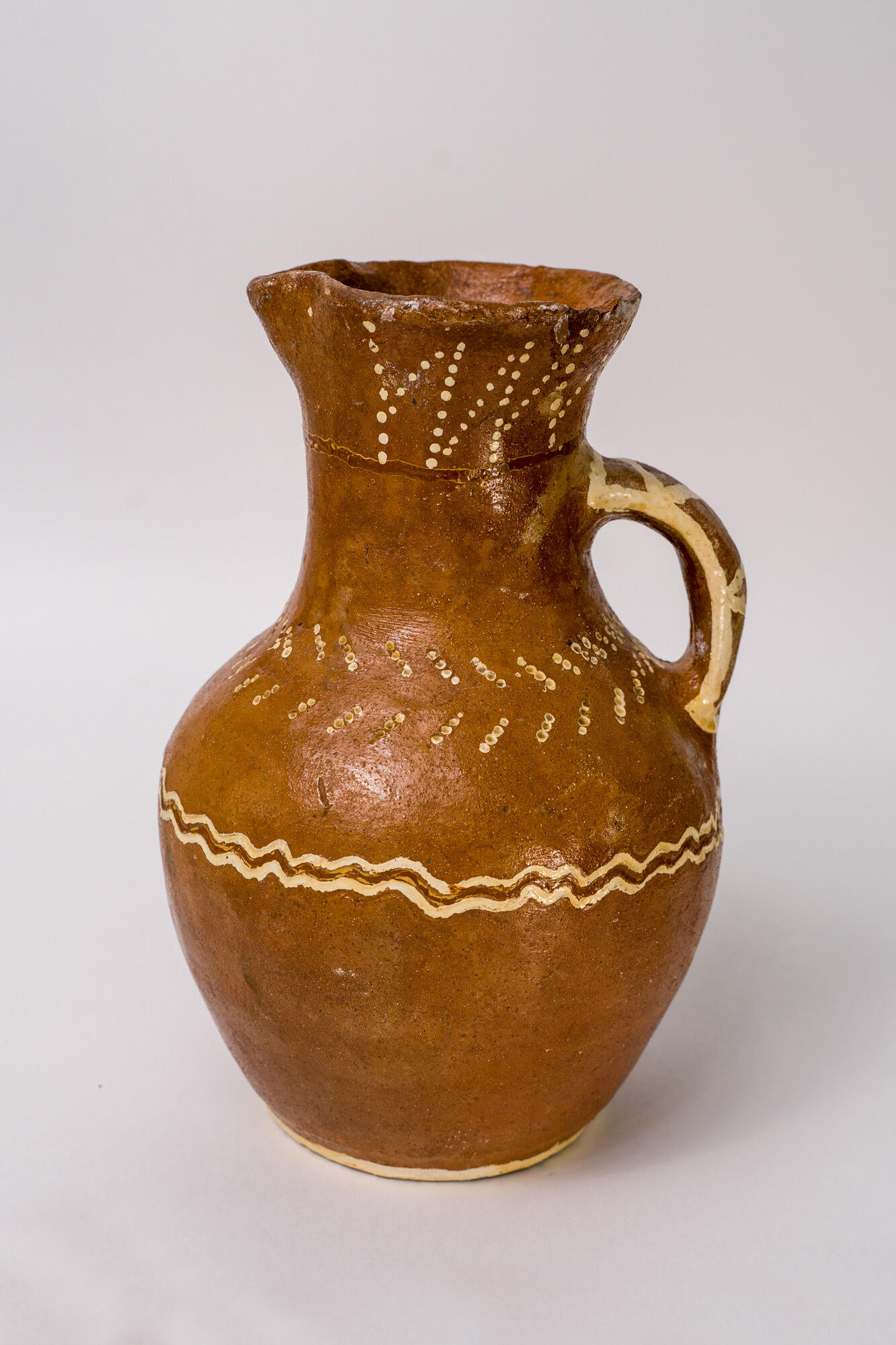


The ceramic jug, presented in the exposition of the Adygeysk Museum of Local Lore belonged to Bayzet Ilyasovich Ujuh from the Gabukai village in the Teuchezhsky district of the Republic of Adygea. According to him, he got the jug from his parents.
The Adyghe people have been making pottery since ancient times. According to the scientist, archaeologist and local historian Nikita Vladimirovich Anfimov, in the 5th–4th centuries BC, the ancestors of the Adyghe made pottery at home — it was molded by hand or on a flat, non-rotating stand.
From the first half of the 4th century BC, the potter’s wheel became widely used by the ancestors of the Adyghe. Communal potters made carefully sculpted pots from gray clay for their communities and their neighbors.
From the first half of the 4th century BC, the potter’s wheel became widely used by the ancestors of the Adyghe. Communal potters made carefully sculpted pots from gray clay for their communities and their neighbors.
Pottery was widely used in everyday life. Grain and liquids were stored in large vessels — pithoses. They were also widely used in wine production. Pots served as kitchen utensils. Bowls were used for serving food, and cups, bowls and clay mugs were used for drinks. Water and milk were stored in jugs. The ancestors of the Adyghe used wooden and metal vessels.
In the 1st century AD, vessels with zoomorphic handles appeared. They depicted mostly rams or wild boars and sometimes horses, predators or birds. Occasionally the handles of the vessels were decorated with individual parts of animals: heads, horns and eyes.
The Adyghe preserved their rich tradition of making ceramic products and further developed upon it in the following centuries. In the 18th — first half of the 19th century, pottery production was widespread among the Adyghe. They made jugs of various shapes and sizes, and also cups, dishes and plates. They were covered with beautiful ornaments. The Adyghe also made glazed jugs and large ones for wine.
With the development of commodity-money relations, ceramic production among the Adyghe has greatly decreased. Artisanal pottery was gradually replaced by factory-made products. Ceramic production in Adygea ceased to exist in 1917.
In the 1st century AD, vessels with zoomorphic handles appeared. They depicted mostly rams or wild boars and sometimes horses, predators or birds. Occasionally the handles of the vessels were decorated with individual parts of animals: heads, horns and eyes.
The Adyghe preserved their rich tradition of making ceramic products and further developed upon it in the following centuries. In the 18th — first half of the 19th century, pottery production was widespread among the Adyghe. They made jugs of various shapes and sizes, and also cups, dishes and plates. They were covered with beautiful ornaments. The Adyghe also made glazed jugs and large ones for wine.
With the development of commodity-money relations, ceramic production among the Adyghe has greatly decreased. Artisanal pottery was gradually replaced by factory-made products. Ceramic production in Adygea ceased to exist in 1917.