



In April 1890, Chekhov travelled to Sakhalin. At that time he was 30. Such trip was very difficult even for a healthy person, and the writer’s pulmonary tuberculosis was already developing.
The railway track was laid only until Tyumen, and another 4000 versts (Russian units of distance) of the journey he did in a tarantas (horse-driven cart). The weather was wet and cold. “Rain and wind covered my face with fish scale … my valenki (felt boots) turned into a studen (jelly)…”, — he wrote in his letters during the trip.
While travelling through Siberia to Sakhalin, Chekhov wrote his sketches “From Siberia”. The artist Ilya Repin admired them thinking that they are no worse than Chekhov’s stories. ‘At Yenissey the life began with a groan and will end with display of the courage you didn’t even dream about. < … > I was standing and thinking of the full, smart and brave life that will illuminate these banks sooner or later! ’
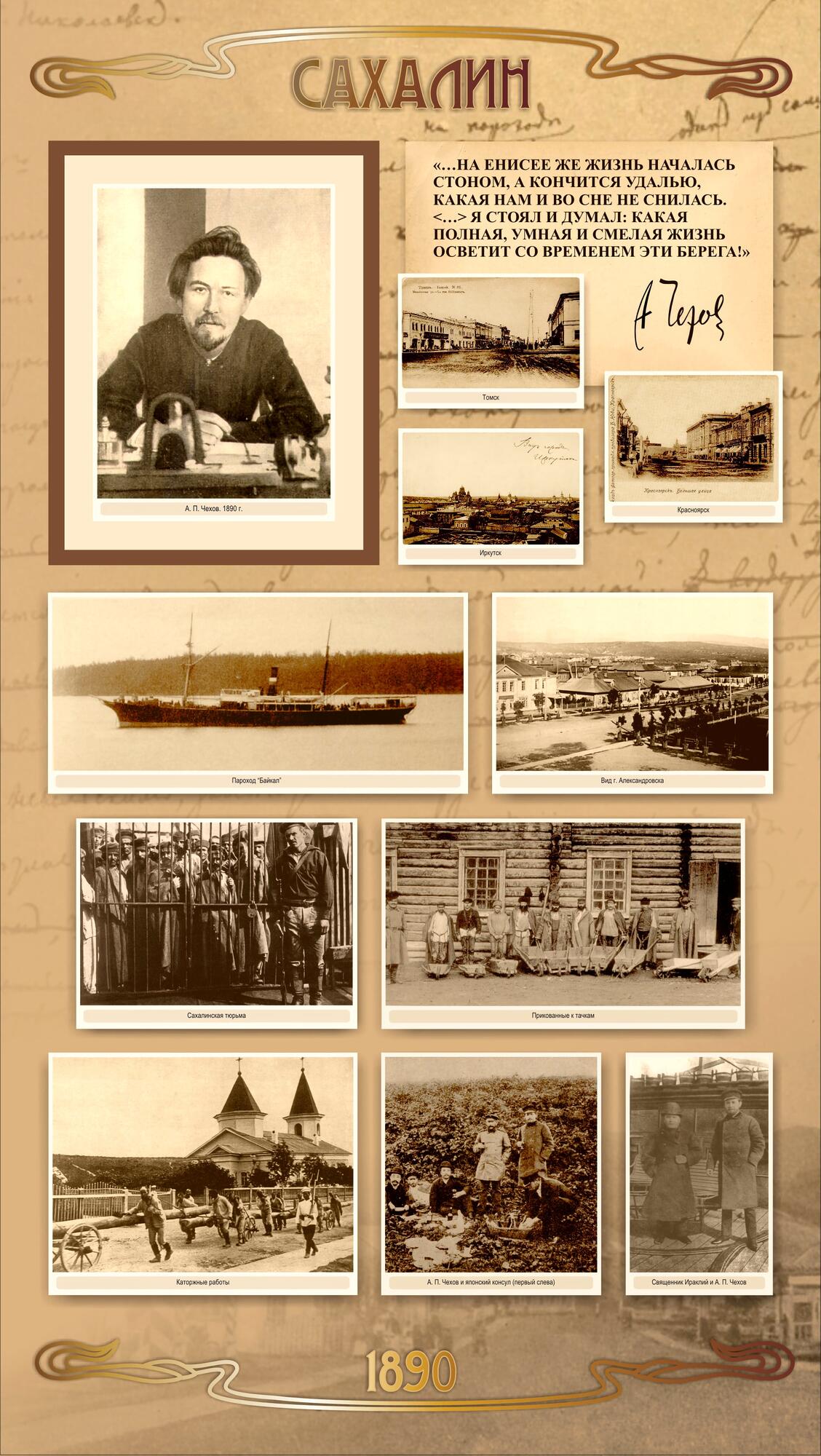
The picture in the top right corner of the display panel shows Chekhov in 1890. Next to it there are cards with the views of Tomsk, IrKutsk and Krasnoyarsk – the cities Chekhov passed through on his way to Sakhalin. Chekhov got to Sakhalin by “Baikal” motor vessel, and on arrival, he lived at Alexandrovsky post (now the city of Alexandrovsk-SakhalInsky). The house where the writer stayed is now a museum that opened in 1990. All in all, Chekhov spent on Sakhalin 3 months and 2 days.
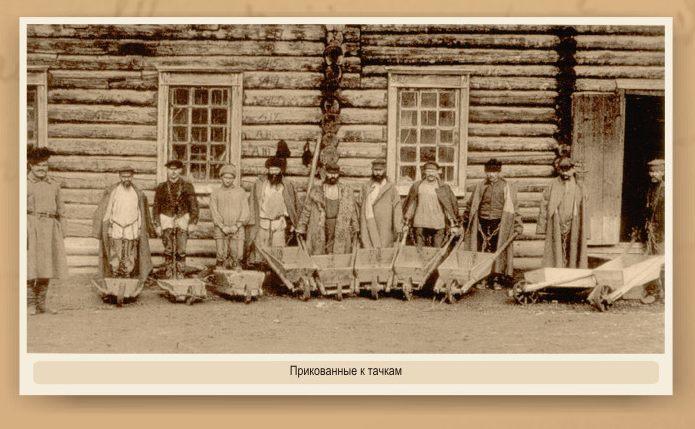
“A good deal has already been done, , enough for three thesis papers. I got up at 5 o”clock every day, went to bed late, — he wrote. — I had enough patience to count all the population of Sakhalin. I travelled through all settlements, entered into all houses and talked to everybody…”. It is true that Chekhov took the census of the entire Sakhalin population – 10 000 people. It was the first partial census in Russia. On Sakhalin, Chekhov claimed to have seen “everything but execution”. “I was in hell on Sakhalin”, — he remembered. The next pictures on the stand were taken at the request of Anton Pavlovich and show the tough life of the convicts: Sakhalin prison, convicts chained to wheel-barrows; hard labor.
On Sakhalin, Chekhov met the Japanese consul. In the center of the bottom row there is a group picture: Chekhov and the Japanese consul (first on the left) at a picnic. Near it there is a picture of priest Irakly whom Chekhov met on Sakhalin and with whom he went back to Odessa by “Peterburg” motor ship. Upon coming back home, Chekhov tried to improve the life of Sakhalin settlers even very little, for instance, he sent them books and textbooks for the schoolchildren. In 1893 he finished his work at “Sakhalin Island”. Its publication had a significant literary and public response. One of the reviews read: « If Mr.Chekhov only wrote that book, his name would have anyway left a mark in the history of Russian literature …’.
The railway track was laid only until Tyumen, and another 4000 versts (Russian units of distance) of the journey he did in a tarantas (horse-driven cart). The weather was wet and cold. “Rain and wind covered my face with fish scale … my valenki (felt boots) turned into a studen (jelly)…”, — he wrote in his letters during the trip.
While travelling through Siberia to Sakhalin, Chekhov wrote his sketches “From Siberia”. The artist Ilya Repin admired them thinking that they are no worse than Chekhov’s stories. ‘At Yenissey the life began with a groan and will end with display of the courage you didn’t even dream about. < … > I was standing and thinking of the full, smart and brave life that will illuminate these banks sooner or later! ’
The picture in the top right corner of the display panel shows Chekhov in 1890. Next to it there are cards with the views of Tomsk, IrKutsk and Krasnoyarsk – the cities Chekhov passed through on his way to Sakhalin. Chekhov got to Sakhalin by “Baikal” motor vessel, and on arrival, he lived at Alexandrovsky post (now the city of Alexandrovsk-SakhalInsky). The house where the writer stayed is now a museum that opened in 1990. All in all, Chekhov spent on Sakhalin 3 months and 2 days.
“A good deal has already been done, , enough for three thesis papers. I got up at 5 o”clock every day, went to bed late, — he wrote. — I had enough patience to count all the population of Sakhalin. I travelled through all settlements, entered into all houses and talked to everybody…”. It is true that Chekhov took the census of the entire Sakhalin population – 10 000 people. It was the first partial census in Russia. On Sakhalin, Chekhov claimed to have seen “everything but execution”. “I was in hell on Sakhalin”, — he remembered. The next pictures on the stand were taken at the request of Anton Pavlovich and show the tough life of the convicts: Sakhalin prison, convicts chained to wheel-barrows; hard labor.
On Sakhalin, Chekhov met the Japanese consul. In the center of the bottom row there is a group picture: Chekhov and the Japanese consul (first on the left) at a picnic. Near it there is a picture of priest Irakly whom Chekhov met on Sakhalin and with whom he went back to Odessa by “Peterburg” motor ship. Upon coming back home, Chekhov tried to improve the life of Sakhalin settlers even very little, for instance, he sent them books and textbooks for the schoolchildren. In 1893 he finished his work at “Sakhalin Island”. Its publication had a significant literary and public response. One of the reviews read: « If Mr.Chekhov only wrote that book, his name would have anyway left a mark in the history of Russian literature …’.


