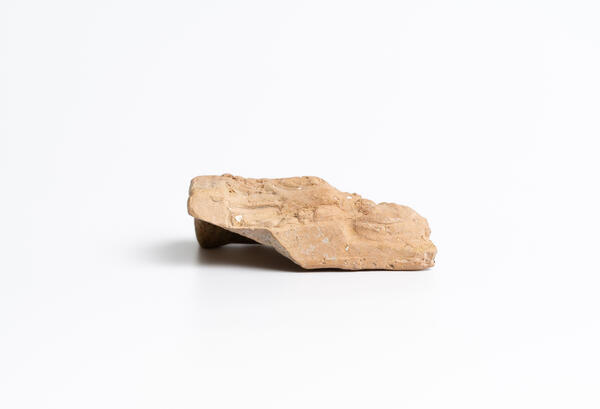
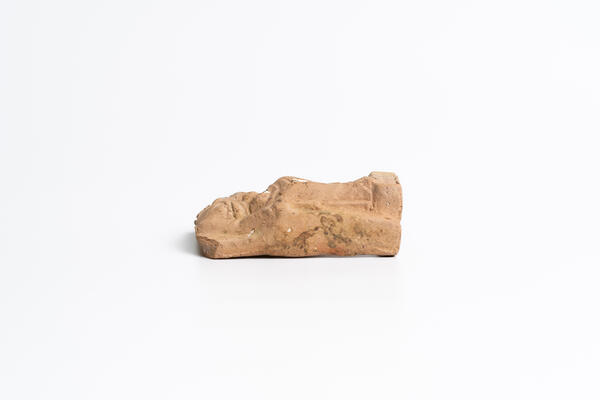
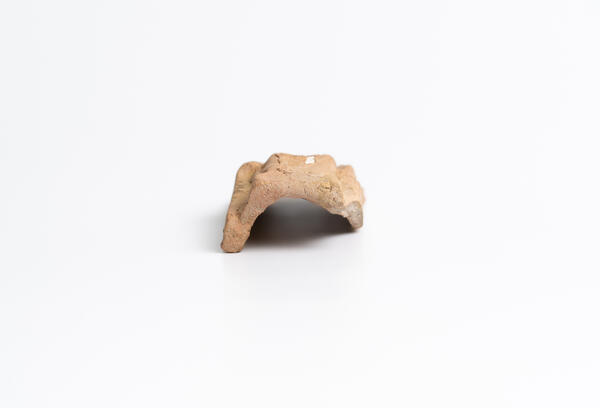
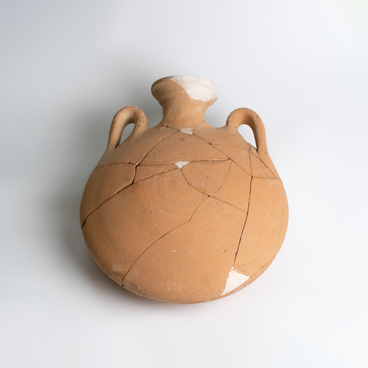
The terracotta figurine of the seated goddess Cybele was discovered in 2004 at the Belyaus settlement. The head of the figurine is missing. The clay used to create the statue is yellow-pink in color, and the surface of the fracture in the middle is gray. Archaeologists have dated the find to the 3rd century BCE.
When the ancient cities of the Northern Black Sea region were founded, Greek colonists brought with them various artistic crafts, including coroplastic art. It is a fine art that is primarily associated with terracotta figurines. The word “terracotta” means “baked earth (or clay)” in Italian, and “coroplastic” translates from ancient Greek to mean “the manufacture of dolls”.
Terracotta products first appeared in ancient times. However, the analysis of clay figurines does not always allow researchers to identify the center of production, as there were deposits of different grades of clay near almost every city, which differed in quality, color, and impurities. Therefore, when determining the origin of terracotta artifacts, it is necessary to consider not only the composition of the clay but also the peculiarities of the production technology, style, painting, and selection of subjects.
In the Archaic period, Greek colonists in Asia Minor adopted the cult of Cybele, the Phrygian Mother of the Gods. She was considered the goddess of life, death, and fertility. Cybele was surrounded by the Corybantes, Curettes, wild panthers, and lions.
The syncretic cult of this goddess, which incorporated the characteristics of Rhea, Demeter, Artemis, and Isis, spread in Greece from the 3rd century BCE. In Rome, her worship was established as early as 204 BCE. In Chersonesus, images of Cybele were not represented in coins or lapidary epigraphy, suggesting that she was not venerated by the civil community. However, the earliest monuments associated with the worship of Cybele in Chersonesus date back to the late 5th century BCE.
Ancient graffiti with dedications to Cybele in Chersonesus and other sites in Northwestern Taurica, likely associated with domestic shrines, date from the 4th–3rd centuries BCE. Additionally, a mold for creating terracotta figurines of seated Cybele was discovered in a Chersonese ceramic workshop of the Hellenistic period. A terracotta statue of Cybele with a lion in her lap dates from the same period.