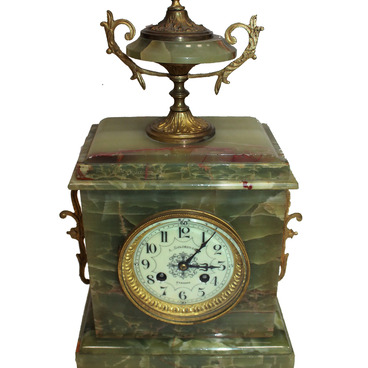
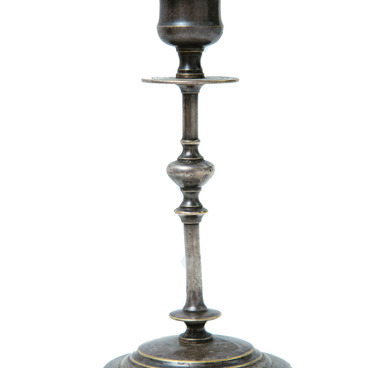
Traditionally, interiors of merchant estates were richly decorated. Halls, drawing rooms, dining rooms, and boudoirs were adorned with expensive porcelain tableware, vases made of malachite or other valuable materials, statuettes, and other cute trinkets. Walls were covered with paintings and photographs of family members in ornate frames. Expensive clocks, barometers, and candlesticks were displayed on mantelpieces.


"Girl with a Child," statuette
Creation period
Second half of the 19th century
Place of сreation
Western Europe (?)
Dimensions
19,8x16,5x9,5 cm
19.8 х 16.5 х 9.5 cm
19.8 х 16.5 х 9.5 cm
Technique
Casting
Collection
Exhibition
0
Open in app#1
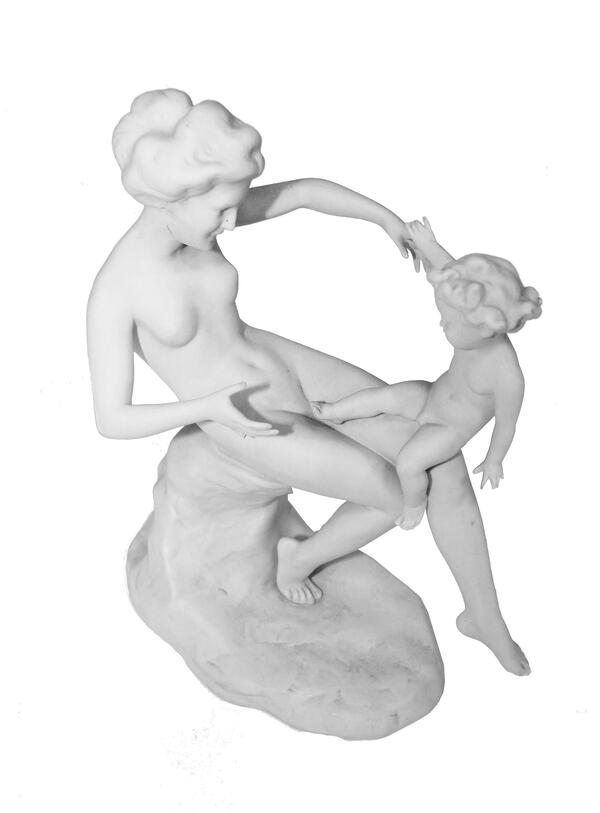
‘Girl with a Child’ Statuette
#3
#4
Numerous statuettes made of ceramics or cast from metal could usually be found on wall shelves. These included figurines of dancers and fairy tale characters, craftsmen and animals, as well as complex compositions consisting of several figures.
#5
Back then, the technology for manufacturing such figurines was quite complicated. Porcelain had to be mixed from a large number of raw materials, such as kaolin (white clay), feldspar, quartz, tubular bones, clay, alumina; in total, it could be made of up to forty different ingredients. Once everything was blended together, water was added to the mix, and the resulting liquid substance was poured into plaster molds, which could consist of two or more parts depending on the figurine’s complexity. After the mold was opened, the product was sent for finalization, where it was refined, dried, painted, glazed, and fired, sometimes several times.
#6
Figurines made of biscuit porcelain were popular at the turn of the 20th century. They were produced in Russia, as well as brought from abroad. One of the statuettes created with the use of this technique is the “Girl with a Child” from the collection of the Tomsk History Museum. Biscuit porcelain was fired twice, hence the name: the first part of the word – “bis” – translates to “twice”. These products were very slowly heated to a temperature of 800 to 1,000 degrees Celsius, which meant that it also took a long time for moisture to evaporate from the workpiece. Porcelain created with the use of this technique was not glazed before firing. The resulting product had a matte white appearance and a porous texture. Due to this texture, biscuit porcelain easily absorbed water, which is why it was never used for tableware. At the same time, this material has always been in great demand by sculptors.
#7
Tomsk History Museum
read morehide
00:00
00:00
1x
"Girl with a Child," statuette
Creation period
Second half of the 19th century
Place of сreation
Western Europe (?)
Dimensions
19,8x16,5x9,5 cm
19.8 х 16.5 х 9.5 cm
19.8 х 16.5 х 9.5 cm
Technique
Casting
Collection
Exhibition
0
 Point your smartphone camera to open in the app
Open in app
Share