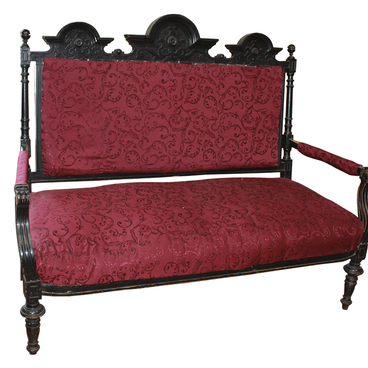
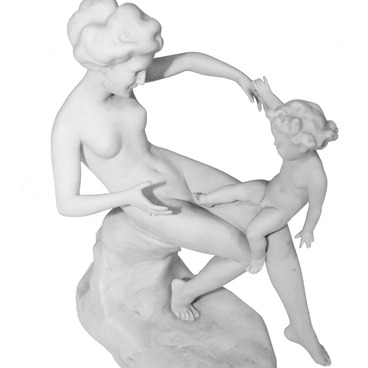
The oldest mantel clock to survive to these days dates back to the 16th century and was made in Europe. However, the real heyday of mantel clocks was between the late 17th and the early 18th centuries. These clocks were especially liked by King of France Louis XIV. During his reign, clocks were regarded as works of art. In those days, the appearance of these objects, which adorned the most richly decorated interiors, was considered more important than their functionality. The creation of a single masterpiece of this kind involved the work of a sculptor, a clockmaker, a stonecutter, a caster, and even a potter. And only affluent people could afford to make such a purchase.


Mantel clock
Creation period
Second half of the 19th century
Place of сreation
Krakow
Dimensions
42x20,5x12 cm
42 х 20.5 х 12 cm
42 х 20.5 х 12 cm
Technique
Industrial production
Collection
Exhibition
7
Open in app#1
Mantel Clock
#3
#4
The popularity of mantel clocks peaked in the 19th century. They were found in every wealthy household. Homeowners sought to create an atmosphere of sophistication and coziness in their drawing rooms. This is where they displayed their most valuable and beautiful possessions: the walls were decorated with ceremonial portraits of owners and landscape paintings, the room’s corners were adorned with rare floor vases, and drawing room furniture was upholstered with expensive fabrics and ornamented with carvings or enamel medallions. Mantel clocks were also a popular item in such lavishly decorated interiors. They were embellished with semi-precious stones, such as onyx, jasper, and marble, among others. These minerals not only gave the clocks an impressive character but also complemented the overall composition, as fireplaces were often decorated with marble as well. As bronze casting and clockmaking techniques evolved, mantel clocks became increasingly sophisticated and perfected. During that time, clockmakers and clockmaking companies started the tradition of putting their names and logos on the dial. Meanwhile, the backside of the clock case began to feature the print of the bronze casting company.
#5
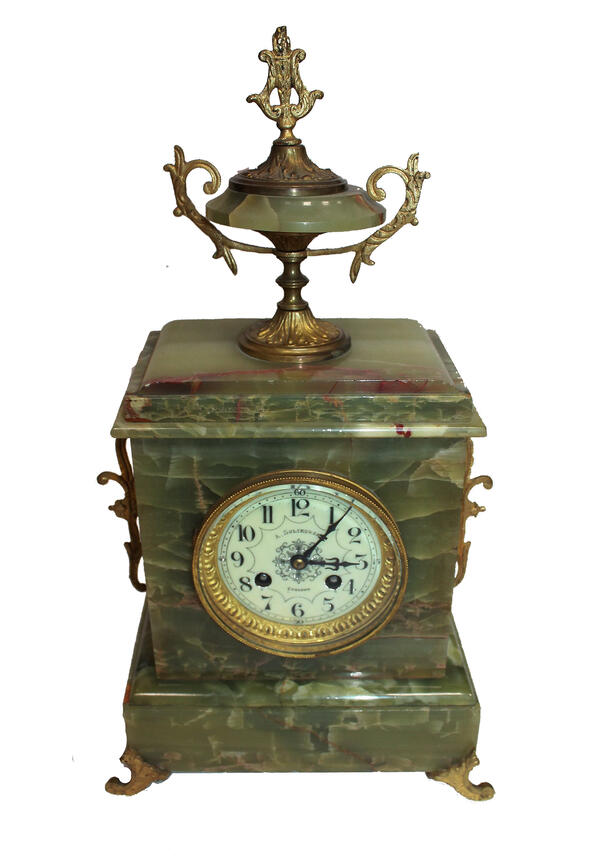
The clock from the merchant’s drawing room of the Tomsk History Museum was likely made no earlier than the mid-19th century. Its enamel face has an inscription indicating the clock’s manufacturer and the city where it was created, Krakow. At different points of its history, the factory, which is presently located on the territory of Poland, produced different types of timepieces: for example, pocket watches.
#6
The clock from our collection is decorated with onyx, a quartz mineral with multiple layers that are separated by red veins created by iron impurities. In the 19th century, onyx was also used for other interior items, such as candlesticks, candelabra, or inkstands.
#7
Tomsk History Museum
read morehide
00:00
00:00
1x
Mantel clock
Creation period
Second half of the 19th century
Place of сreation
Krakow
Dimensions
42x20,5x12 cm
42 х 20.5 х 12 cm
42 х 20.5 х 12 cm
Technique
Industrial production
Collection
Exhibition
7
 Point your smartphone camera to open in the app
Open in app
Share