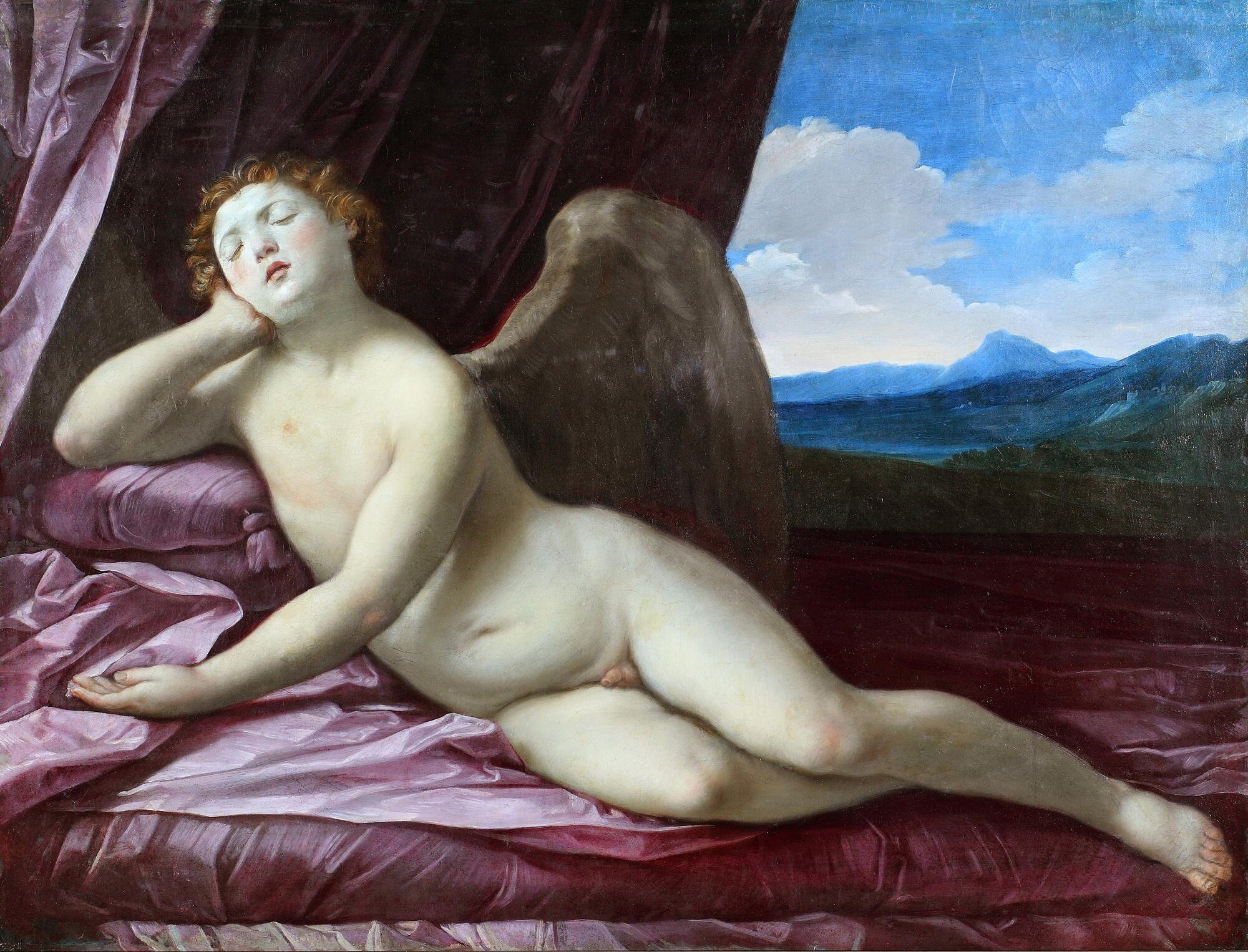


The painting “Sleeping Cupid” from the collection of the Irbit State Museum of Fine Arts is presented following the successful completion of a lengthy and complex restoration. As a result of the rediscovery of the original artwork and extensive technological, art-historical, and archival research, a significant connection has been established between this canvas and Guido Reni — one of the most brilliant and influential masters of Italian painting, not only of the 17th century but of all Western art history.
A key role in the attribution of the “Sleeping Cupid” was played by Lyubov Yurievna Savinskaya, a leading researcher at the Pushkin State Museum of Fine Arts. She established that the painting originated from the renowned collection of the Princes Yusupov. According to documents she uncovered, the work — listed as “Sleeping Cupid against a Purple Veil” — was acquired by Prince Nikolay Borisovich Yusupov (1750–1831) at the end of the 18th century, likely during one of his travels to Italy or France. By 1801, the painting was already recorded in his collection. Notably, Yusupov acquired the work specifically as a painting by Guido Reni.
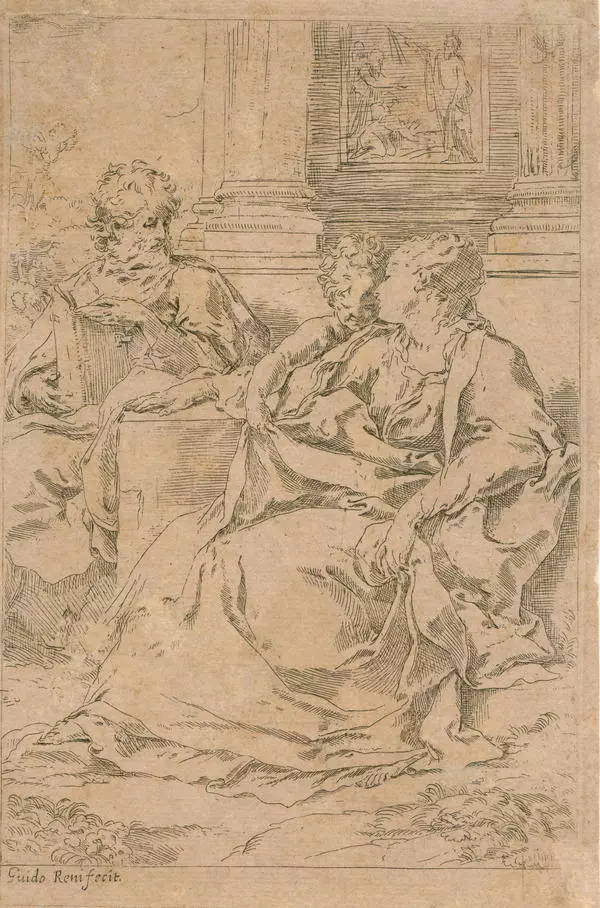
Guido Reni (1575–1642) was a painter, draftsman, and printmaker, born near Bologna into a family of musicians. At the age of nine, he began his apprenticeship under the Flemish artist Denis Calvaert, from whom he learned the practice of drawing from nature and developed an early appreciation for the refined style of Parmigianino. Around 1595, he joined the Accademia degli Incamminati (Academy of the Journeying) founded by the Carracci family, where Ludovico Carracci became his principal mentor.
Around 1600, Reni traveled to Rome with fellow artist Francesco Albani, where, under the guidance of Annibale Carracci, he contributed to the fresco cycle in the Palazzo Farnese. In Rome, he encountered the revolutionary works of Caravaggio, whose dramatic chiaroscuro deeply influenced Reni’s early religious compositions — most notably “The Crucifixion of St. Peter” (1603, Vatican Pinacoteca). Yet he was even more profoundly inspired by the harmonious idealism of Raphael, whose balanced compositions resonated with Reni’s own artistic sensibilities.
During his Roman period, Reni developed the core principles of his restrained, idealized style — a hallmark of the classical trend within early Baroque painting. This is evident in his masterpieces such as the frescoes in the church of San Gregorio al Celio “The Martyrdom of St. Andrew” (1609), in the Annunziata Chapel of the Papal Palace on the Quirinal (1612), and especially the celebrated ceiling fresco “Aurora” (1614) in the Palazzo Rospigliosi. Among his finest works are those distinguished by intimate emotion and natural grace, such as “Education of the Virgin” (1610, Hermitage Museum, St. Petersburg), and “The Lamentation over the Dead Christ” (1613–1614, Pinacoteca Nazionale, Bologna).