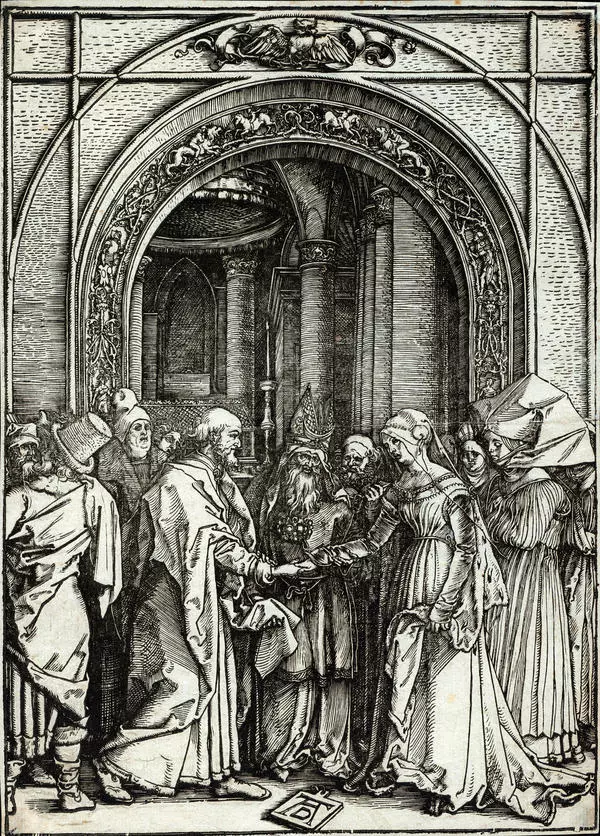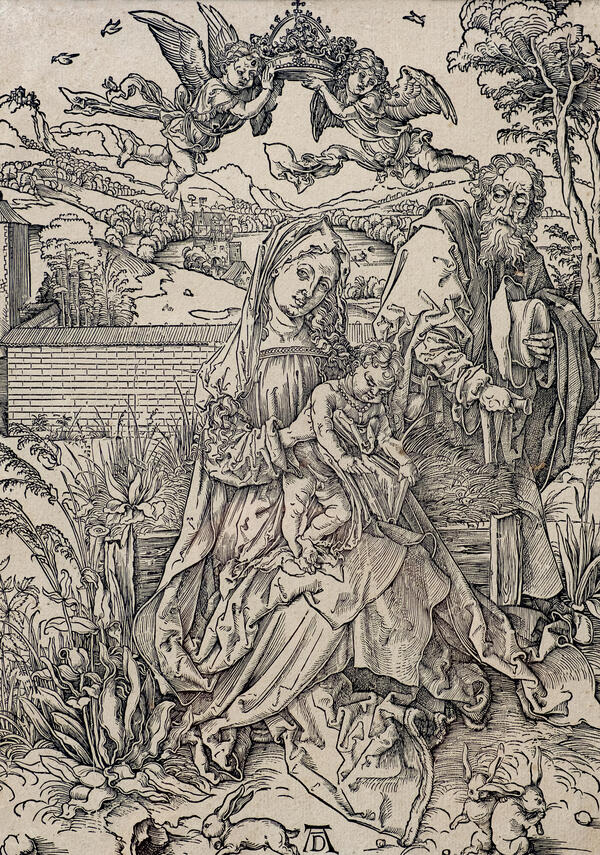


Albrecht Dürer (1471–1528) was an outstanding master of the German Renaissance. Beginning his training in the workshop of his father, a goldsmith, he emerged as one of the most versatile figures of his time: a brilliant draftsman, pioneering engraver, and profound philosopher of art. Dürer played a pivotal role in transforming German art, by bridging the medieval and modern worlds.
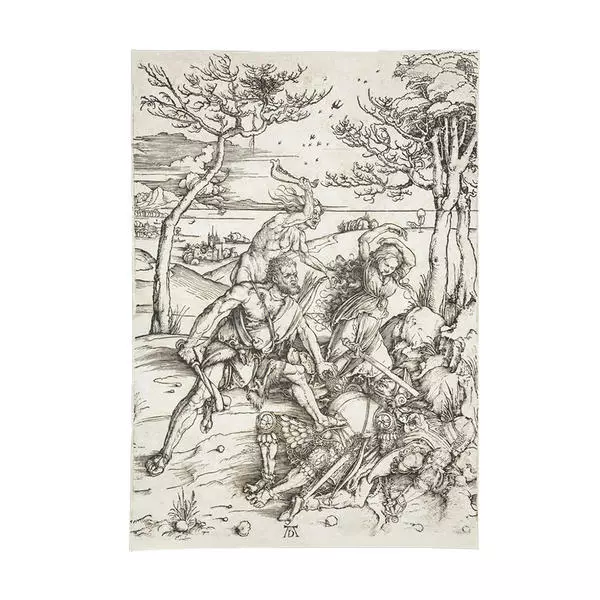
Like many artists of the Northern Renaissance, Dürer was deeply drawn to biblical subjects. The story of Samson, with its dramatic intensity, themes of divine gift, personal destiny, and liberation, resonated powerfully with his humanist ideals. In Dürer’s engravings, Old Testament figures transcend literal narrative, becoming eternal symbols of moral struggle and human fate.
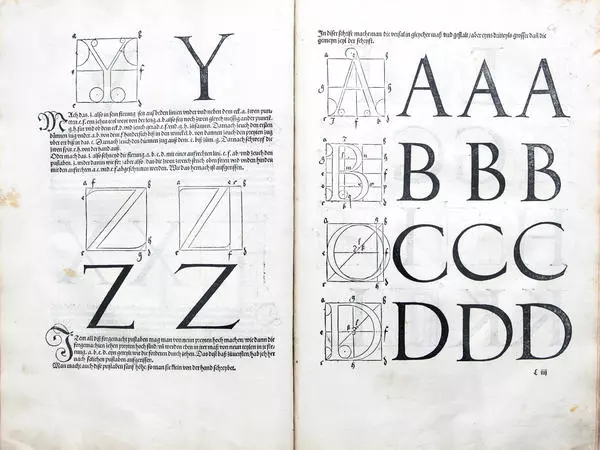
For Dürer the humanist, Samson’s story could serve as an allegory of the creative vocation. Just as Samson’s strength resided in his uncut hair — the outward sign of his sacred vow — so too did the artist’s power lie in technical mastery, honed through years of disciplined, ascetic labor. Dürer devoted his life not only to artistic practice but also to the theory of art, leaving behind foundational treatises. Possessing rare mathematical insight, in “The Four Books of Measurement” (1525), he laid out the principles of geometry and perspective, explored optics and astronomy, and developed a systematic theory of ornament.
The story of Samson is recounted in the Book of Judges (chapters 13–16). He was a hero from the tribe of Dan, born during a time when his people suffered under the oppression of the Philistines. Samson devoted himself to fighting the oppressors, winning many victories over them.
Dedicated from birth as a Nazirite, Samson observed a sacred vow: he abstained from wine and grape products, avoided contact with the dead, and never cut his hair. His seven long braids were the source of his superhuman strength. As the angel foretold: “He shall begin to deliver Israel out of the hand of the Philistines” (Judges 13:5). By that time, the Philistines had dominated the Israelites for forty years.
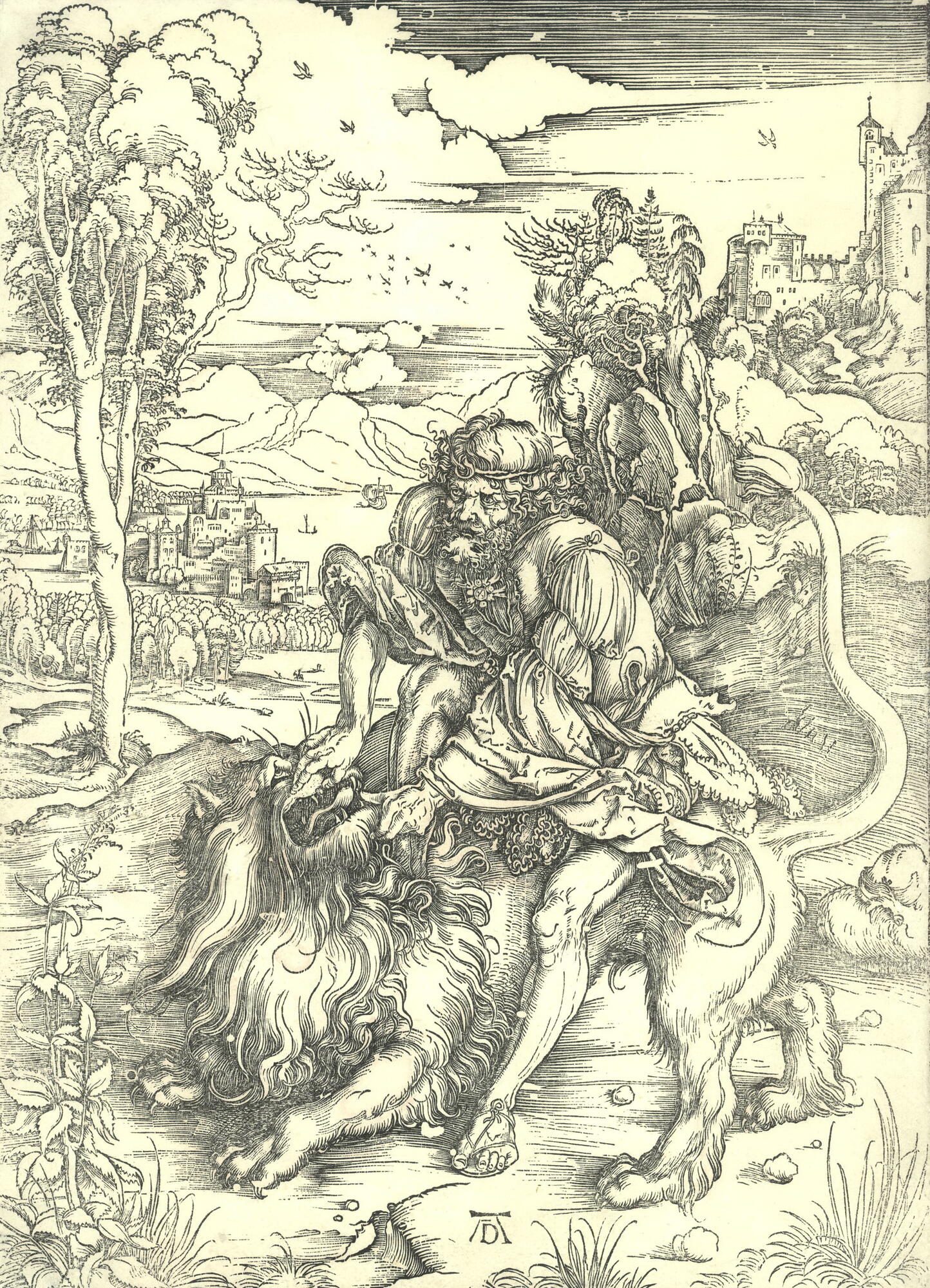
From youth, Samson displayed extraordinary power. Samson, contrary to his parents’ wishes and the Mosaic law, married a Philistine woman. Once, on his way to the city, he encountered a young lion and tore it apart “as he might have torn a young goat” (Judges 14:6). Later, returning along the same path, he found a swarm of bees and honey in the carcass. He ate some and this miracle inspired a riddle: “Out of the eater, something to eat; out of the strong, something sweet” (Judges 14:14).
During his seven-day wedding feast, Samson challenged the Philistine guests to solve the riddle, wagering thirty linen garments. When they failed, they pressured his wife to find out the answer. In retaliation, Samson killed thirty Philistines in Ashkelon to claim the promised clothing.