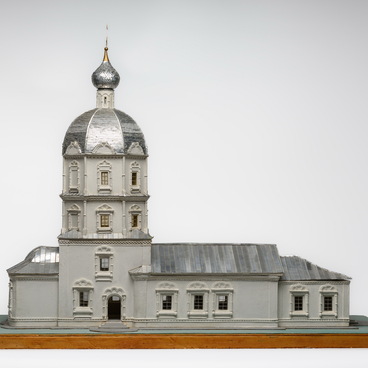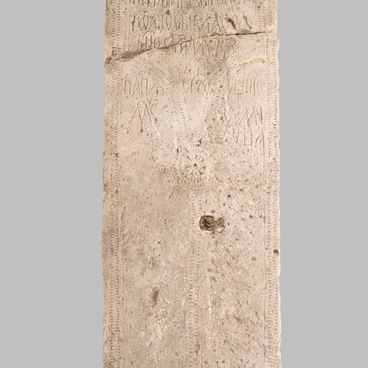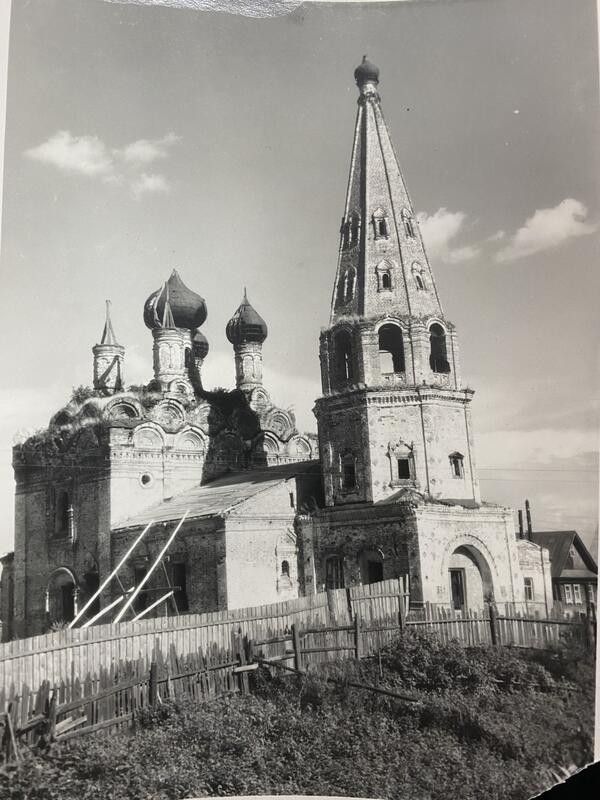
The Church of the Savior Not Made by Hands appeared in Balakhna during the heyday of folk crafts: salt production, shipbuilding, and the making of unique tiles. The church is located on the ridge between the rivers Netech and Volga, in the Kuznechnaya Sloboda (tax-free settlement). Back in the 16th century, there were two wooden churches, the Church of the Savior and the Church of St. Nikita. Both of them were destroyed in a fire (it is known that in 1610 the Church of St. Nikita was burned by a Cossack gang).
A new, pillarless stone Church of the Savior with a refectory was erected on this site in 1668 through the efforts of the salt merchant Grigory Yefremovich Dobrynin. He did this God-pleasing deed in memory of his father and brother who had died of pestilence. His Holiness Patriarch Joasaph II of Moscow blessed its construction. The décor of the church was distinguished by opulence which was rare for local churches: there were gilded royal doors, vessels and revetments made of silver, the clergy wore expensive vestments.
In 1680, the church roof, domes and crosses were damaged in a fire. In 1702–1704, the church was restored, and the domes were covered with tiles. The bell tower with a tented roof, attached to the church from the west and made in the same style, harmoniously complemented the ensemble. The walls of the bell tower were decorated with polychrome glazed tiles with images of fantastic flowers, fruits, birds and Baroque cartouches. In the inner space of the church, two square rooms were allocated for chapel altars. Openings in the western wall served to connect them with the refectory. The side windows at the southern and northern portals were made for lighting.
In 1918, the property of the church was nationalized.
In 1926, the church suffered from a flood. For lack of funds to repair it, it was transferred to the Scientific and Local History Archaeological society and turned into a museum.
In the early 1930s, the church was under threat of demolition, but in the middle of the century it was restored as an architectural monument, although it was used as a warehouse for a long time. The restoration works were led by the architects Svyatoslav Leonidovich Agafonov and Vladimir Alexandrovich Orelsky.
Since 1995, services have resumed in the church. The monument itself is declared an object of cultural heritage of federal significance.
A new, pillarless stone Church of the Savior with a refectory was erected on this site in 1668 through the efforts of the salt merchant Grigory Yefremovich Dobrynin. He did this God-pleasing deed in memory of his father and brother who had died of pestilence. His Holiness Patriarch Joasaph II of Moscow blessed its construction. The décor of the church was distinguished by opulence which was rare for local churches: there were gilded royal doors, vessels and revetments made of silver, the clergy wore expensive vestments.
In 1680, the church roof, domes and crosses were damaged in a fire. In 1702–1704, the church was restored, and the domes were covered with tiles. The bell tower with a tented roof, attached to the church from the west and made in the same style, harmoniously complemented the ensemble. The walls of the bell tower were decorated with polychrome glazed tiles with images of fantastic flowers, fruits, birds and Baroque cartouches. In the inner space of the church, two square rooms were allocated for chapel altars. Openings in the western wall served to connect them with the refectory. The side windows at the southern and northern portals were made for lighting.
In 1918, the property of the church was nationalized.
In 1926, the church suffered from a flood. For lack of funds to repair it, it was transferred to the Scientific and Local History Archaeological society and turned into a museum.
In the early 1930s, the church was under threat of demolition, but in the middle of the century it was restored as an architectural monument, although it was used as a warehouse for a long time. The restoration works were led by the architects Svyatoslav Leonidovich Agafonov and Vladimir Alexandrovich Orelsky.
Since 1995, services have resumed in the church. The monument itself is declared an object of cultural heritage of federal significance.