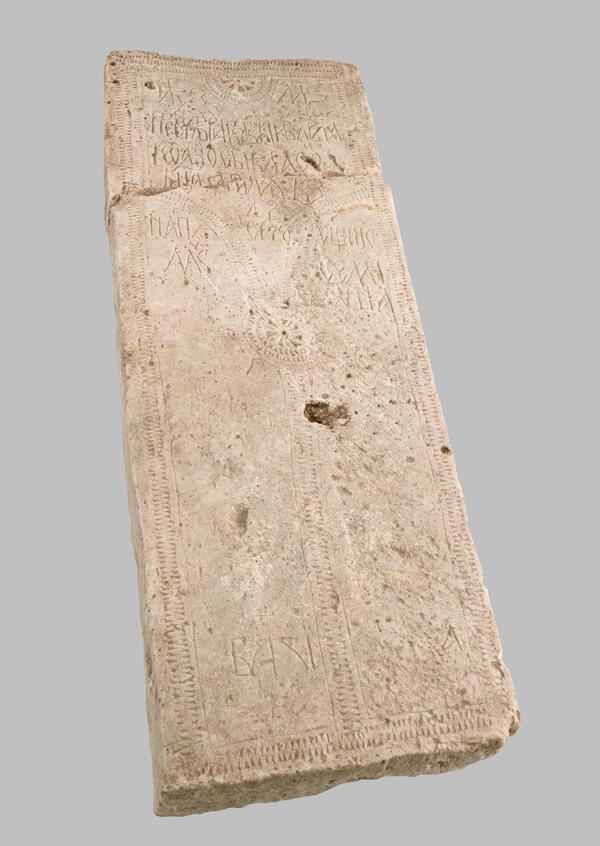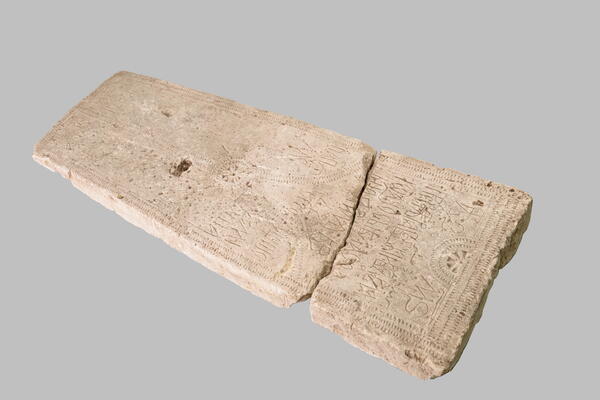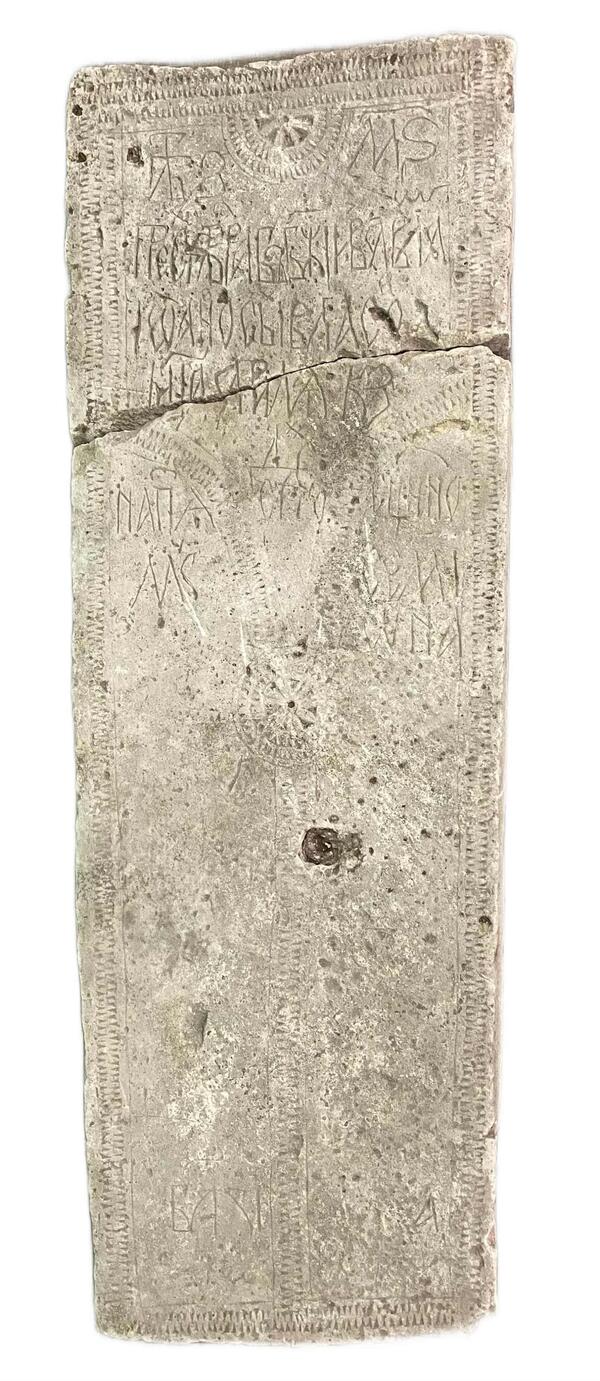
A white tombstone with an epitaph is one of the oldest monuments discovered in the center of Balakhna (the most ancient is a slate spindle whorl of the 13th century). It is split in two, but generally well preserved.
In addition to this tombstone, in 1994, archaeologists managed to unearth 46 more fragments of ornamented tombstones, but they were almost shapeless fragments. All of them are made of white stone — the material most suitable for carving — which was probably brought from the upper Volga. Archaeologists established that the tombstone came from the necropolis of the 16th–17th centuries, which was located on the territory of the Intercession Monastery, south of the Balakhna fortress.
It has not been established exactly when the monastery was founded due to the lack of written sources. However, it is known for certain that it could not have appeared in this part of the town before the fortress made of wood and earth was built; it served as a shelter for monastic buildings. The construction of the fortress walls began in 1536. At that time, Balakhna started to be mentioned in chronicles as a city.
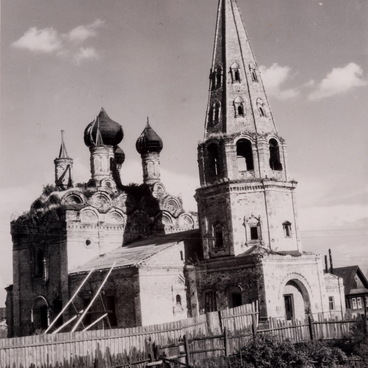
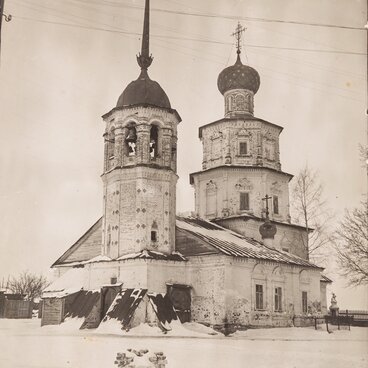
The date indicated on the tombstone — 1538 — apparently refers to the period when the Intercession Monastery did not yet exist. The stone could have appeared on the territory of the monastery in two cases: either during the construction of the St. Nicholas Church in 1552, or later, during its major reconstruction in 1719–1722 after the fire that engulfed Balakhna in 1680.
In either case, the tombstone was obviously used as an additional building material to strengthen the floor.
The inscription on the tombstone allows to determine the status of the person buried under it. The indication of the surname (Vlasov) proves his noble origin: ordinary taxed townspeople of the 16th–17th centuries did not use surnames. In addition, a gravestone, especially one decorated with inscriptions and ornaments, was very expensive and inaccessible to an ordinary Balakhna resident. Apparently, the deceased belonged to the local nobility, he could have been a salt merchant.
In addition to this tombstone, in 1994, archaeologists managed to unearth 46 more fragments of ornamented tombstones, but they were almost shapeless fragments. All of them are made of white stone — the material most suitable for carving — which was probably brought from the upper Volga. Archaeologists established that the tombstone came from the necropolis of the 16th–17th centuries, which was located on the territory of the Intercession Monastery, south of the Balakhna fortress.
It has not been established exactly when the monastery was founded due to the lack of written sources. However, it is known for certain that it could not have appeared in this part of the town before the fortress made of wood and earth was built; it served as a shelter for monastic buildings. The construction of the fortress walls began in 1536. At that time, Balakhna started to be mentioned in chronicles as a city.
The date indicated on the tombstone — 1538 — apparently refers to the period when the Intercession Monastery did not yet exist. The stone could have appeared on the territory of the monastery in two cases: either during the construction of the St. Nicholas Church in 1552, or later, during its major reconstruction in 1719–1722 after the fire that engulfed Balakhna in 1680.
In either case, the tombstone was obviously used as an additional building material to strengthen the floor.
The inscription on the tombstone allows to determine the status of the person buried under it. The indication of the surname (Vlasov) proves his noble origin: ordinary taxed townspeople of the 16th–17th centuries did not use surnames. In addition, a gravestone, especially one decorated with inscriptions and ornaments, was very expensive and inaccessible to an ordinary Balakhna resident. Apparently, the deceased belonged to the local nobility, he could have been a salt merchant.