

There is still debate among historians on the origins of the word “samovar”. Some believe that the name comes from the words “self” and “boiling”, while others believe that it came from the Tatar word “snabar”, which means “kettle”. Since samovars were made of copper or brass, some sources indicate that they first appeared in areas with a developed metal industry — the Urals. In 1701, Nikita Demidov, a blacksmith-industrialist from Tula, together with a group of skilled copper craftsmen, founded the Suksun plant, which marked the birth of Ural “tea machines” dynasties. The first officially recorded samovar in Tula was made in 1778 by the Lisitsyn brothers at a small samovar factory opened on the premises of an ancient factory that produced copper tableware. By the end of the 19th century, several dynasties of samovar-makers emerged, such as the Batashevs, the Vorontsovs, the Kopyrzins, the Teile and others. Over time, the number of such enterprises got so big that each had to develop a kind of trademark to distinguish themselves from the rest. The maker of the samovar was determined by the branding present on every product. This branding needed to be approved by the government.
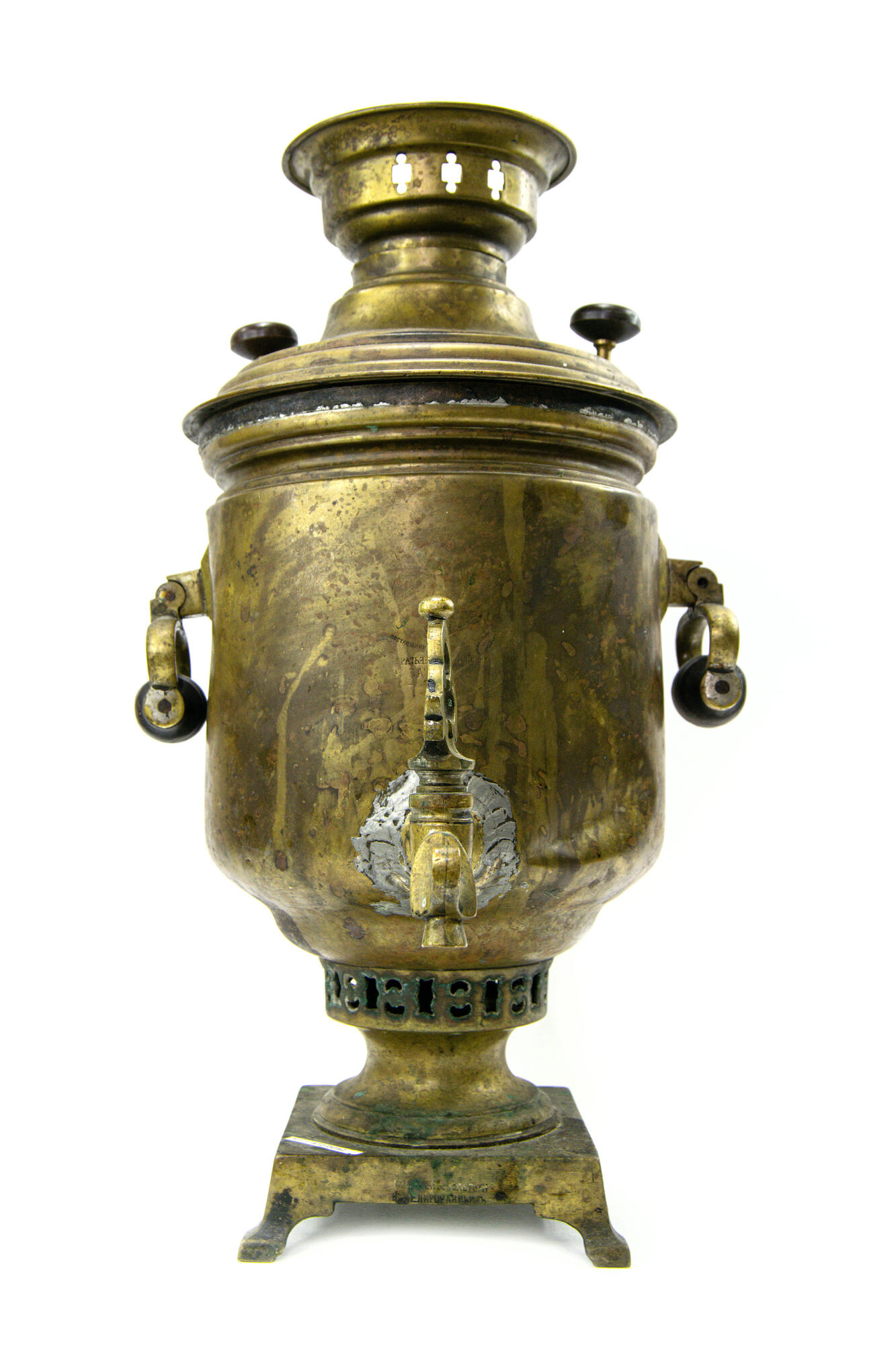
There were popular exhibitions, in which the “samovar kings” received awards for the best presented product and medals were hung on the body of the chosen samovar. In 1918, after samovar production was nationalized, factories became state property. Of the many enterprises, the factory of Vasily Stepanovich Batashev (the supplier of the Imperial Court until 1918) continued its work. It became part of the Tula Cartridge Factory and produced samovars from 1920 to 1940.
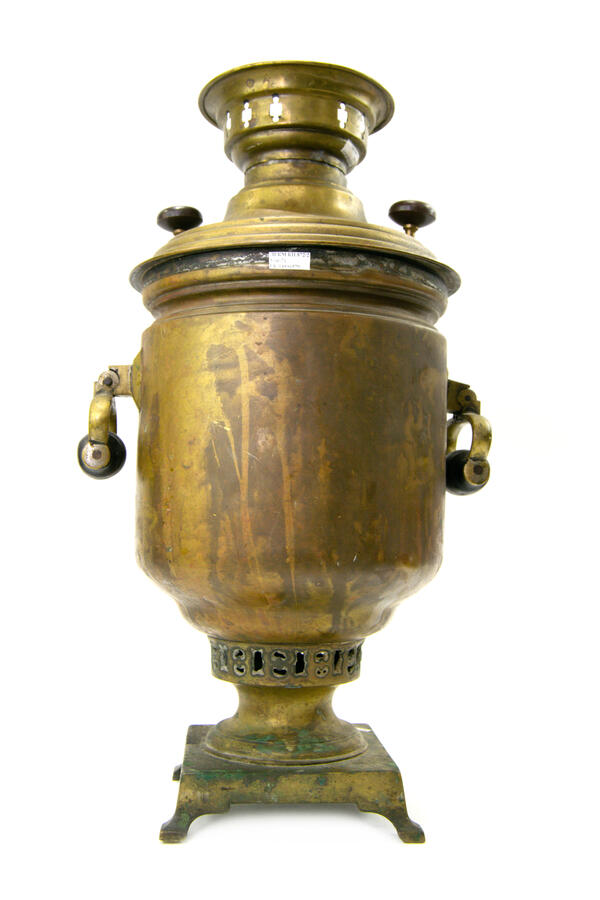
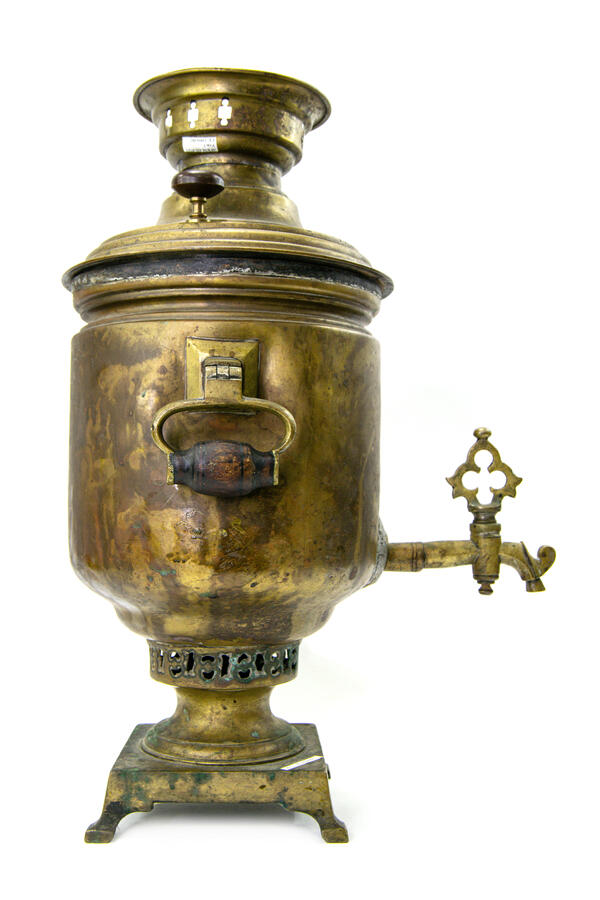
Samovars were produced in several shapes: vase, cylinder, egg, ball and many others. The coal samovar on display has a cylindrical body. The materials used to make a samovar were also different: brass was very popular, while copper was used to make more expensive samovars. The exhibit is made of copper. Imprints left from medals awarded at samovar exhibitions are still visible on its body.