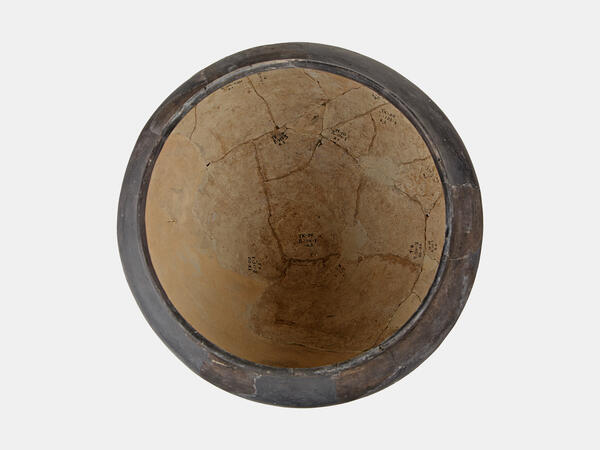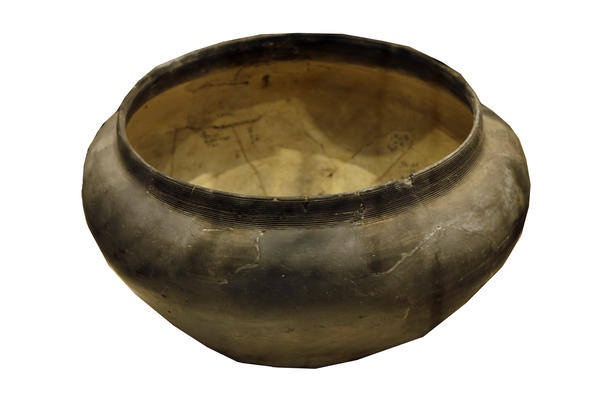
A pot is the basic and most common ceramic cookware in the world known since Paleolithic times. In medieval Russia, pots accounted for up to 90% of all pottery products. A pot has a wide low neck, convex sides, and a narrow flat bottom. Until the end of the 17th century, pots were adorned with circular lines, wavy patterns, or simple dots.
Pots were used to store and serve food and were used as plates. Their size ranged from 200 grams to 10 liters. -sized pots were used for cooking — they can be easily identified by the black soot on the outer wall. People used grips when they needed to place a pot on a hot stove or to pull it out. A good housewife had several grips for various pot sizes.
Pots were very valuable items. If a crack appeared, the pot was repaired — birch bark cords were used to tie and secure the outer surface. Such a pot was no longer suitable for cooking food but could be used for storing. Hence the old riddle: “When I was a child, I didn’t know swaddling, but when I got old, I started to be swaddled.”
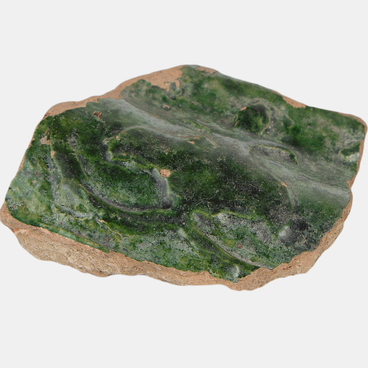
If the pot was completely broken, its shards were used for other purposes, for example, as a spindle weight. At the same time, there was a custom of breaking pots for good luck during a wedding celebration or at other especially important events. Pots were also smashed against thresholds to protect the house against dark forces and hung upside down on fences for the same purpose.
The pot played a prominent role in beliefs, sayings, as well as wedding and funeral rites. The Russian folklorist Andrey Lvovich Toporkov noted that the Slavs regarded the pot as a ritual object, associated it with the symbolic meanings of the stove, hearth, and earth, and interpreted it as a receptacle for the soul and spirits. It is not for nothing that the funeral urns of the Slavs were shaped like pots.
Sometimes pots became part of magical rituals associated with blessing a new home. A large pot was discovered in the 16th-century Tula Kremlin. It is claimed to be part of the so-called “construction sacrifice” that had been placed under the base of an adobe stove to appease the household spirit, who was supposedly living there.