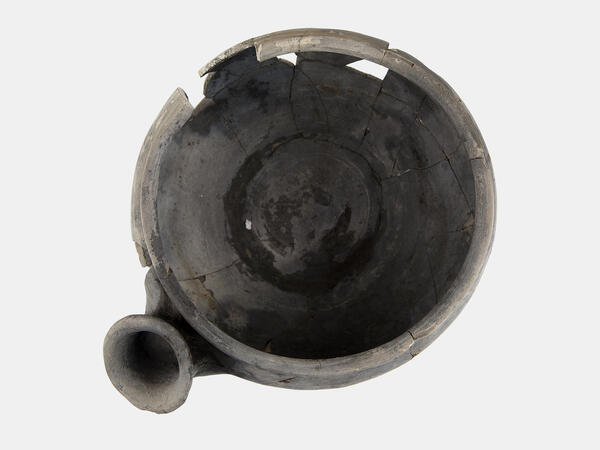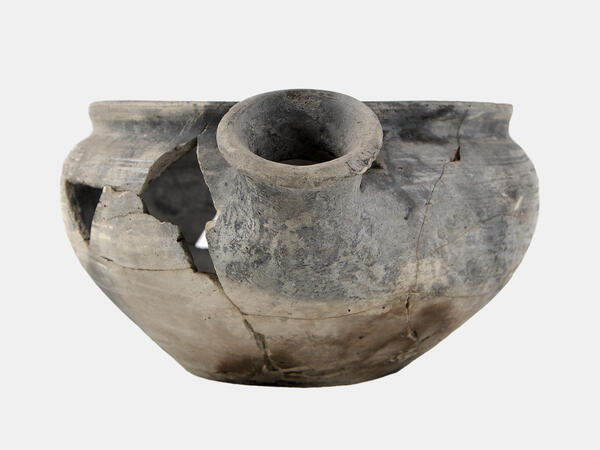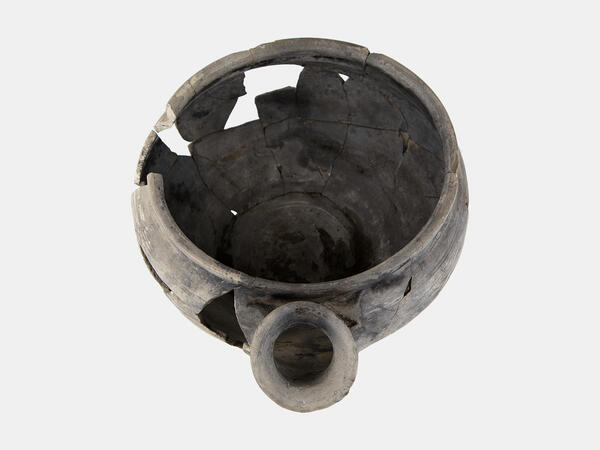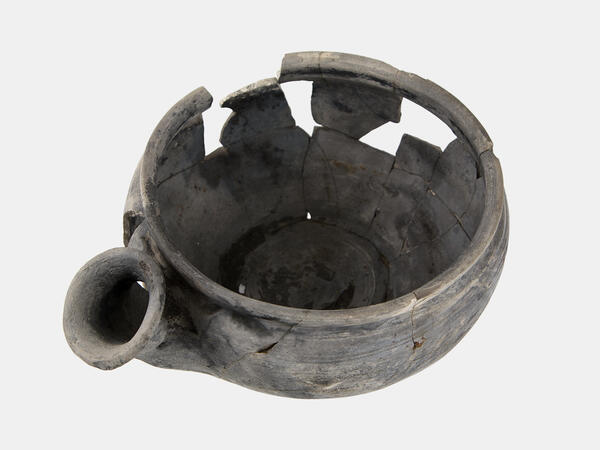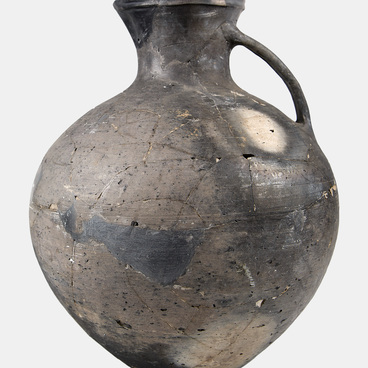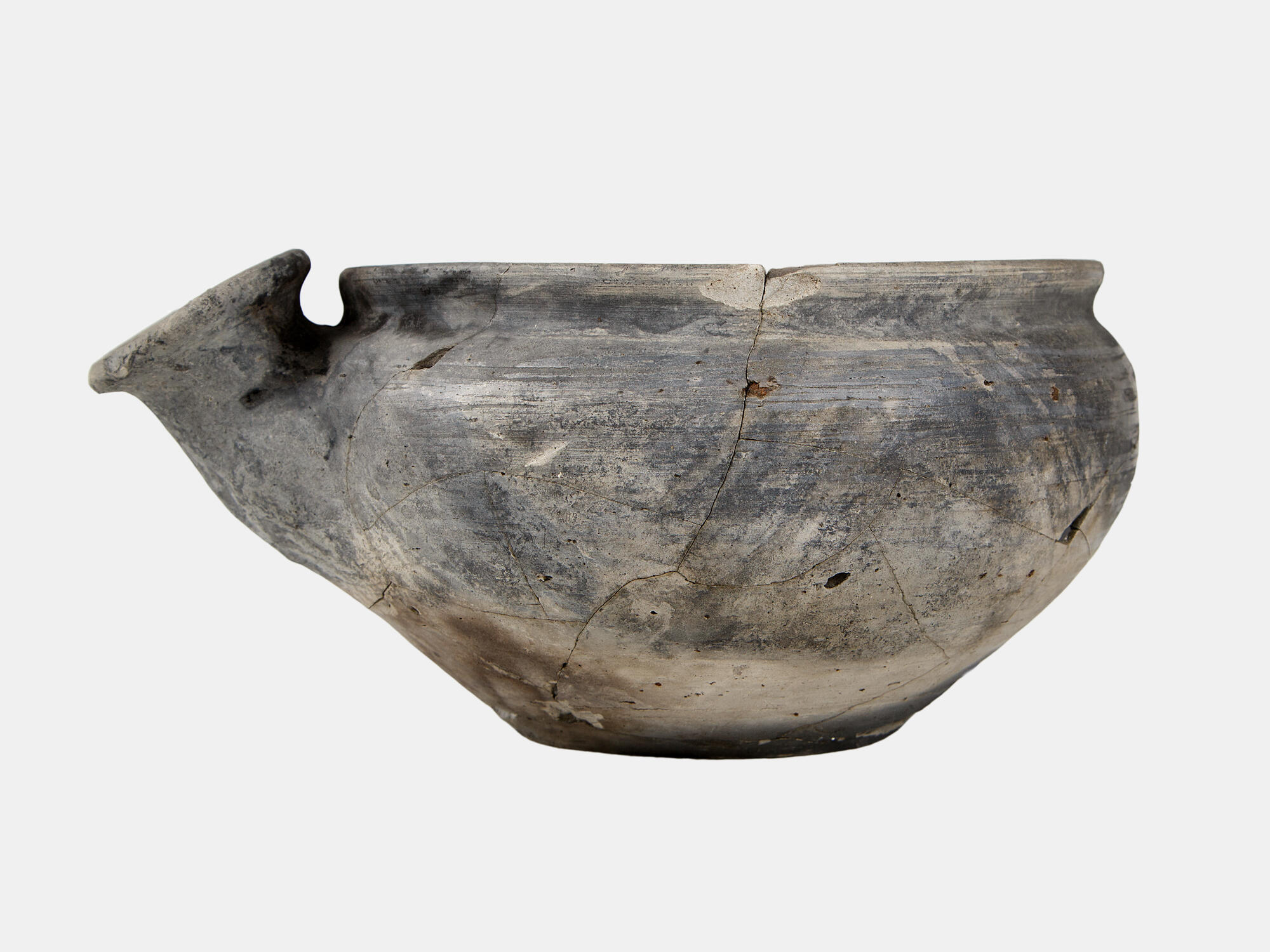


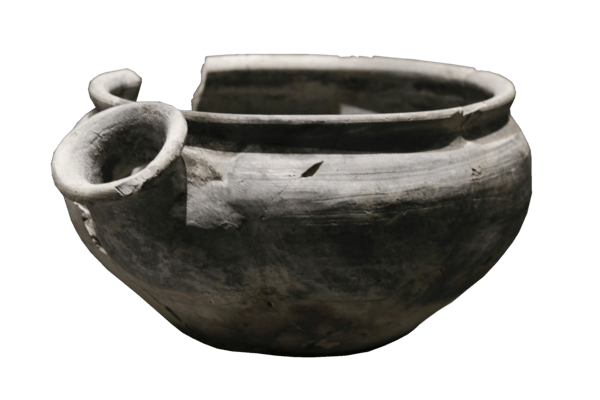
A milk bucket is a bucket used in milking. It was a wooden, clay or copper vessel with an open wide neck, a spout at the top and a curved handle. Milk buckets usually had no lid since milk would turn sour quickly if the bucket was closed immediately after milking.
Fresh milk was protected from dust and insects by a thin linen cloth, which was used to cover the vessel and filter the milk. Before milking a cow, a woman would pour warm water into the milk bucket and take a piece of butter to cleanse and lubricate the udder.
People had rules and superstitions concerning the milk bucket since it was an important item of daily life. For example, a milk bucket was always bought together with the cow. It was not to be taken with bare hands — people used mittens or lower parts of their coats to grab and pass it on, and they crossed themselves when they lifted a milk bucket from the ground.
If the cow did not milk in the new place, the owners called a sorcerer, and he made a cross sign over the animal’s horns and hooves, whispered a spell, and sprinkled the cow with water from the milk bucket. For the same purpose, all the other milk buckets in the yard were filled to the brim with water.
Milk buckets had different names throughout Russia deriving from the word “milk”. There was a riddle about a milk bucket: “There is a big-nosed guest in our house.”
In Rus, a bucket of milk was used as a kind of barometer, which predicted the weather. Every milking woman knew: if the milk in the milk pan began to foam, it was going to rain soon. This weather lore tradition is still alive: it is believed that during a thunderstorm, milk turns sour. There is no mysticism here — only the influence of the atmosphere on the protein and calcium in milk.
Other signs associated with the milk bucket are more difficult to explain. One of them warns: