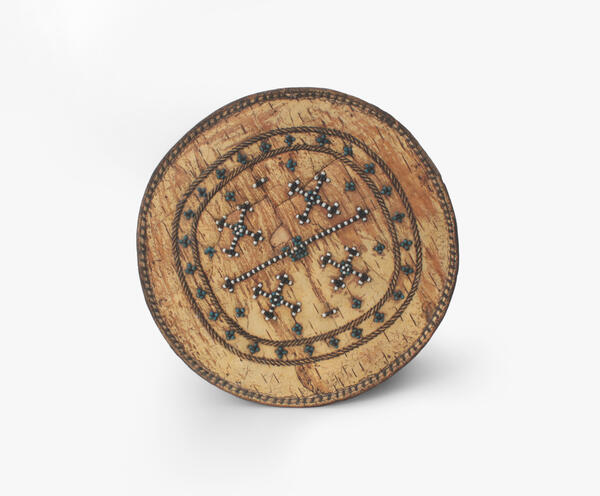
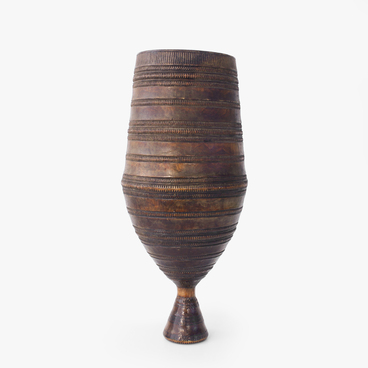
A large part of the exhibits in the Churapchinsky Museum is made of birch bark. Yakut women excelled in this craft.
Among the items made by craftswomen were koumiss dishes, snuff boxes, and boxes for needlework. They were decorated with distinctive types of patterns, such as geometric or vegetal, and included basic stitches: a cross stitch, cone stitch, serrated stitch, spaced stitch, and others. Besides, needlewomen used various decorating techniques, such as sewing with twisted black and white horsehair, appliqués from birch bark of different colors, embossing, openwork slits with mica and metal plate linings, decoration with large and small beads, and scraps of colored fabric.
Yakut craftswomen had their own special way of making birch bark utensils: first they made a basic mold, on which they put free sliding wide birch bark rings. Then they fixed them with hoops made of willow twigs, which were split in two lengthwise. They were then entwined with black or dark brown horsehair using various stitches that formed an original pattern on the convex surface of the rim. The bottoms of koumiss dishes were made of double birch, which made each item quite strong.
The birch bark boxes “mallaakh ihit”, which means “birch bark vessel” in Yakut, were especially treasured by housewives and were used for sewing accessories. In the folk consciousness it was seen as a magical object that protected and brought prosperity to the house.
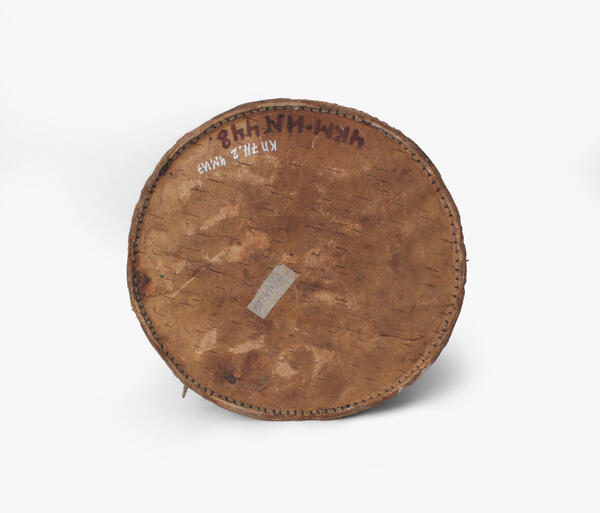
The basic form of needlework boxes was a cylinder, which was girdled with rims made of willow twigs. When decorating their work, the craftswomen used the natural beauty and texture of the material. Stitching with black or brownish horsehair stood out against the light ochre background of birch. To make it strong, the wide rim of the body was stitched with narrow decorative “finger” and oblique stitches, and the bottom was stitched with the so-called whipstitch with a root twig that pressed the construction. Horsehair entwined the convex edges with a border and patterns on the lid.
The tall zigzag pattern “urasa” on the smooth
golden-yellow background of the box is made in the archaic style.