A frying pan has a rich history. According to scientists, the Russian word “skovoroda” derives from the common Slavic “sko-vorda” that means “a grate, a rod”, or from the old Slavonic “skvar” that means “fire, heat”. This cooking utensils was known long ago in ancient Mesopotamia, Greece and Rome.
People used a flat stone heated on a fire as the earliest frying pan: the food was not so much fried as dried on it. Over time, people hit upon the idea of making a recess in the stone, which retained heat.
With the development of pottery, ceramic pans appeared, and various substances were added to the clay for special heat resistance. Even later, metal cookware appeared. At the end of the 19th century, even electric frying pans were used in America: a heating element was attached to their bottom, and a socket was placed on the handle. Such a device was considered a luxury item, and in the late 1970s it was replaced by electric stoves.
The most famous recipe that requires a frying pan is pancakes. To prepare pancakes ground grain (flour) was needed. The Russian word “bliny” (pancakes) derives from “mlyn” that means “to grind”. It is believed that millet, barley, pea, “red” wheat and “royal” buckwheat pancakes had been cooked earlier than ordinary bread. In Rus, they were served to celebrate the birth of a child and to commemorate the deceased. But first of all, pancakes have been an indispensable attribute of the Maslenitsa celebration. Many proverbs and sayings are devoted to them: “There is no Maslyana without a pancake”, “It is not all Shrovetide for the cat, there will be Great Lent”, “As pancakes were thrown up to the ceiling during Shrovetide Week”, “Pancakes are relatives of the sun” and so on. According to tradition, the first pancake was given to the poor to commemorate the dead.
Maslenitsa was celebrated for a whole week, and each day had its own name: “Welcoming”, “Playing”, “The Sweet Tooth Day”, “Revelry”, “Mother-in-law’s eye”, “Sister-in-law’s Gathering” and “Seeing Off”. Every day pancakes were to be served. On Monday one took the largest frying pan, on Tuesday it was the size of a saucer, on Wednesday pancakes were with different additional ingredients. And from Thursday to Sunday any type of pancakes was allowed but they had to be prepared in large quantities.
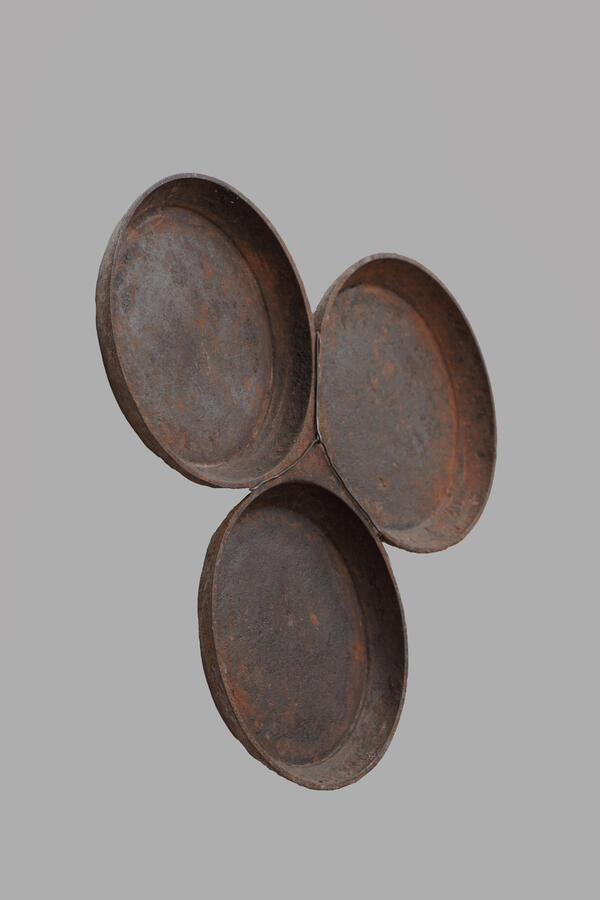
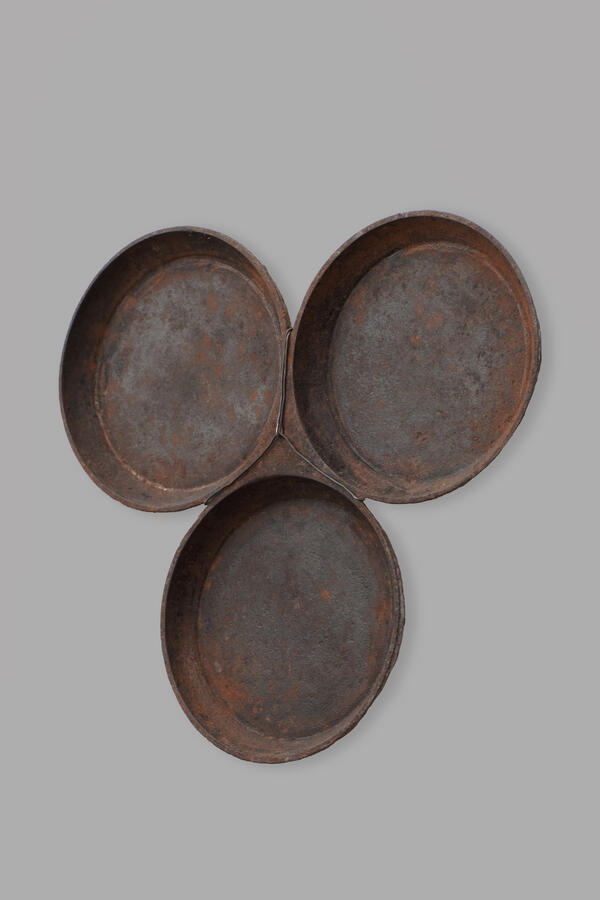
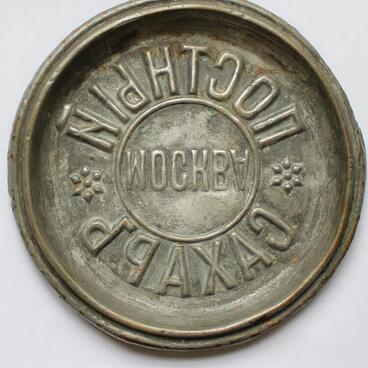
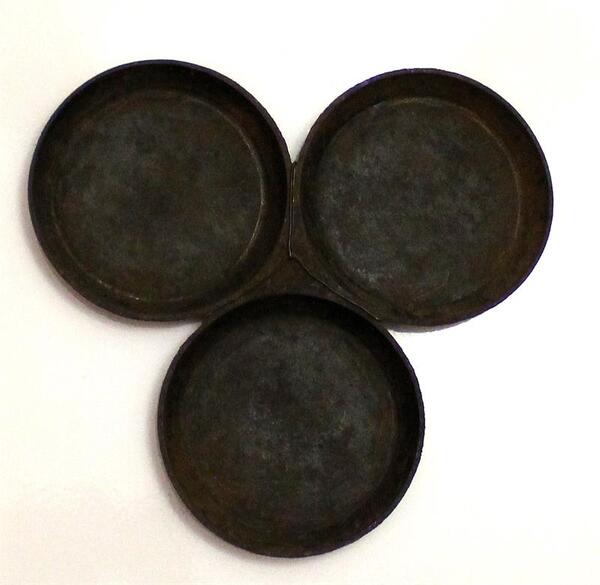
The preparation of pancakes was a sacrament, the housewives did not allow even their family members to take part in this process. The dough was prepared near a river or a well, sometimes a handful of snow from the yard was added to it. Traditionally pancakes were baked in the oven without turning them over. With the advent of gas and electric stoves, they began to fry them on both sides, but the expression “bake pancakes” has survived to this day. When it was necessary to cook a lot of pancakes, the housewives were rescued by conveyor pans: three combined into one. That way they managed to make many identical pancakes three times faster.
People used a flat stone heated on a fire as the earliest frying pan: the food was not so much fried as dried on it. Over time, people hit upon the idea of making a recess in the stone, which retained heat.
With the development of pottery, ceramic pans appeared, and various substances were added to the clay for special heat resistance. Even later, metal cookware appeared. At the end of the 19th century, even electric frying pans were used in America: a heating element was attached to their bottom, and a socket was placed on the handle. Such a device was considered a luxury item, and in the late 1970s it was replaced by electric stoves.
The most famous recipe that requires a frying pan is pancakes. To prepare pancakes ground grain (flour) was needed. The Russian word “bliny” (pancakes) derives from “mlyn” that means “to grind”. It is believed that millet, barley, pea, “red” wheat and “royal” buckwheat pancakes had been cooked earlier than ordinary bread. In Rus, they were served to celebrate the birth of a child and to commemorate the deceased. But first of all, pancakes have been an indispensable attribute of the Maslenitsa celebration. Many proverbs and sayings are devoted to them: “There is no Maslyana without a pancake”, “It is not all Shrovetide for the cat, there will be Great Lent”, “As pancakes were thrown up to the ceiling during Shrovetide Week”, “Pancakes are relatives of the sun” and so on. According to tradition, the first pancake was given to the poor to commemorate the dead.
Maslenitsa was celebrated for a whole week, and each day had its own name: “Welcoming”, “Playing”, “The Sweet Tooth Day”, “Revelry”, “Mother-in-law’s eye”, “Sister-in-law’s Gathering” and “Seeing Off”. Every day pancakes were to be served. On Monday one took the largest frying pan, on Tuesday it was the size of a saucer, on Wednesday pancakes were with different additional ingredients. And from Thursday to Sunday any type of pancakes was allowed but they had to be prepared in large quantities.
The preparation of pancakes was a sacrament, the housewives did not allow even their family members to take part in this process. The dough was prepared near a river or a well, sometimes a handful of snow from the yard was added to it. Traditionally pancakes were baked in the oven without turning them over. With the advent of gas and electric stoves, they began to fry them on both sides, but the expression “bake pancakes” has survived to this day. When it was necessary to cook a lot of pancakes, the housewives were rescued by conveyor pans: three combined into one. That way they managed to make many identical pancakes three times faster.