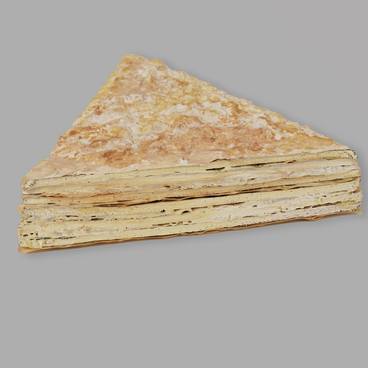
Lenten sugar is often mentioned in price lists, cookbooks and fiction of those years when fasting traditions were observed all around in Russia. The appearance of this product is associated with numerous fasting days in the calendar of Russian Orthodox Church.
Both Lenten and ordinary sugar is made from molasses. To clean it, a carbon filter was used — a tin funnel with finely crushed cooled coal. The coal itself was obtained from beef bones, one contact with which made the product unsuitable for fasting consumers.
The technology was not a secret for fasting people, and they were forced to give up sweets for many weeks, and confectionery factories, remaining without customers, suffered huge losses. However, confectioners found a way out: they began to create a “clean” product for fasting customers. Charcoal from burnt beef bones was replaced with cloth or paper filters. At the same time, the quality of cleaning became worse, but this did not bother anyone.
Lenten sugar is also called “potato sugar” or “starch sugar”. To obtain it, potato molasses was boiled for a considerable amount of time, then poured into clay bowls and placed in a warm place. After some time, the crystals accumulated at the bottom. They were collected and put under pressure. The resulting mass was melted, poured into wooden molds and left to solidify. After about two days, the sugar was ready. Sometimes berry juices or pieces of fruit were added to it.
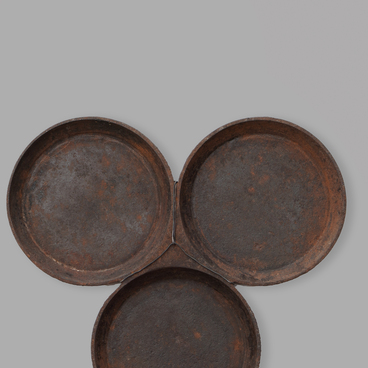
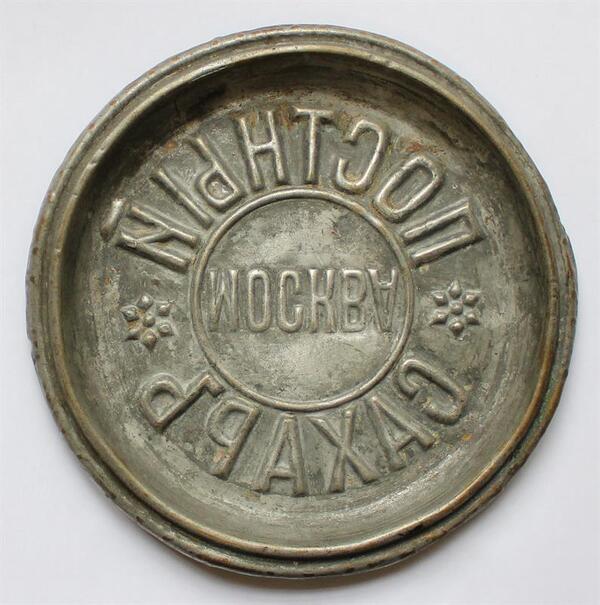
In factories, special molds were used for Lenten sugar. In them, the pieces turned out to be homogeneous, and most importantly, each one had an imprint with the confectioner’s or company’s name.
By the way, confectioners only benefited from the need to start producing an unusual dessert: Lenten sugar cost more than ordinary sugar, although it was less expensive than candies. According to the price list of the Partnership “A.I. Abrikosov’s Sons” at the beginning of the 20th century, a pood (about 16 kilograms) of Lenten sugar cost 8 rubles 50 kopecks. In 1916, the Einem company was selling the same amount for 17 rubles 60 kopecks.
Lenten sugar disappeared from stores only in the first half of the 20th century, and for a long time it remained in oblivion. Some modern factories are reviving this old recipe.
Both Lenten and ordinary sugar is made from molasses. To clean it, a carbon filter was used — a tin funnel with finely crushed cooled coal. The coal itself was obtained from beef bones, one contact with which made the product unsuitable for fasting consumers.
The technology was not a secret for fasting people, and they were forced to give up sweets for many weeks, and confectionery factories, remaining without customers, suffered huge losses. However, confectioners found a way out: they began to create a “clean” product for fasting customers. Charcoal from burnt beef bones was replaced with cloth or paper filters. At the same time, the quality of cleaning became worse, but this did not bother anyone.
Lenten sugar is also called “potato sugar” or “starch sugar”. To obtain it, potato molasses was boiled for a considerable amount of time, then poured into clay bowls and placed in a warm place. After some time, the crystals accumulated at the bottom. They were collected and put under pressure. The resulting mass was melted, poured into wooden molds and left to solidify. After about two days, the sugar was ready. Sometimes berry juices or pieces of fruit were added to it.
In factories, special molds were used for Lenten sugar. In them, the pieces turned out to be homogeneous, and most importantly, each one had an imprint with the confectioner’s or company’s name.
By the way, confectioners only benefited from the need to start producing an unusual dessert: Lenten sugar cost more than ordinary sugar, although it was less expensive than candies. According to the price list of the Partnership “A.I. Abrikosov’s Sons” at the beginning of the 20th century, a pood (about 16 kilograms) of Lenten sugar cost 8 rubles 50 kopecks. In 1916, the Einem company was selling the same amount for 17 rubles 60 kopecks.
Lenten sugar disappeared from stores only in the first half of the 20th century, and for a long time it remained in oblivion. Some modern factories are reviving this old recipe.