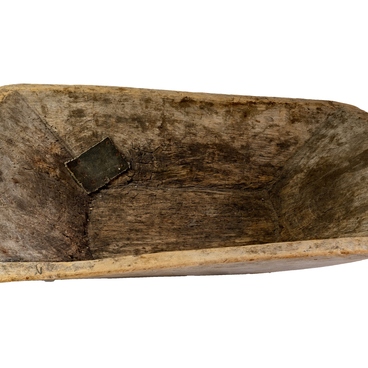
Pine nuts are seeds of Siberian pines that grow in the Siberian taiga. They have been eaten since ancient times. Moreover, the seeds are used to squeeze oil out of them; their shells are added to tinctures and balms. Pine seeds contain a lot of vitamins, amino acids, and minerals. The indigenous people of Siberia added them to food to make up for a deficiency of nutrients, improve health and protect from diseases. The so-called pine nut milk — crushed and diluted in water nuts — was recommended to ill people to recover from illness as fast as possible, pregnant women and babies who could not be fed by their mothers.
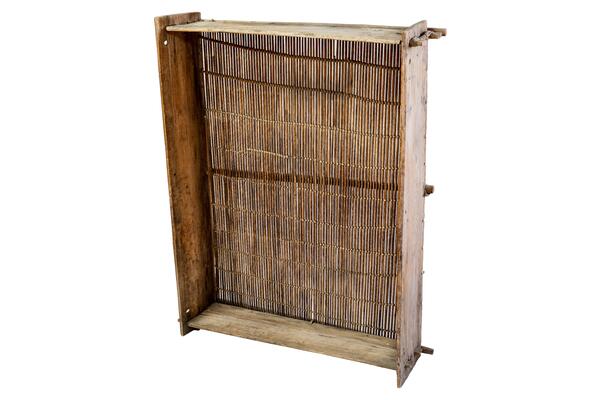
The process of collecting such nuts has been one of the famous trades in Siberia since the middle of the 19th century. It took only 10–20 days a year and did not become the main business. Pine stone seeds grew ripe in October–November. Сones were knocked down off the trees with special sticks or poles, crushed, and peeled. Collected nuts were sifted through a large mesh sieve. It helped to remove husks. This device is displayed at the collection of Nizhnevartovsk Museum of Local History.
This sieve consists of a wooden frame and a mesh. An unknown craftsman made a base from narrow wooden bars and connected them with the help of grooves and tongues. He wove a mesh of willow twigs and connected them with sarga (thin long bands of pine roots). This material was preserved and stored rolled. It was necessary to soak sarga before weaving to make it as elastic as fresh.
Strips of sarga were fixed across the rods at a distance of 10–11 cm from each other. The craftsman fixed them in sieve sides through specially drilled holes.
Pine nuts were sieved through one or several sieves. Seeds size was about 5–9 mm. That is why the largest sieve cells were a little bigger — about 6–10 mm. In this case, kernels could slip through them, but large impurities stayed in a sieve. To remove husks and crumbs it was necessary to use sieves with smaller meshes. Clean nuts were the result of this process. They were sold or left for family use.
The process of collecting such nuts has been one of the famous trades in Siberia since the middle of the 19th century. It took only 10–20 days a year and did not become the main business. Pine stone seeds grew ripe in October–November. Сones were knocked down off the trees with special sticks or poles, crushed, and peeled. Collected nuts were sifted through a large mesh sieve. It helped to remove husks. This device is displayed at the collection of Nizhnevartovsk Museum of Local History.
This sieve consists of a wooden frame and a mesh. An unknown craftsman made a base from narrow wooden bars and connected them with the help of grooves and tongues. He wove a mesh of willow twigs and connected them with sarga (thin long bands of pine roots). This material was preserved and stored rolled. It was necessary to soak sarga before weaving to make it as elastic as fresh.
Strips of sarga were fixed across the rods at a distance of 10–11 cm from each other. The craftsman fixed them in sieve sides through specially drilled holes.
Pine nuts were sieved through one or several sieves. Seeds size was about 5–9 mm. That is why the largest sieve cells were a little bigger — about 6–10 mm. In this case, kernels could slip through them, but large impurities stayed in a sieve. To remove husks and crumbs it was necessary to use sieves with smaller meshes. Clean nuts were the result of this process. They were sold or left for family use.