In the 16th century, Tula became the center of the origin and development of ironworks. By the end of the 17th century, the Tula gunsmiths established a way they would organize production in the region. All the large and small armory workshops came to an agreement. Despite repeated attempts to centralize Tula’s ironworks industry at the end of the 17 th century, and the founding of the Imperial Arms Factory in 1712 by decree of Peter I, the way things were organized remained unchanged until the middle of the 19th century. Tula gunsmiths primarily did state orders for weapons. For all its flaws, this situation presented many benefits, among which was duty-free trade of any products, including weaponry.
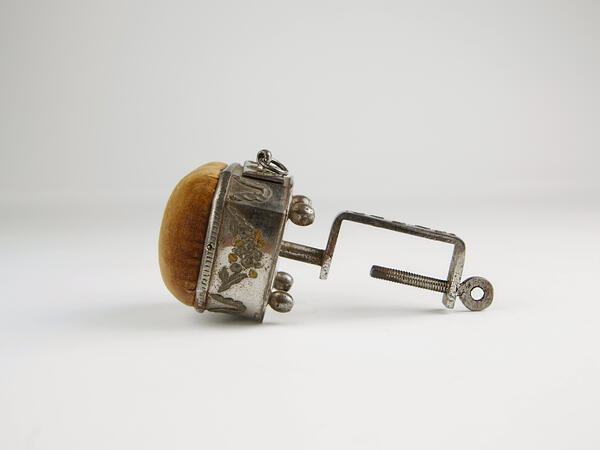
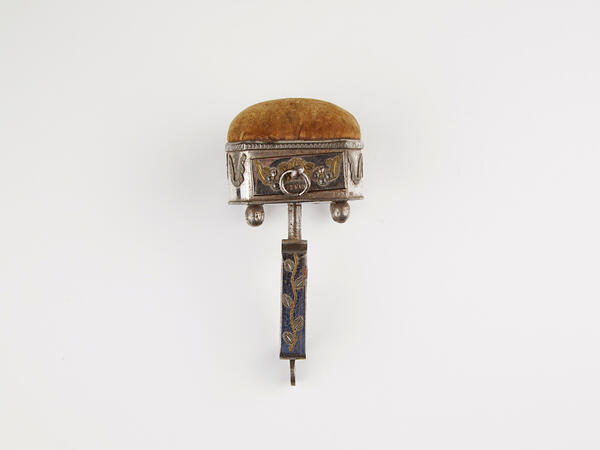
In their free time, Tula craftsmen made so-called “particular”, or otherwise household items made of steel for “free sale”. These were sugar tongs, perfume bottles, snuffboxes, jewelry boxes. The range also included sewing birds for women’s handicrafts. There are several types of sewing birds. The first and most common was a pad, often covered in velvet and attached to the table with a clamp. The second was box-shaped, instead of the pad, it featured a metal bird at the top used for clamping fabric. The design of the sewing bird could be very similar to that of a distaff, and consist of a wooden base at the bottom housing a vertical beam with a soft cloth pad. The seamstress would sit on the base of such a sewing bird to make it more stable. One end of the fabric was pinned to the pad, and the other was pulled away with the left hand; with the right hand the seamstress would lay a clean line of beautiful stitches. Thus, the seamstress had both hands free, which made it possible to lay a more accurate seam. By keeping the fabric tight at all times, the speed of work increased.
The craftsmen Ivan Svechnikov and Sergey Medvedev worked in Tula in the second half of the 19th century. They made jewelry boxes, pincushions and sewing birds. These products were exhibited at the Moscow Industrial and Art Exhibition of 1882.