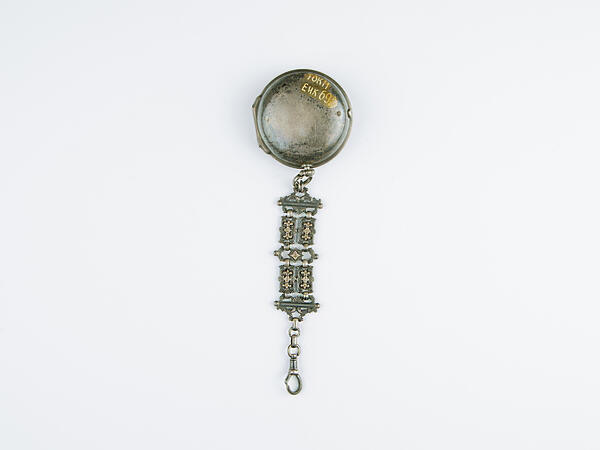
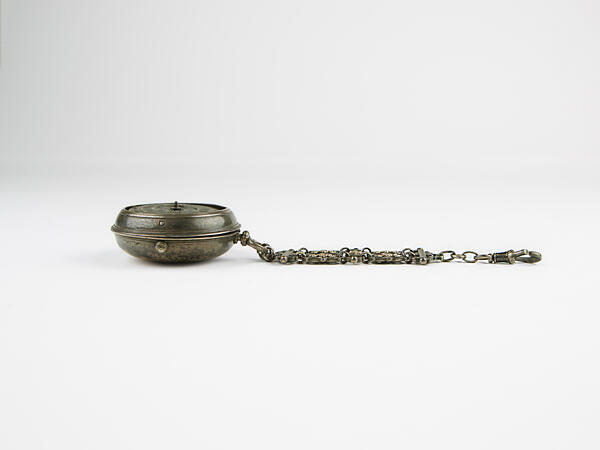
The Historical and Memorial Museum of the Demidovs presents a men’s pocket watch. This was the most common type of watch from the 16th century, when they were invented, until the First World War, when the military began using trench watches, which were transitional by design and were followed up by wristwatches.
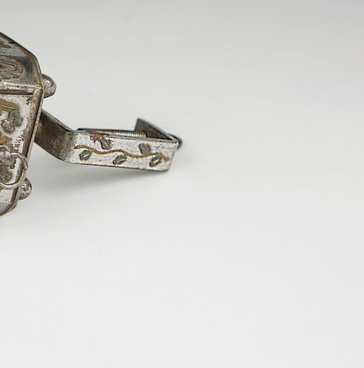
Most pocket watches had a chain which was used to fasten the watch to a vest, lapel or belt loop, and also to prevent them being dropped. In situations where the long chain would be too bulky or could catch on something, the watch could also be attached to a short leather strap or fob. This fob could also provide a protective flap over their face and crystal. Women’s watches were usually like that, with a fob that was more decorative than protective. Chains were usually decorated with a silver or enamel pendant, often with the coat of arms of a club or society, which by association also became known as a fob.
Most pocket watches looked pretty much the same, differing only in the decoration of the case. The mechanisms of the clock, on the other hand, were more diverse. For example, they either did or did not feature a second hand, or a lunar calendar. The presence of the latter was not only functional but was a sign of the wearer’s prestige. Pocket watches with an alarm were rare. Pocket watches sometimes featured a repeater — a mechanism that would chime the hours and minutes at the press of a special button. According to one version, the repeater first appeared in marine chronometers, for situations when one wished to know the time but were unable to see and read the face of the clock — like, for example, in dark environments, where one could not light a fire or during a watch at night. Later, this would become a popular feature, and the repeater chronograph would become a popular accessory.
For several centuries, Russia only imported watches, then, with some delay, the domestic production of watches was established. In 1769, state-owned factories for manufacturing watches were set up in St. Petersburg and Moscow.