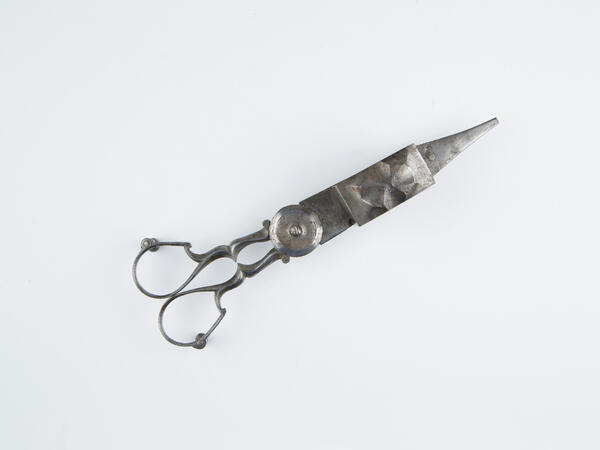
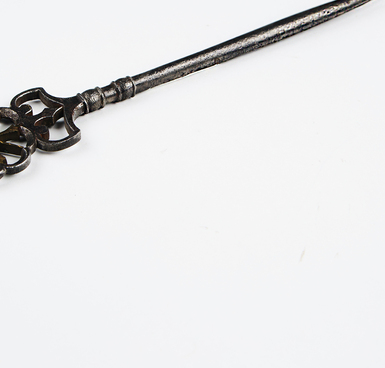
The history of scissors goes back centuries. In ancient Egypt, scissors began to be used as early as 1500 BC. At that time, they were made of a single piece of metal with two blades connected by a thin metal strip (spring), which was used to put the scissors into action. Most often scissors were made of bronze. Through active trade, they quickly spread from Egypt to other countries. Over time, scissors for specific tasks began to appear, like the scissor snuffer. They were created to shorten the wicks of candles and oil lamps in houses and temples.
Until the beginning of the 19th century, candles were made of wax or animal fat. They were inexpensive, so they were used as light sources until the early 20th century. The material itself was the main disadvantage — while burning, candle snuff formed on top of the wick and emitted smoke. The longer the wick burnt, the more smoke it emitted. This constituted a fire hazard and could lead to burns, damage to clothes or furniture. In the first half of the 19th century, candles were the main source of light and were placed in various candle holders, like candlesticks, candelabra, and chandeliers. To avoid fires in court halls, theaters, temples, the condition of candles was monitored by servants equipped with snuffers — metal caps on long sticks for extinguishing burning candles. With the invention of paraffin and stearin, the need for constantly cutting the wick disappeared, but not completely. In the 19th century, wicks were made from a thick cotton braid reinforced with a lead thread, which almost didn’t burn. As the wax melted and the wick became longer, the height of the flame would also grow and the wax would melt faster, creating a fire hazard.
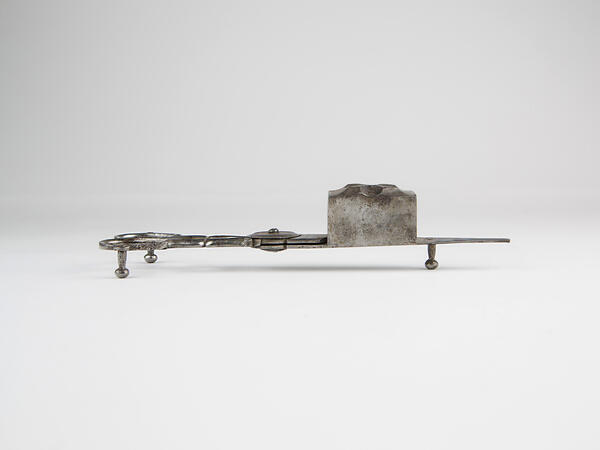
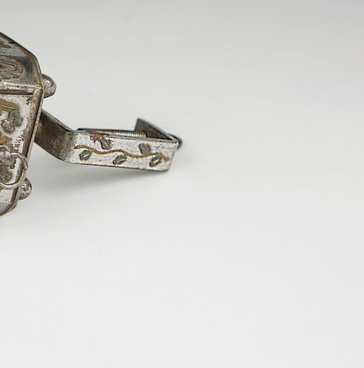
Traditional European scissors for removing candle snuff and trimming the wick had flat and wide blades. For making them even more convenient to use, European scissors had legs for keeping the scissors slightly elevated from the surface (usually three: one supported the blade, the other two supported the handles). From the middle of the 16th century, a small box for cut wicks began to be soldered onto one of the blades. Then a small tray was added to the scissors. Candle scissors were most often cast from brass, but there were also those made of bronze and steel. Very elegant were the scissors made of silver and melchior — in Russia their name could be translated as “removers”. When factories began impregnating wicks with boric acid during production, there was almost no need in removing the remains of the wick. However, scissor snuffers are still produced, for example for the needs of the church.