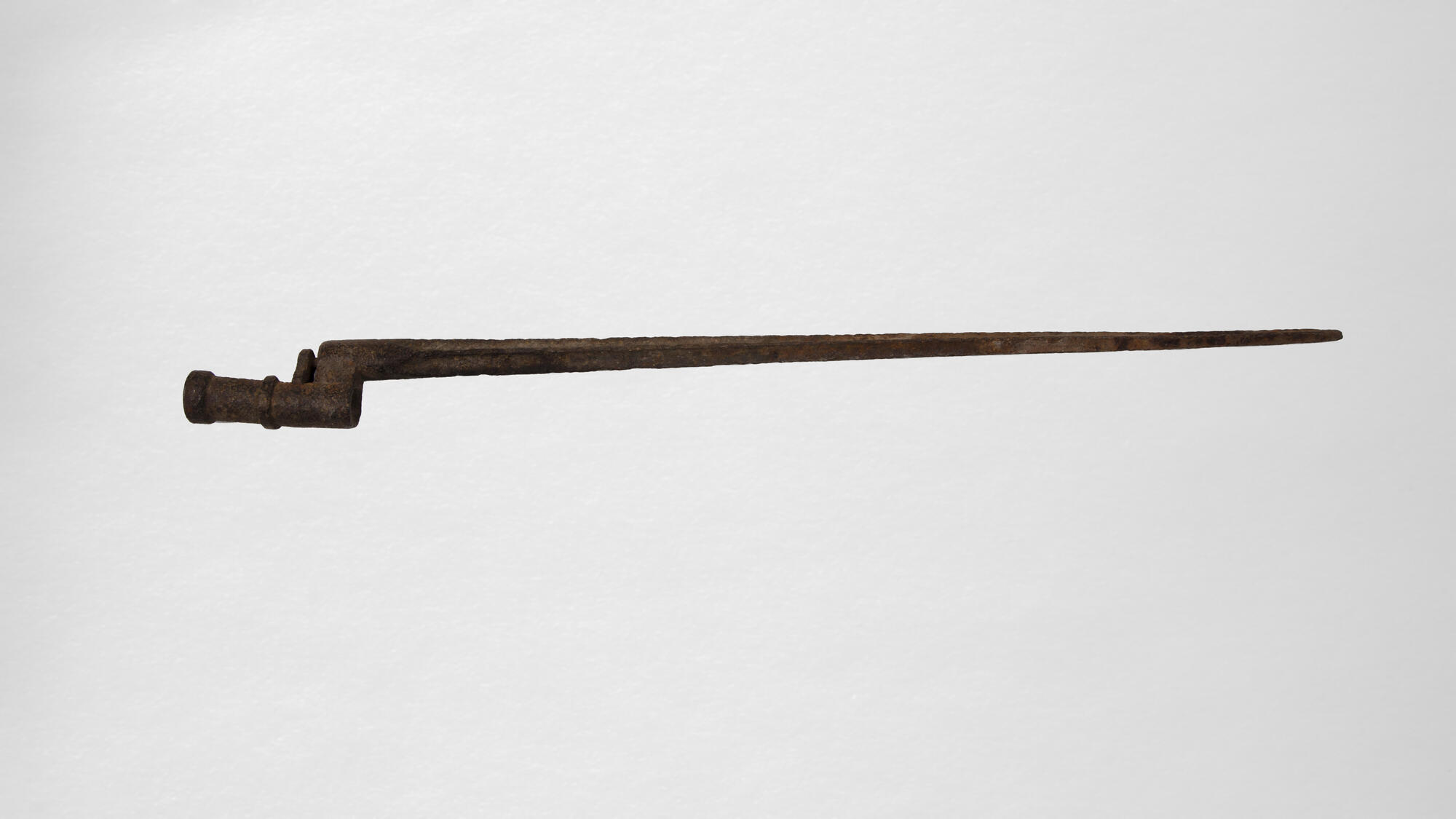


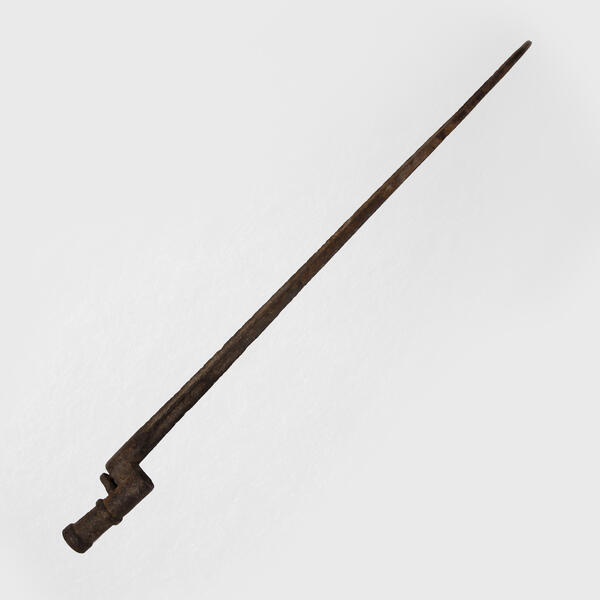
The Zimovniki Museum of Local History houses a bayonet knife, which used to be attached to the barrel of the Mosin rifle, a firearm of the Russian army. It was accepted into service in 1891 and used until the end of the 1950s.
In 1882, the Main Artillery Directorate of the Russian Empire set the task to develop a multi-shot rifle “which would be reliable, durable, and would not require too much maintenance”. In a year, a special commission was created to test “magazine rifles”. Major General Nikolai Chagin was appointed its chairman.
The commission worked for six years and finally in 1889 the army was offered to choose between two versions. The first was a Belgian model, designed by Leon Nagant, and the second one was a weapon of domestic production, designed by Sergei Mosin. He took the Austro-Hungarian model of the Mannlicher rifle as the basis.
The commission organized shooting tests in order to make a choice. Representatives of officers and soldiers cast their votes for the Belgian rifle: according to some parameters, it was superior to the domestic model. However, the decisive vote was left to the army leadership, and commanders chose the Mosin rifle due to the fact that it gave fewer misfires and was cheaper to produce.
In 1891, the Imperial Army adopted the Mosin rifle. Production of the new weapon began in France in 1892. The first batch consisted of 503,539 pieces. Later, bayonets for this rifle were produced in Russia: in Tula, Sestroretsk and at the Izhevsk plant, as well as at plants in the United States.
This rifle had three modifications, but the differences between them were minor. The infantry model had an extended barrel and bayonet. The Dragoon variant had a shorter barrel, and the Cossack rifle had no bayonet.
It is unknown, in which battle the Mosin rifle was first used. Some researchers believe it happened in 1893 during the military conflict in the Pamir. Other historians believe that the weapon was used in combat during the Boxer rebellion in China in 1900 — 1901.
In 1882, the Main Artillery Directorate of the Russian Empire set the task to develop a multi-shot rifle “which would be reliable, durable, and would not require too much maintenance”. In a year, a special commission was created to test “magazine rifles”. Major General Nikolai Chagin was appointed its chairman.
The commission worked for six years and finally in 1889 the army was offered to choose between two versions. The first was a Belgian model, designed by Leon Nagant, and the second one was a weapon of domestic production, designed by Sergei Mosin. He took the Austro-Hungarian model of the Mannlicher rifle as the basis.
The commission organized shooting tests in order to make a choice. Representatives of officers and soldiers cast their votes for the Belgian rifle: according to some parameters, it was superior to the domestic model. However, the decisive vote was left to the army leadership, and commanders chose the Mosin rifle due to the fact that it gave fewer misfires and was cheaper to produce.
In 1891, the Imperial Army adopted the Mosin rifle. Production of the new weapon began in France in 1892. The first batch consisted of 503,539 pieces. Later, bayonets for this rifle were produced in Russia: in Tula, Sestroretsk and at the Izhevsk plant, as well as at plants in the United States.
This rifle had three modifications, but the differences between them were minor. The infantry model had an extended barrel and bayonet. The Dragoon variant had a shorter barrel, and the Cossack rifle had no bayonet.
It is unknown, in which battle the Mosin rifle was first used. Some researchers believe it happened in 1893 during the military conflict in the Pamir. Other historians believe that the weapon was used in combat during the Boxer rebellion in China in 1900 — 1901.


