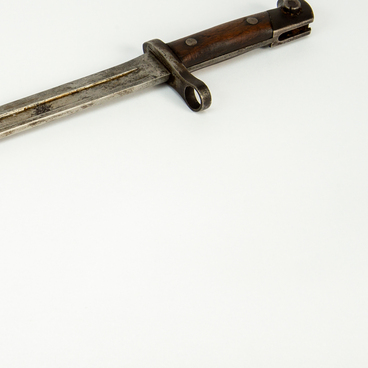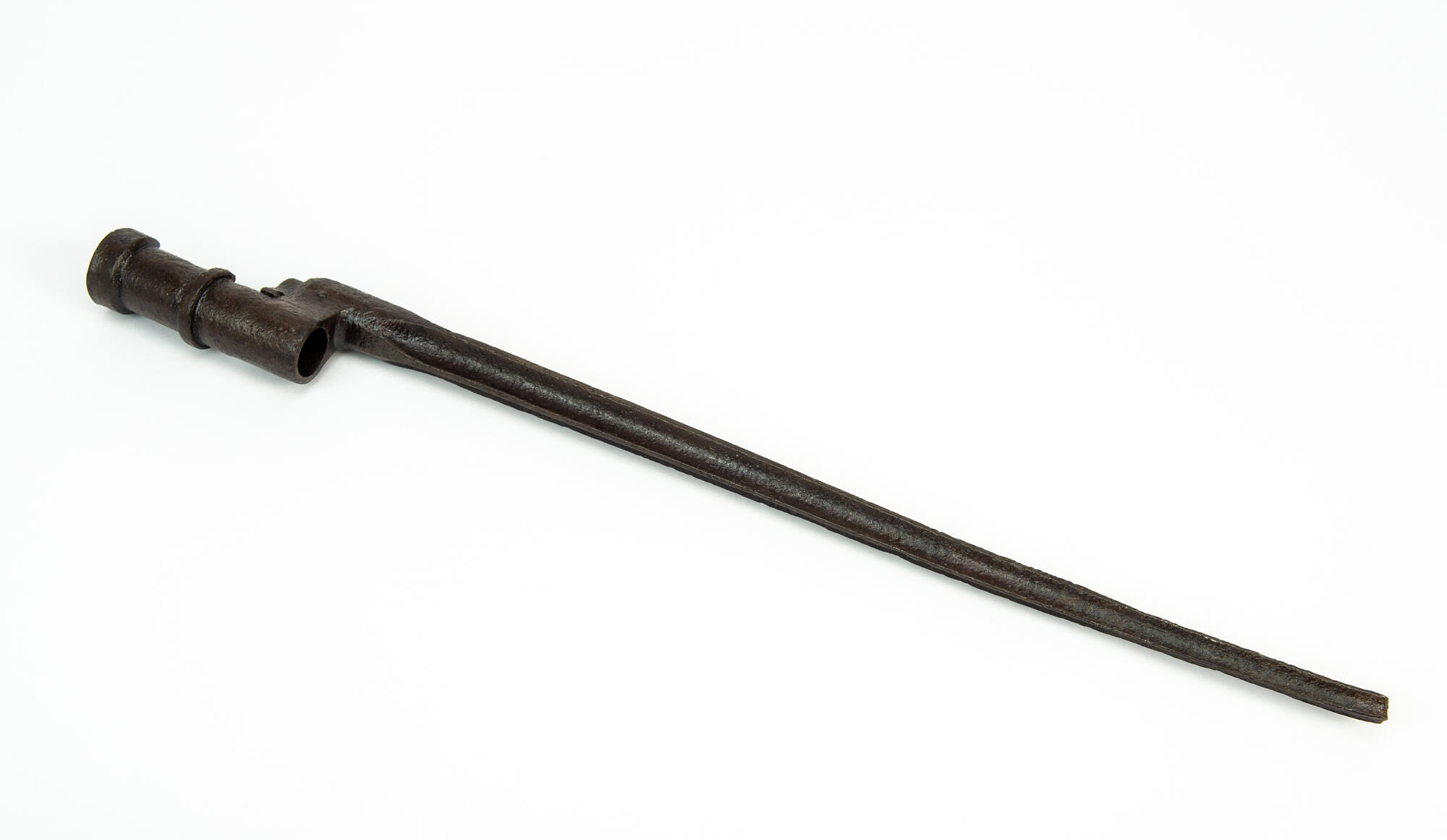


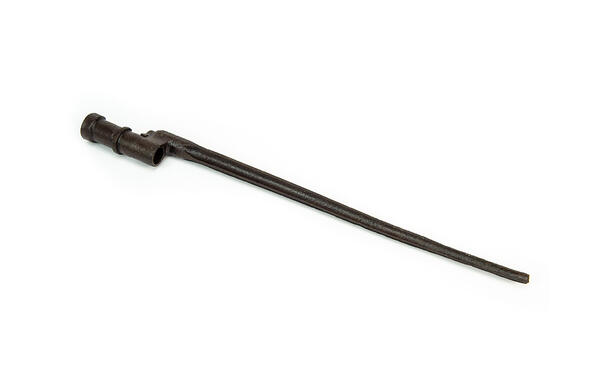
A bayonet for the Mosin rifle was found on the territory of the Verkhnyaya Pyshma town in the forest, behind the town cemetery. In 1918, during the Civil War, battles between the White Guards and the Red Army took place in this area.
A bayonet is a stabbing edged weapon that was attached to the barrel of a gun. It was a sharp blade up to 50 centimeters long. The bayonet has been used in the Russian army since the 17th century.
For a long time, the bayonet was considered one of the most effective and dangerous types of weapons for close combat. Sharpened on all sides, it inflicted deep penetrating wounds that damaged internal organs. In addition, the diameter of the bayonet was only a few centimeters; on the battlefield, the enemies had difficulty assessing how deep and serious the soldier’s wounds were. In most cases, timely medical assistance was not provided, so internal bleeding occurred, infections developed, and the wounded died.
Alexander Suvorov, the famous Russian commander, ordered his soldiers to shoot first, and then attack with a bayonet. This is how the phrase “The bullet is a fool, but the bayonet is a good fellow” appeared, which became a catch phrase in Russian.
The four-sided needle bayonet was used for the first time in 1870 together with the Berdan rifle. In 1891, the device was modified and designed to fit the Mosin rifle.
However, the soldiers quickly discovered the bayonet’s flaws in the battle. It was too long, and it was almost impossible to fit it into a cramped trench. Although bayonets were expensive to manufacture, they often broke when they were needed most.
In 1916, new ersatz bayonets were introduced, which were made from low-grade steel using a simplified technology. They were smaller and cheaper. The blade of the new bayonet resembled not a needle, but a knife blade, which made it possible to inflict the blows on the enemy in a circular and cutting manner.
The Mosin rifles with sharp bayonets were used during World War I and the Great Patriotic War.
In the second half of the 20th century, close combat became rare: with the advent of pistols and machine guns, soldiers practically stopped using bayonets on their weapons.
A bayonet is a stabbing edged weapon that was attached to the barrel of a gun. It was a sharp blade up to 50 centimeters long. The bayonet has been used in the Russian army since the 17th century.
For a long time, the bayonet was considered one of the most effective and dangerous types of weapons for close combat. Sharpened on all sides, it inflicted deep penetrating wounds that damaged internal organs. In addition, the diameter of the bayonet was only a few centimeters; on the battlefield, the enemies had difficulty assessing how deep and serious the soldier’s wounds were. In most cases, timely medical assistance was not provided, so internal bleeding occurred, infections developed, and the wounded died.
Alexander Suvorov, the famous Russian commander, ordered his soldiers to shoot first, and then attack with a bayonet. This is how the phrase “The bullet is a fool, but the bayonet is a good fellow” appeared, which became a catch phrase in Russian.
The four-sided needle bayonet was used for the first time in 1870 together with the Berdan rifle. In 1891, the device was modified and designed to fit the Mosin rifle.
However, the soldiers quickly discovered the bayonet’s flaws in the battle. It was too long, and it was almost impossible to fit it into a cramped trench. Although bayonets were expensive to manufacture, they often broke when they were needed most.
In 1916, new ersatz bayonets were introduced, which were made from low-grade steel using a simplified technology. They were smaller and cheaper. The blade of the new bayonet resembled not a needle, but a knife blade, which made it possible to inflict the blows on the enemy in a circular and cutting manner.
The Mosin rifles with sharp bayonets were used during World War I and the Great Patriotic War.
In the second half of the 20th century, close combat became rare: with the advent of pistols and machine guns, soldiers practically stopped using bayonets on their weapons.