Font
Color
Graphics
Изображение точки

To see AR mode in action:

1. Install ARTEFACT app for iOS or Android;

2. Find the exhibition «Rus and Horde: 14th Century Warfare»

3. Push the «Augmented reality» button and point your phone's camera at the exhibit;

Скрыть точки интересаПоказать точки интереса
Показать в высоком качестве

Sphero-conical helmet

Creation period
the 13th–15th centuries
Dimensions
22x20x15 cm
Technique
iron; forging, riveting
0
Open in app
#2
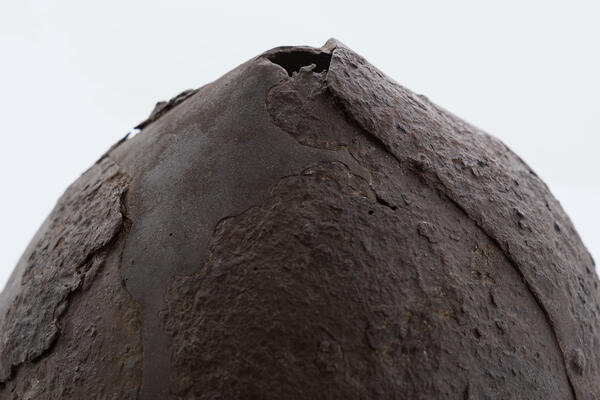
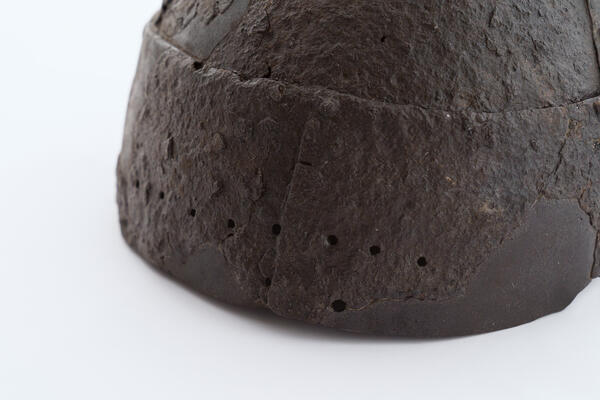
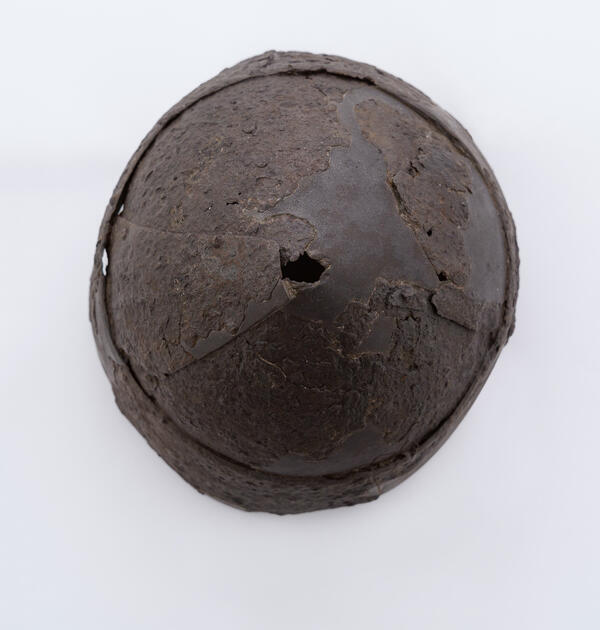
The exhibition of the State Museum-Reserve “Kulikovo Field”, in the hall “Rus and Horde: 14th Century Warfare”, presents an iron helmet, an element of armor from the 14th century. The helmet is sphero-conical in shape and is made up of four forged triangular sections that are riveted together. It was assembled by placing the front and back sections on top of the side sections. The item is fairly well preserved.


This helmet was designed to protect the head of a warrior during battle.


During the era of the Battle of Kulikovo, protective weapons were an essential part of a professional warrior’s equipment. At the same time, helmets were considered mandatory elements of armor. Earlier, some warriors, including archers, did not use helmets or used lighter ones made of organic materials (leather, wood, or a combination of both). The reason was that iron headgear was quite expensive and not all warriors could afford it. However, in the second half of the 14th century, the role of helmets increased significantly.
#4
Sphero-conical helmet
#5

Russian warriors’ helmets had a sphero-conical shape with a strongly elongated tip. Based on existing depictions, it seems that helmets were often painted, while those of nobles were silver-plated and gilded, not only giving them an elegant appearance but also protecting them from rust.

The Horde warriors’ protective armament included helmets, body armor, limb armor and shields. Horde helmets had brow cutouts, a movable noseguard, and disc-shaped earpieces.

The high level of craftsmanship and specific skills of blacksmithing — stamping and gouging — required a certain level of expertise from blacksmiths. Helmet smiths may also have made shield bosses (“umbos”). All Horde shields had such bosses, and often also additional metal plates.

The helmet on display at the museum-reserve is one of those pieces of combat headgear that Russian princes and Horde emirs used to arm their warrior servants — ancient Russian “military servants” or Horde “nökers”. The widespread use of helmets by medieval warriors is also mentioned in the monuments of the Kulikovo cycle. For instance, the phrase “hardened swords rattling on Tatar helmets” is used multiple times on the pages.

#3

Sphero-conical helmet

#6
View in the State Catalogue
read morehide
00:00
00:00
1x

Sphero-conical helmet

Creation period
the 13th–15th centuries
Dimensions
22x20x15 cm
Technique
iron; forging, riveting
0
Point your smartphone camera to open in the app
Share
VkontakteOdnoklassnikiTelegram
Share on my website
Copy linkCopied
Copy
Open in app
To see AR mode in action:
  1. Install ARTEFACT app for 
  2. iOS or Android;
  3. Find and download the «Paintings in Details» exhibition
  4. Push the «Augmented reality» button and point your phone's camera at the painting;
  5. Watch what happens on your phone screen whilst you flip through the pictures.
 
We use Cookies
Cookies on the Artefact Website. We use cookies to ensure that we give you the best experience on our website. If you continue without changing your settings, we'll assume that you are happy to receive all cookies on the Artefact website. However, if you would like to, you can change your cookie settings at any time.
Learn more about useHide
Content is available only in Russian

X

Нашли опечатку?...

%title%%type%