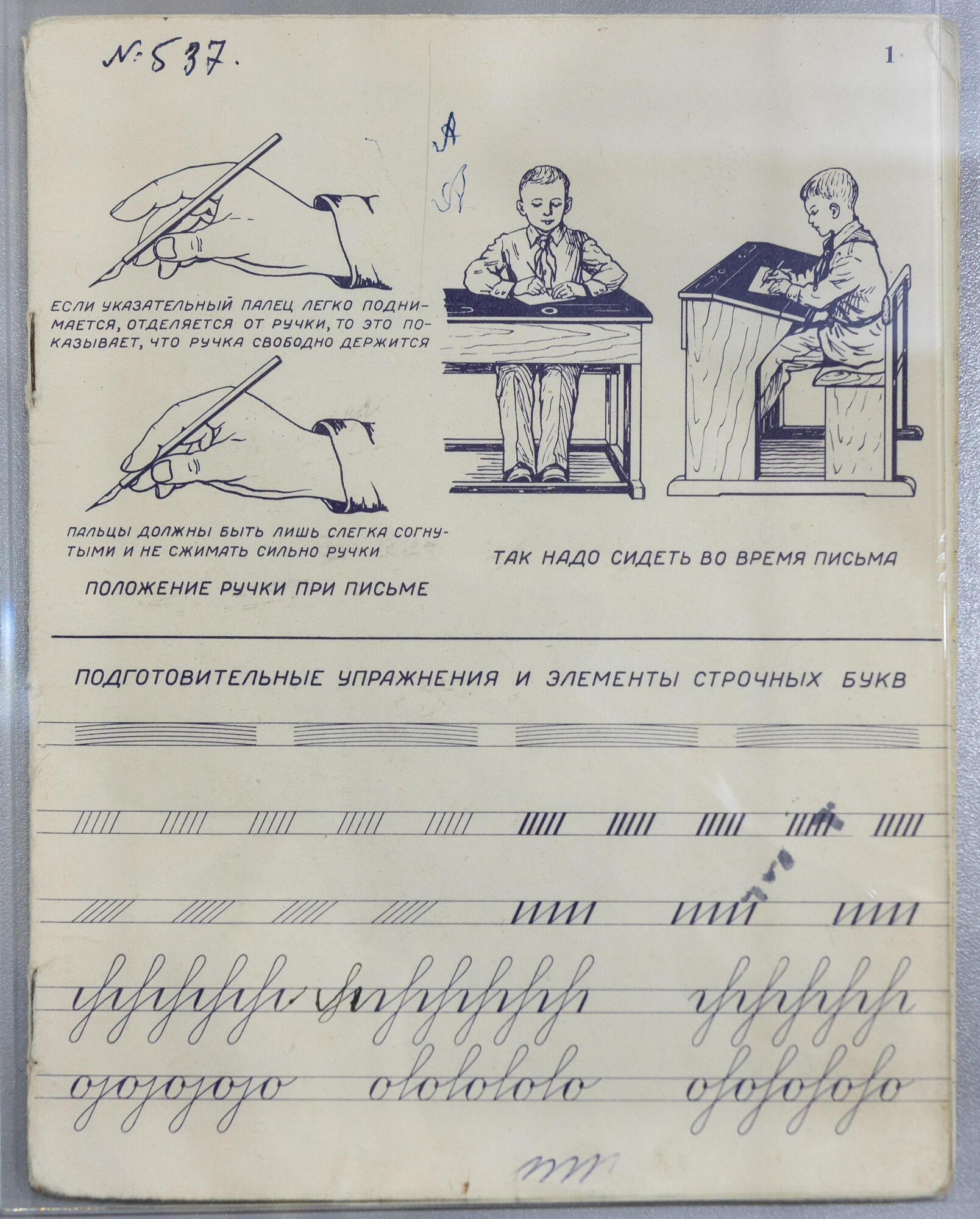


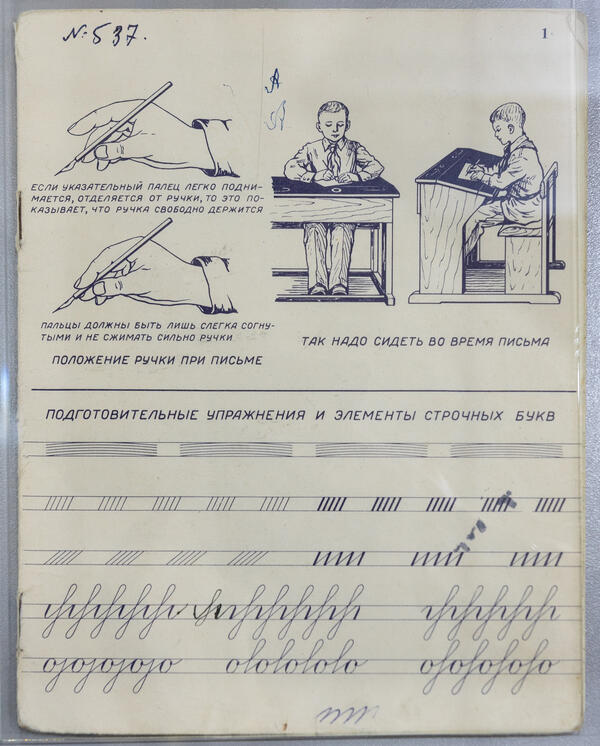
The first school memories of several generations of Soviet people are associated with copybooks and the subject ‘calligraphy’. In such copybooks, using a feather, children learned to write beautifully. The design of a fountain pen for schoolchildren was quite simple: a lightweight wooden body with a metal sharp tip — a nib. The writing nibs were interchangeable and different numbers were used. The width and clarity of the line depended on the tip of the pen, and the amount of ink typed on the width of the shoulders. In elementary school, the most commonly used pen number 11 with the ‘star’ stamp. Writing with fountain pens was taught in elementary school.
First-graders first learned to ‘put’ their hand on copybooks — special notebooks with writing assignments, then they continued their studies in notebooks in a slanting ruler, the slope of which regulated the writing of letters. Writing with a pen was not easy: you had to be able to put the pen correctly, change the pressure on the pen, draw ink. The wear of the notebook speaks of the laboriousness of this process.
The amount of ink drawn by such a pen when dipping into an inkwell was enough to write just a few letters, so it was necessary to dip it into an inkwell very often, and it had to be done carefully. In the Soviet school, up to the massive use of ballpoint pens, they used the tear-off technique, which required students to write letters separately. In the classroom, handwriting was developed with pressure (at the base of letters) and hair (at the top of letters) lines. One of the main troubles of schoolchildren of that period were ink blots. Calligraphy rules required rewriting such a text, sometimes it happened several times.
Learning to write with a fountain pen contributed to the formation of beautiful and clear handwriting. Notebooks of schoolchildren of the middle to the last century were noticeably different from modern ones. In 1968, during the school reform, calligraphy lessons were canceled and switched to other methods of teaching writing. During this period, the transition to a ballpoint pen began, the work with which was based on completely different principles.
First-graders first learned to ‘put’ their hand on copybooks — special notebooks with writing assignments, then they continued their studies in notebooks in a slanting ruler, the slope of which regulated the writing of letters. Writing with a pen was not easy: you had to be able to put the pen correctly, change the pressure on the pen, draw ink. The wear of the notebook speaks of the laboriousness of this process.
The amount of ink drawn by such a pen when dipping into an inkwell was enough to write just a few letters, so it was necessary to dip it into an inkwell very often, and it had to be done carefully. In the Soviet school, up to the massive use of ballpoint pens, they used the tear-off technique, which required students to write letters separately. In the classroom, handwriting was developed with pressure (at the base of letters) and hair (at the top of letters) lines. One of the main troubles of schoolchildren of that period were ink blots. Calligraphy rules required rewriting such a text, sometimes it happened several times.
Learning to write with a fountain pen contributed to the formation of beautiful and clear handwriting. Notebooks of schoolchildren of the middle to the last century were noticeably different from modern ones. In 1968, during the school reform, calligraphy lessons were canceled and switched to other methods of teaching writing. During this period, the transition to a ballpoint pen began, the work with which was based on completely different principles.