

In the Soviet Union, chess became one of the ways to prove to the world the advantages of socialism — hence the state’s attention to it, and the mass character of this sport. Chess was popular in Molotovsk (as Severodvinsk was then called) — it was played not only by professionals, but also by amateurs.
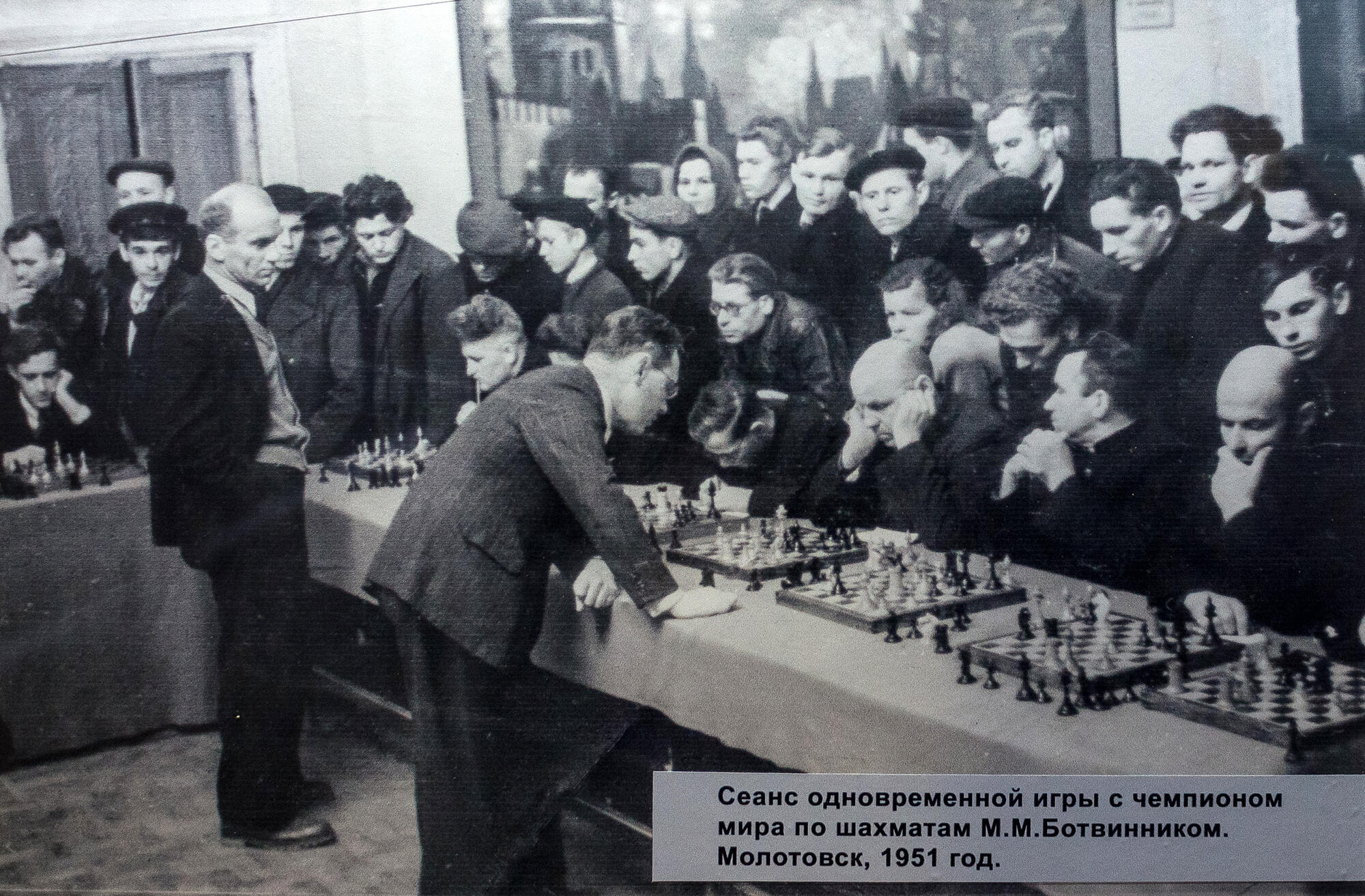
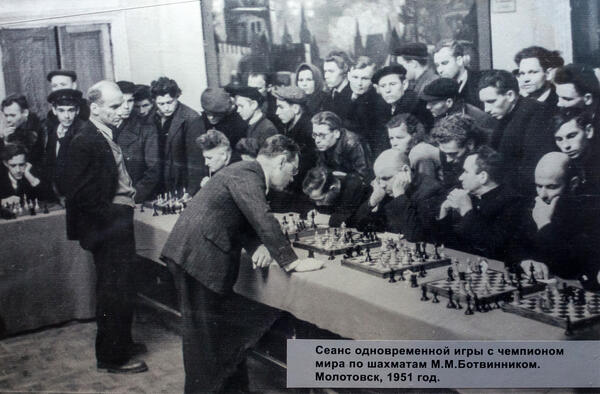
The first chess championship of the city was held in 1951, Ivan Doronin, a technologist at the department of plant No. 402, became the champion. On October 8–9, 1951, Grandmaster Mikhail Botvinnik visited Molotovsk. At the Gorky club, he met with representatives of the public and sports clubs. There the world champion gave a lecture on the success of the chess art in the USSR and answered numerous questions from the townspeople. On October 9, Mikhail Botvinnik gave a session of simultaneous play on 25 boards. He won 15 games, ended in a draw 9 and lost one. The chess player of the city sports club Kaplun bypassed the world champion. This event was captured on film, the city newspaper wrote about it, and the residents of the city remembered it for a long time.
In the next Severodvinsk championships, the intensity of the struggle increased, the candidates for the master of sports entered the duel. In 1956, the winner was the designer Anatoly Kosterin, a man of outstanding erudition and chess talent, who subsequently led the team of the city and the region at republican and all-Union competitions for many years. In 1959, the team of plant No 402 made it to the final of the USSR championship among enterprises. This success was repeated in 1963.
In the 1960s, athletes from different cities of the country played chess matches even by telegraph. A telegram came from the opponent with a record of the next move, that who received it (having spent time at the chessboard) hurried to the telegraph with a return move. The number of rivals in the tournament reached twenty, the analysis of games was ongoing, the number of telegrams was measured in hundreds.
Having passed the sieve of the most severe selection, the Severodvinsk team won the title of the champion of the RSFSR in 1962–1963. By the early 1980s, chess had become a part of the life of every work collective. In noisy industrial areas and in the quiet of offices, in stuffy smoking rooms and laboratories during lunchtime, one could observe gambling confrontations.
The first chess championship of the city was held in 1951, Ivan Doronin, a technologist at the department of plant No. 402, became the champion. On October 8–9, 1951, Grandmaster Mikhail Botvinnik visited Molotovsk. At the Gorky club, he met with representatives of the public and sports clubs. There the world champion gave a lecture on the success of the chess art in the USSR and answered numerous questions from the townspeople. On October 9, Mikhail Botvinnik gave a session of simultaneous play on 25 boards. He won 15 games, ended in a draw 9 and lost one. The chess player of the city sports club Kaplun bypassed the world champion. This event was captured on film, the city newspaper wrote about it, and the residents of the city remembered it for a long time.
In the next Severodvinsk championships, the intensity of the struggle increased, the candidates for the master of sports entered the duel. In 1956, the winner was the designer Anatoly Kosterin, a man of outstanding erudition and chess talent, who subsequently led the team of the city and the region at republican and all-Union competitions for many years. In 1959, the team of plant No 402 made it to the final of the USSR championship among enterprises. This success was repeated in 1963.
In the 1960s, athletes from different cities of the country played chess matches even by telegraph. A telegram came from the opponent with a record of the next move, that who received it (having spent time at the chessboard) hurried to the telegraph with a return move. The number of rivals in the tournament reached twenty, the analysis of games was ongoing, the number of telegrams was measured in hundreds.
Having passed the sieve of the most severe selection, the Severodvinsk team won the title of the champion of the RSFSR in 1962–1963. By the early 1980s, chess had become a part of the life of every work collective. In noisy industrial areas and in the quiet of offices, in stuffy smoking rooms and laboratories during lunchtime, one could observe gambling confrontations.