Historians believe that the first jewelry boxes appeared in the Middle East several thousand years ago. In Europe, they began to be used during the Middle Ages.
In Ancient Rus, small chests or caskets were kept in every household. They were used to store various memorabilia, letters, and jewelry.
A jewelry box is a container for storing small valuable items. Usually, it is a simple box with a lid. However, it can also be an object of decorative art with sophisticated locks, decorated with carvings, metals, mother-of-pearl, semi-precious or precious stones, and other elements.
The word “shkatula” meaning “a jewelry box” was first recorded in Russian written sources in 1598. The current form “shkatulka” was recorded in 1610. According to the Etymological Dictionary of the Russian Language by Max Fasmer, it originated from Polish, Latin, and Italian and meant “a box”.
The cost of each product depended on the raw material. Especially valuable were jewelry boxes made of ivory, precious metals such as gold or silver, as well as ones covered in enamel, leather, and precious or semi-precious stones.
Engraving, inlay, and cloisonné enamel were often used in the décor. Sometimes, filigree was also used — a jewelry technique involving an openwork or soldered pattern of thin gold, silver, or copper wire.
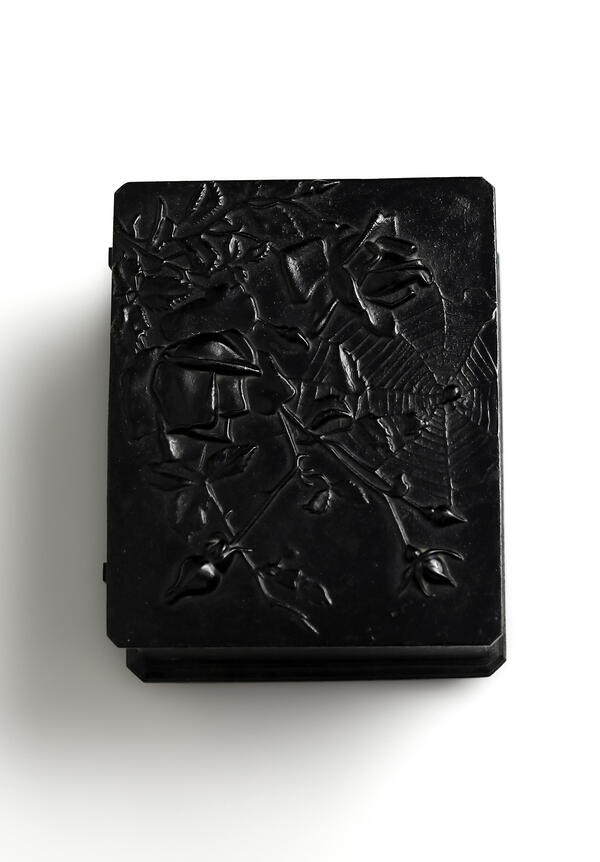
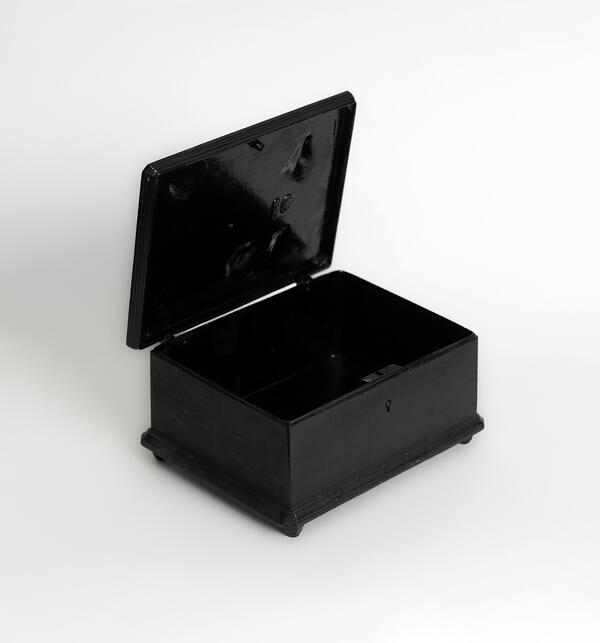
The displayed box was made in the early 20th century at an iron foundry in the village of Kasli, in what is now Chelyabinsk Oblast.
The factory produced sculptures, decorative objects, and architectural elements made of cast iron. Kasli craftsmen used their own casting technique. Their products featured clear silhouettes, relief surfaces, and detailed carvings.
The history of Kasli casting began in 1747 when Yakov Rodionovich Korobkov, a merchant from Tula, purchased 250,000 desyatinas of land for 150 rubles and founded the Kasli Iron and Cast Iron Smelting Plant in the Southern Urals. The choice of location was based on the rich deposits of cast iron, unique high-quality molding sand, and wood for coal production.