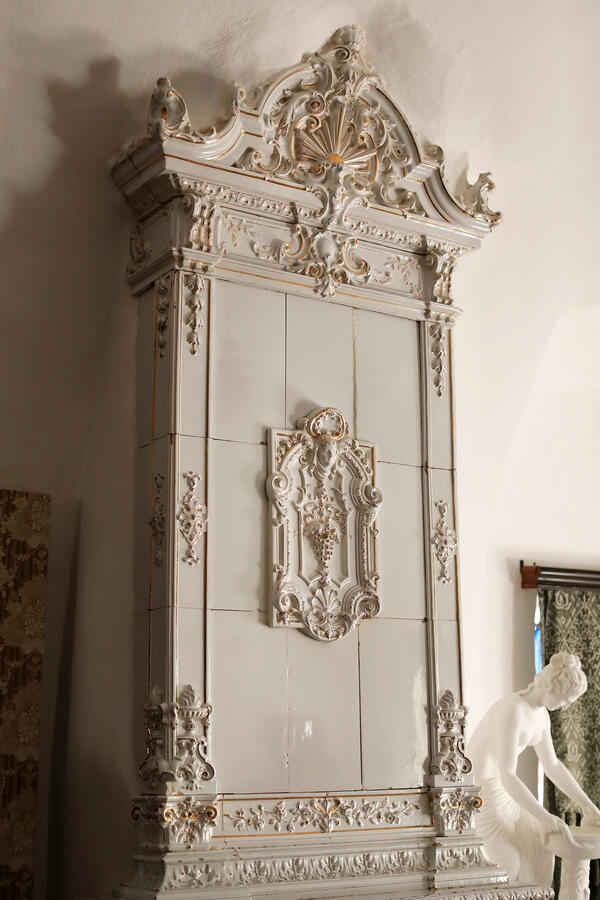
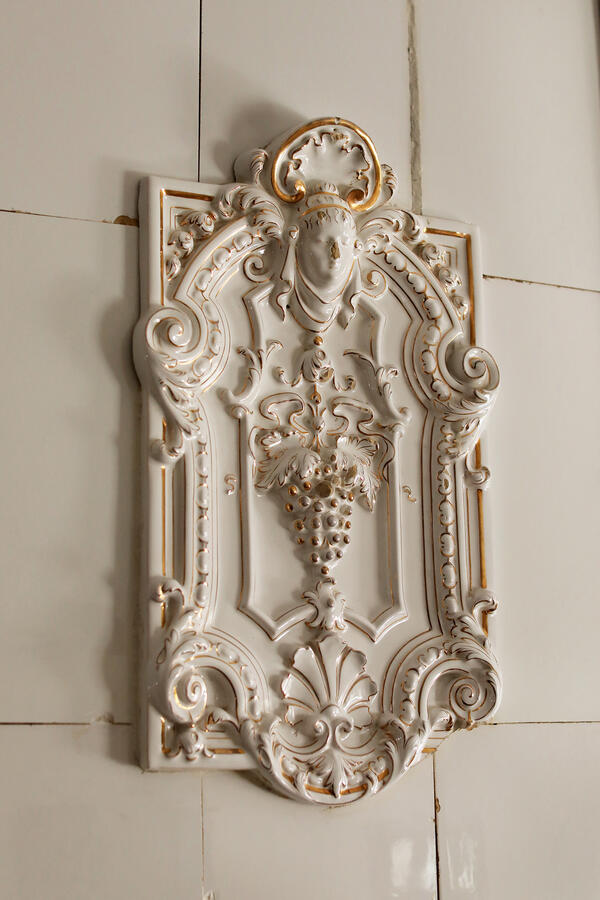
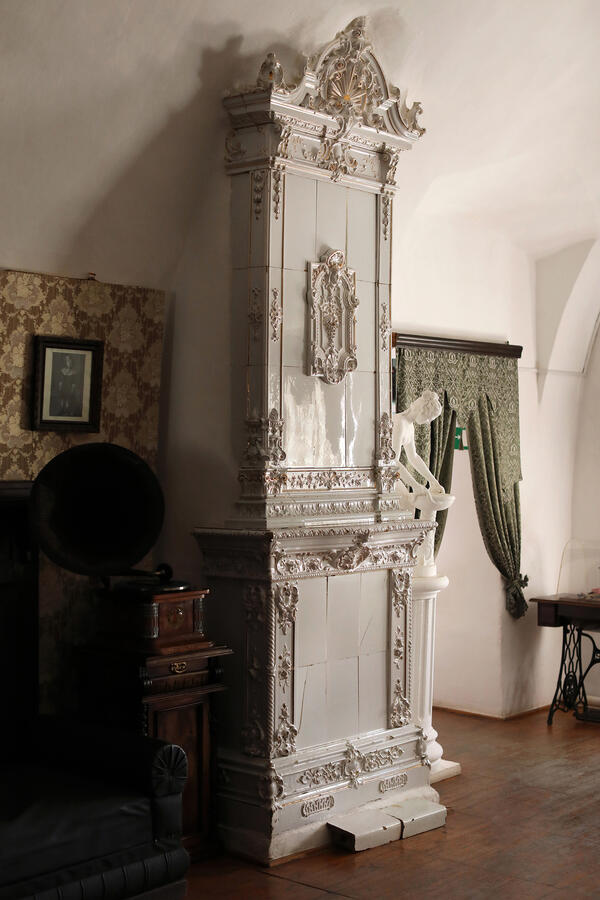
Tiled stoves were works of art distinguished by their rich décor and efficient heating.
The tiles used in stove cladding have been known for a long time. The first Russian tiled stoves appeared in the 15th–16th centuries.
Initially, the relief decorations of the tiles were simple terracotta scenes, floral drawings, and patterns. After cladding, such stoves were whitewashed. By the early 17th century, the front of the tiles began to be treated with green glaze. Authentic green glaze tiles and stoves of this type have not been preserved. In the mid-17th century, multicolor tiles began to be produced in Russia. They were richly decorated with reliefs.
The production of tiles began in Valday. Soon, local craftsmen were invited to decorate the palaces and cathedrals of Moscow. At that time, new elements appeared in the décor of stoves. Craftsmen began creating elaborate stoves with intricate designs and genre scenes.
Due to the complexity of the cladding process, tiled stoves were only affordable for wealthy individuals. However, the rapid advancement of tiled stove art and technology led to their widespread use.
Most Russian stoves were three-tiered, with bands of modest finishing, a bottom tier, and a decorative finial.
In the second half of the 18th century, stove makers started to use profile belts, decorative columns, and intricate finials. The designs of the tiles became more complex and colorful. At that time, the style of painting changed to a more ornate one, with floral motifs, garlands, and large flower pots.
In the 19th century, the art of tiled stoves lost popularity due to mass factory production of tiles.
Over time, the production of stoves decreased, and they were replaced by more convenient and efficient heating devices. However, nowadays, there is a revival of interest in this technology as a decorative element.