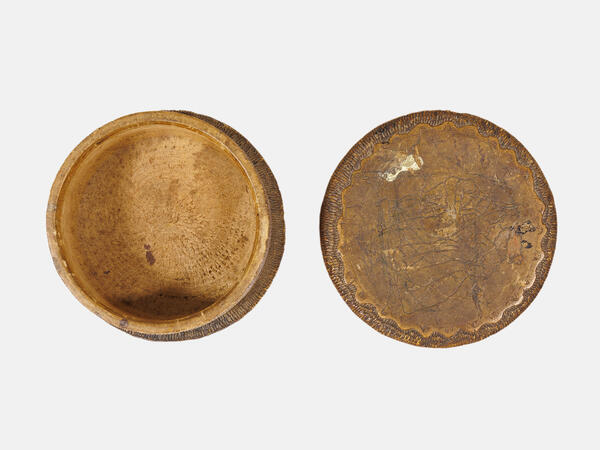
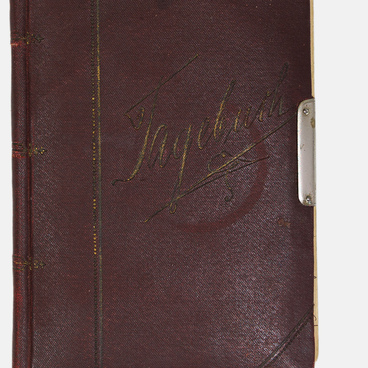
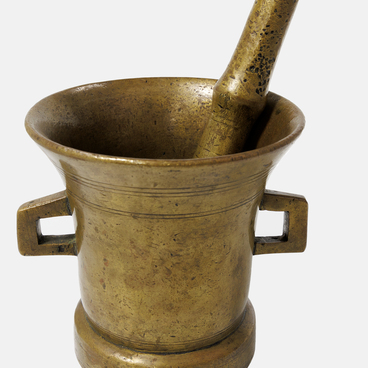
This casket was donated to the museum by the widow of Sergey Chekhov, Anton Chekhov’s nephew.
Caskets came into use in 16th-century Russia as boxes for keeping jewelry, letters, and keys. Later, photographs and documents were also stored in caskets. Such boxes often had a double or triple bottom, a hidden compartment, or a safety lock, which could only be opened by using secret buttons or solving a puzzle. The most precious possessions were hidden in caskets disguised as books or musical instruments.
Caskets come in many shapes. They can be rectangular, square, round, or oval, or have the shape of people, animals, or birds. Traditionally, caskets were most often carved from wood and birch bark. Craftsmen also used other materials, including leather, glass, porcelain, ceramics, bone, and marble. A casket was often seen as a symbol of luxury, which is why it was decorated with gemstones, mother-of-pearl, fine carvings, and painting.
The size of the casket depended on its purpose. Women of fashion used to store pearls in small compact caskets and gemstone jewelry in medium-sized ones. Family heirlooms, maps, money, and securities belonged in large boxes. A casket is mentioned in Anton Chekhov’s 1884 story “Self-Deception”,