

Trinket boxes appeared in ancient times and probably originate from chests for storing clothes. Such items were also called caskets and trunks. The Russian word “shkatulka” (meaning “trinket box”) is first mentioned in 1598.
An official document — a list of the Embassy of Prince Vasily Vasilyevich Tyufyakin to Persia — read as follows: “I sent 4 boxes of wine with many potions to the ambassador.” Researchers found the word “shkatulka” in later documents of 1610.
As a rule, the manufacturers of chests and decorative boxes did not put any maker’s mark on the products, so very little is known about the names of the artisans. The boxes were made from different materials; wood was often used, as it was easily processed and easy to decorate. The cost of ordinary wood was low.
When choosing wood, its strength, color, and texture were taken into account. Such a box turned out to be optimal in weight and size, while an all-metal one could be too heavy.
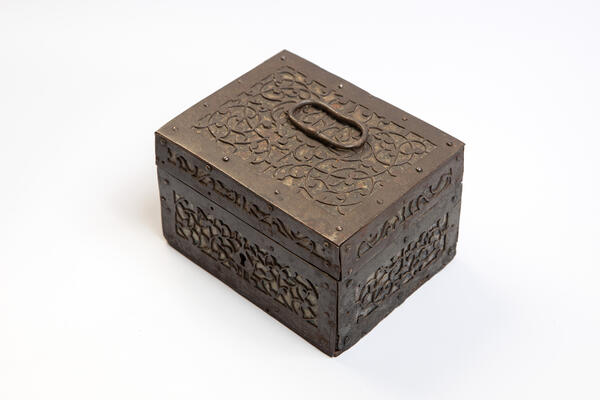
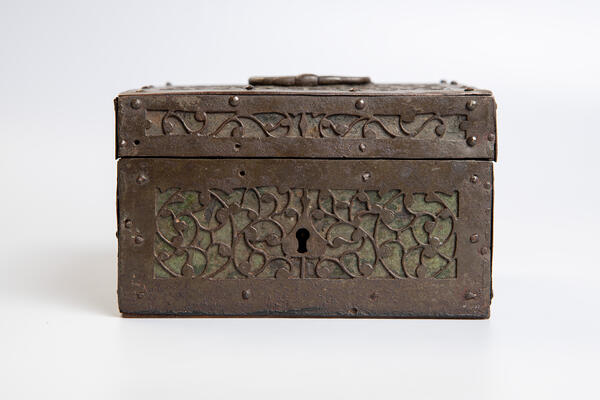
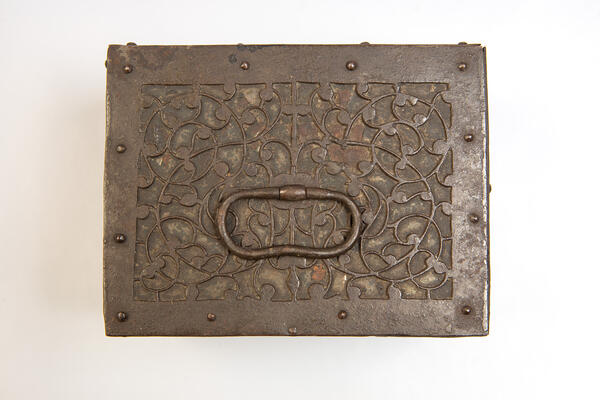
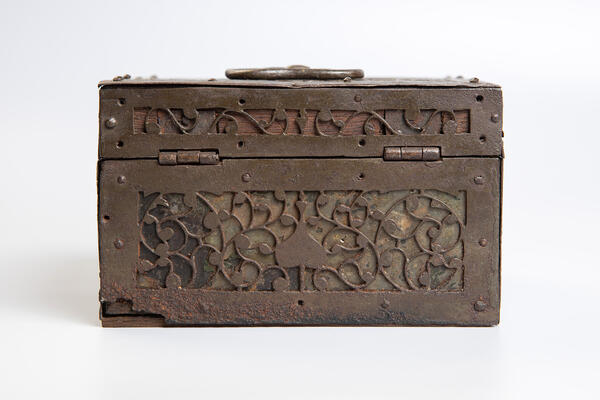
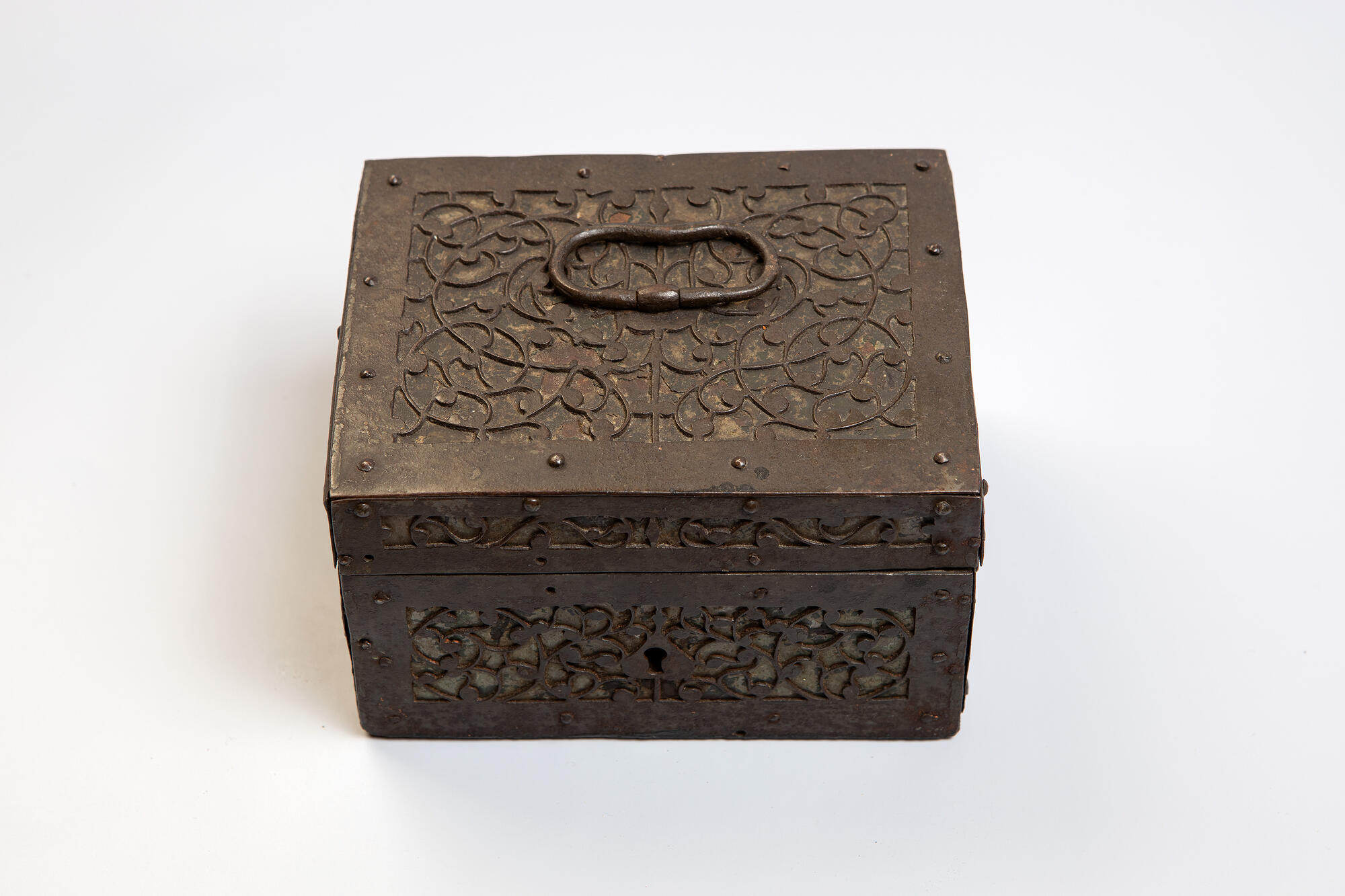
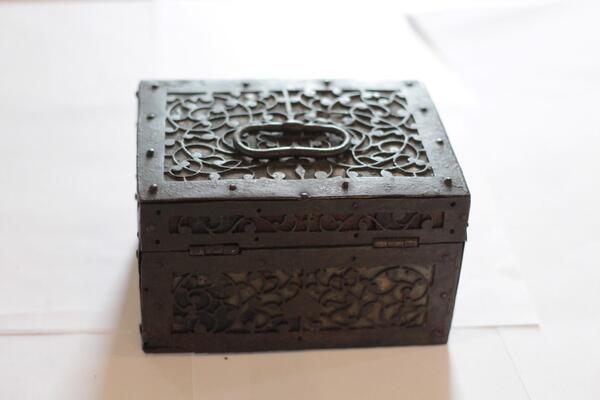
For decoration, ivory, mother-of-pearl, enamel, leather, gold and silver inserts, precious and semi-precious stones were used. In the 16th and 17th centuries, trinket boxes were often decorated as small chests, covered with openwork iron, under which pieces of colored mica and paper were placed. The rich decoration turned the box into a work of art that could cost much more than what was stored inside.
The decorative design often included floral and geometric patterns, as well as subjects from biblical, mythological, and everyday sources. The boxes were often locked with padlocks or built-in locks, as in this exhibit.
Boxes with secrets were popular with the Russian nobility: there were secret compartments in the bottom, in the lid or walls, which opened after pressing the secret key. Jewels were rarely kept in such trinket boxes, which were most often used for securities and letters.
An official document — a list of the Embassy of Prince Vasily Vasilyevich Tyufyakin to Persia — read as follows: “I sent 4 boxes of wine with many potions to the ambassador.” Researchers found the word “shkatulka” in later documents of 1610.
As a rule, the manufacturers of chests and decorative boxes did not put any maker’s mark on the products, so very little is known about the names of the artisans. The boxes were made from different materials; wood was often used, as it was easily processed and easy to decorate. The cost of ordinary wood was low.
When choosing wood, its strength, color, and texture were taken into account. Such a box turned out to be optimal in weight and size, while an all-metal one could be too heavy.
For decoration, ivory, mother-of-pearl, enamel, leather, gold and silver inserts, precious and semi-precious stones were used. In the 16th and 17th centuries, trinket boxes were often decorated as small chests, covered with openwork iron, under which pieces of colored mica and paper were placed. The rich decoration turned the box into a work of art that could cost much more than what was stored inside.
The decorative design often included floral and geometric patterns, as well as subjects from biblical, mythological, and everyday sources. The boxes were often locked with padlocks or built-in locks, as in this exhibit.
Boxes with secrets were popular with the Russian nobility: there were secret compartments in the bottom, in the lid or walls, which opened after pressing the secret key. Jewels were rarely kept in such trinket boxes, which were most often used for securities and letters.