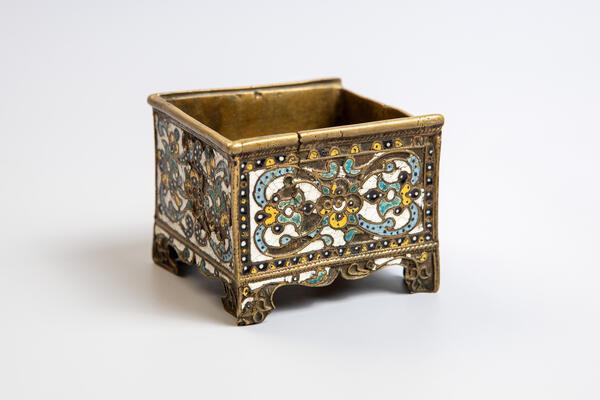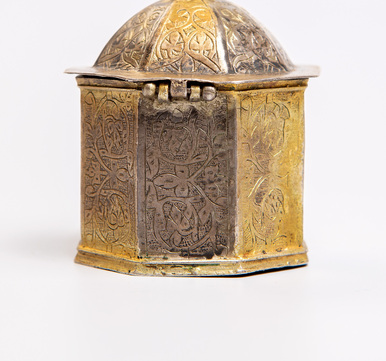
Trinket boxes and caskets occupy a prominent place in the collection of decorative and applied art housed by the Museum “The Smolensk Fortress”. This box was made by an unknown artisan in the 17th century in the city of Solvychegodsk.
This town was first mentioned in a сhronicle from the Synodic archive at the end of the 15th century, but researchers claim that it was founded back in the 14th century. The town used to be called Usolye settlement, Usolsk, and Sol-Vychegodskaya. Its heyday occurred when the Stroganov family moved there.
In the 17th century, the Solvychegodsk school of painting became famous in Russia. Icon painting began to develop actively in this town. The artworks are attributed to the so-called Stroganov school, which was named after the salt merchants. These artworks were characterized by the absence of festive, bright colors. As a result, the town became one of the main centers of Russian art from the 17th to the 19th century.
In addition to icon painting, another direction of art became widespread. It was called Usolsk enamel, later — Vologda enamel. The fact is that initially the city was located on the territory of the Arkhangelsk Governorate. It was not until 1780 that it became part of the Vologda Viceroyalty. This change led to Vologda artisans learning enamel techniques.
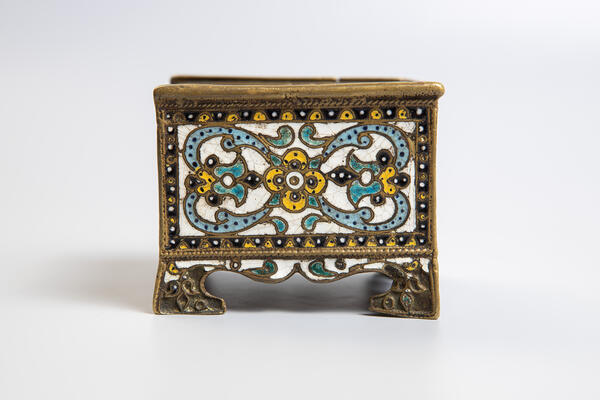
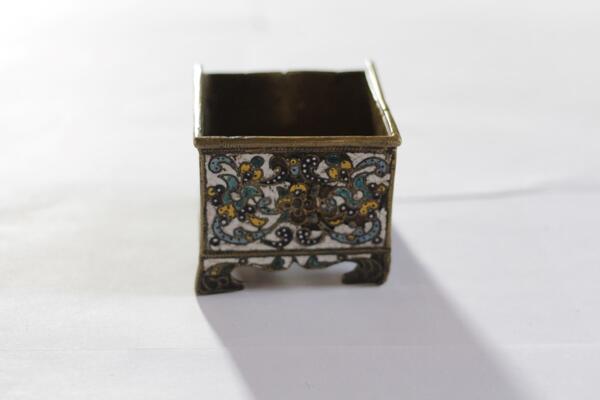
The tradition of painting on a white enamel background came to be known as Usolsk finift (enamel). In the early stages, the craftsmen preferred to use botanical design — as on the box from the museum’s collection.
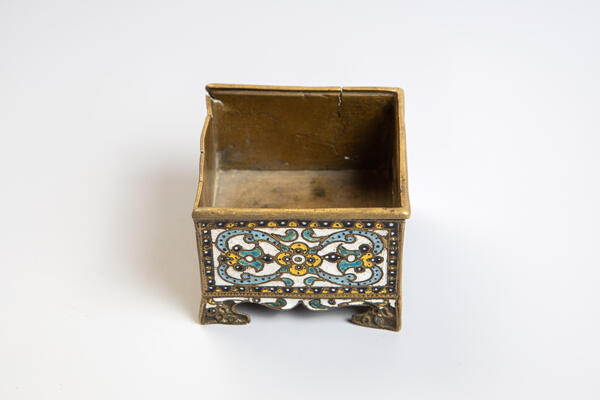
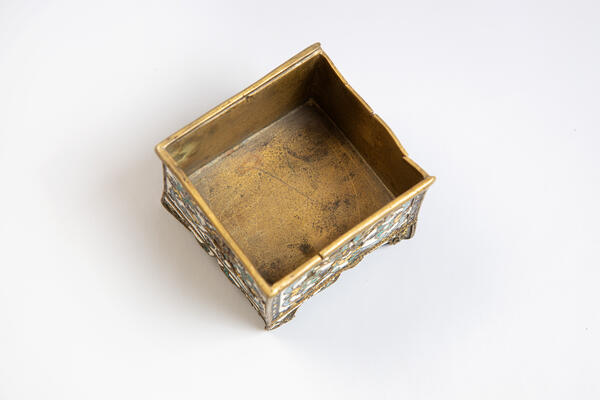
The trinket box from the exhibition “The World of the Streltsy” was made of copper alloy. The craftsman used a classic rectangular shape, and supplied the box with figured legs. He also added a few yellow petals to the traditional light and dark blue color palette.
The tulip was the prevalent floral motif used by Solvychegodsk artisans. Over time, local masters began to decorate white enamel with images of birds and animals, including mythological ones.
This town was first mentioned in a сhronicle from the Synodic archive at the end of the 15th century, but researchers claim that it was founded back in the 14th century. The town used to be called Usolye settlement, Usolsk, and Sol-Vychegodskaya. Its heyday occurred when the Stroganov family moved there.
In the 17th century, the Solvychegodsk school of painting became famous in Russia. Icon painting began to develop actively in this town. The artworks are attributed to the so-called Stroganov school, which was named after the salt merchants. These artworks were characterized by the absence of festive, bright colors. As a result, the town became one of the main centers of Russian art from the 17th to the 19th century.
In addition to icon painting, another direction of art became widespread. It was called Usolsk enamel, later — Vologda enamel. The fact is that initially the city was located on the territory of the Arkhangelsk Governorate. It was not until 1780 that it became part of the Vologda Viceroyalty. This change led to Vologda artisans learning enamel techniques.
The tradition of painting on a white enamel background came to be known as Usolsk finift (enamel). In the early stages, the craftsmen preferred to use botanical design — as on the box from the museum’s collection.
The trinket box from the exhibition “The World of the Streltsy” was made of copper alloy. The craftsman used a classic rectangular shape, and supplied the box with figured legs. He also added a few yellow petals to the traditional light and dark blue color palette.
The tulip was the prevalent floral motif used by Solvychegodsk artisans. Over time, local masters began to decorate white enamel with images of birds and animals, including mythological ones.