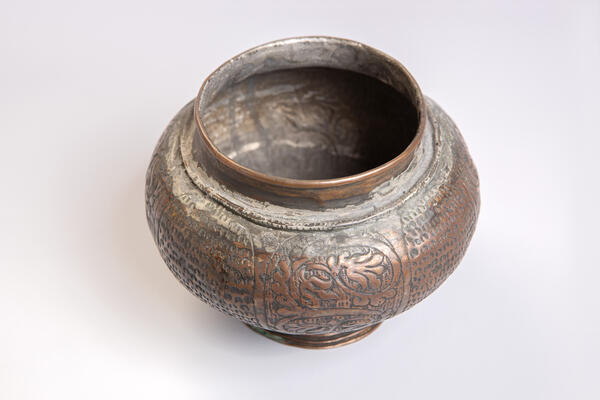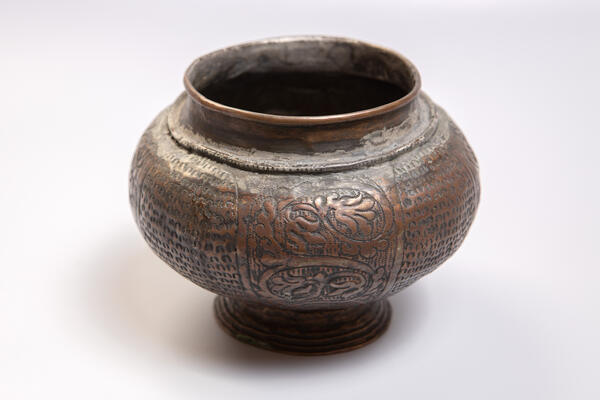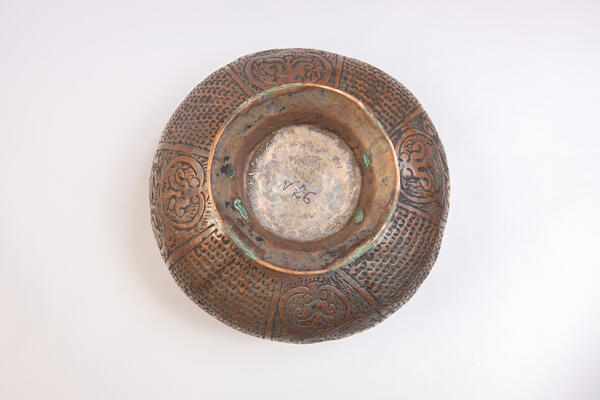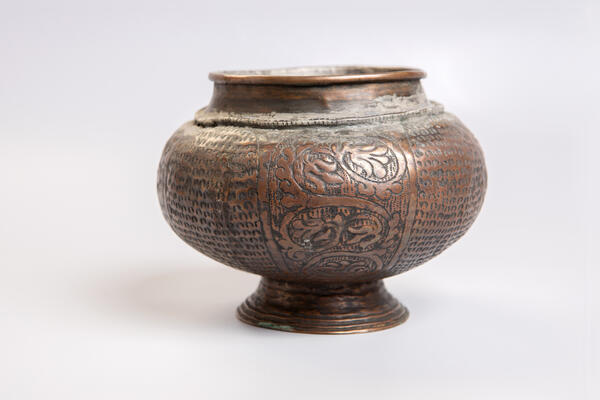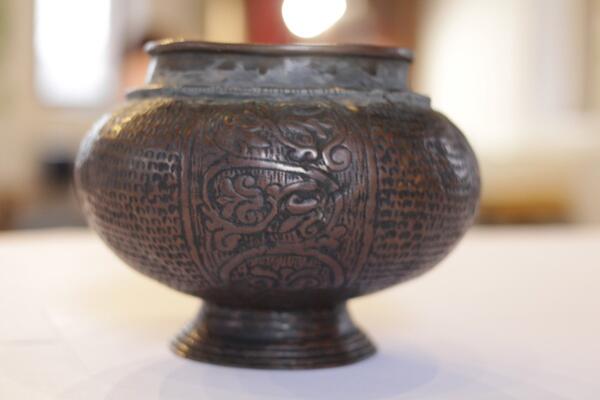
The exhibition “The World of the Streltsy” at the Museum “The Smolensk Fortress” features several bratinas — ball-shaped vessels for various drinks that were used during the feast. The vessels differ in size: the large bratina is almost twice as big as the small one.
This object was created in the 17th century. It was made from a copper alloy, although archaeologists have also found similar vessels made of clay. Unlike its smaller counterpart, the large-size bratina features a traditional Russian floral ornament engraved in several parts of the vessel. Researchers have found similar dishes with engravings of fantastic beasts, as well as birds, such as eagles.
To create this almost two-liter bratina, the artisans used the cold forging technique. This is an ancient metalworking technique making use of soft metal, which can be deformed, stretched and bent with a hammer. Unlike hot forging, only thin sheet metal is used for cold forging, and it is not heated. The workpiece used in this metalworking process should not be more than two millimeters thick.
Cold forging has been used since ancient times. In Russia, this technique was applied to create bratinas, as well as other vessels, such as ladles and goblets, both from copper alloys and from precious metals.
Copper bratinas were sometimes lined with a tin coating to prolong their service life and prevent the metal from oxidizing. Bratinas could be adorned with a decorative pattern or a text along the rim, although this vessel has none — the rim of this large bratina is smooth. There are also no gems or enamels, which were sometimes used to decorate similar cups.
According to some researchers, there are some images of bratinas in the the Radziwill Letopis, also known as the Königsberg Chronicle, a historical document created in the 15th century. The image has been spotted in the miniature “Izyaslav Davydovich Vyatichsky’s Marriage Proposal on Behalf of His Nephew Svyatoslav Vladimirovich Vshchizhsky to the Daughter of Andrey Yuryevich Bogolyubeky (Rostovsky)”.
This object was created in the 17th century. It was made from a copper alloy, although archaeologists have also found similar vessels made of clay. Unlike its smaller counterpart, the large-size bratina features a traditional Russian floral ornament engraved in several parts of the vessel. Researchers have found similar dishes with engravings of fantastic beasts, as well as birds, such as eagles.
To create this almost two-liter bratina, the artisans used the cold forging technique. This is an ancient metalworking technique making use of soft metal, which can be deformed, stretched and bent with a hammer. Unlike hot forging, only thin sheet metal is used for cold forging, and it is not heated. The workpiece used in this metalworking process should not be more than two millimeters thick.
Cold forging has been used since ancient times. In Russia, this technique was applied to create bratinas, as well as other vessels, such as ladles and goblets, both from copper alloys and from precious metals.
Copper bratinas were sometimes lined with a tin coating to prolong their service life and prevent the metal from oxidizing. Bratinas could be adorned with a decorative pattern or a text along the rim, although this vessel has none — the rim of this large bratina is smooth. There are also no gems or enamels, which were sometimes used to decorate similar cups.
According to some researchers, there are some images of bratinas in the the Radziwill Letopis, also known as the Königsberg Chronicle, a historical document created in the 15th century. The image has been spotted in the miniature “Izyaslav Davydovich Vyatichsky’s Marriage Proposal on Behalf of His Nephew Svyatoslav Vladimirovich Vshchizhsky to the Daughter of Andrey Yuryevich Bogolyubeky (Rostovsky)”.