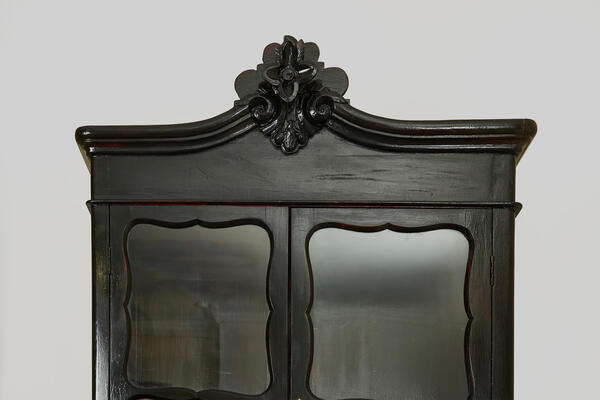
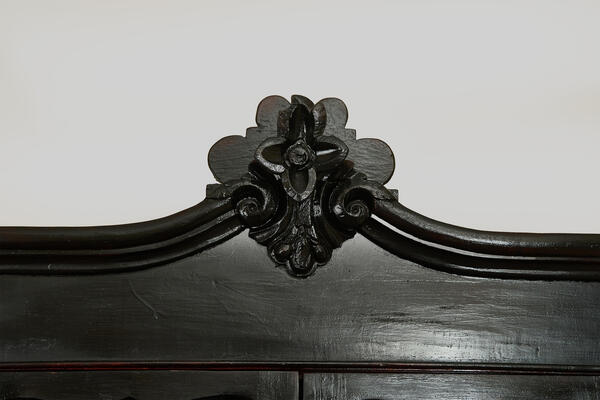
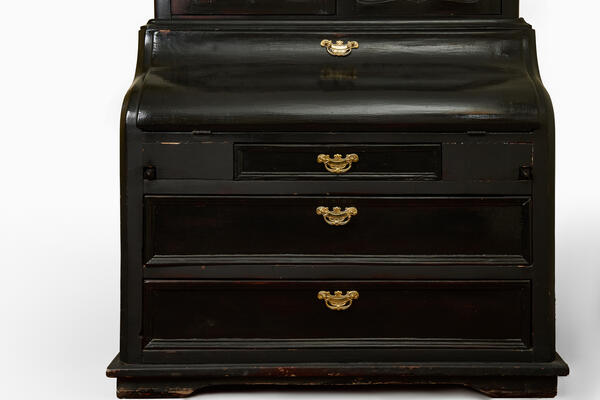
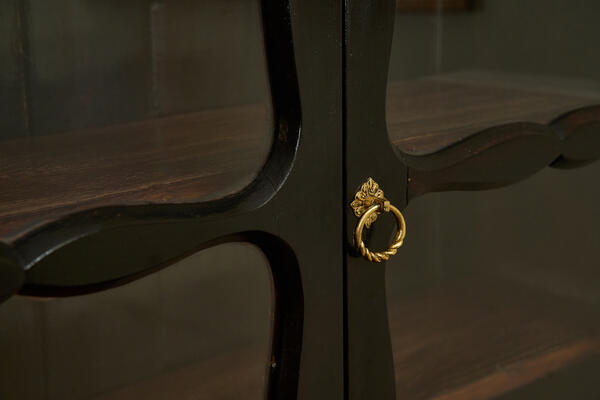
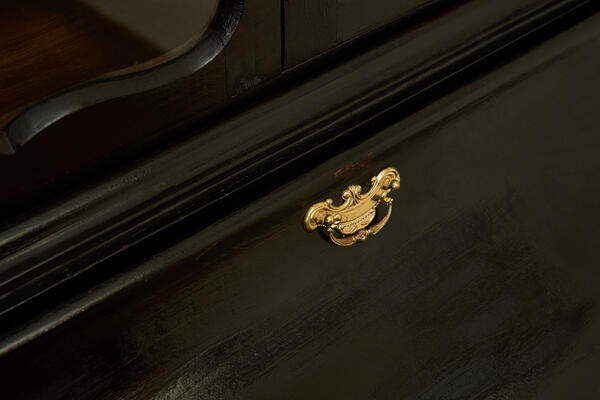
A bureau cabinet is a type of cabinet furniture that combines a closet and a desk.
The word “bureau” came into Russian from French. In the Middle Ages, it was a type of cloth used as a writing pad. At the same time, the first pieces of furniture that remotely resembled a bureau began to appear. For example, in Sweden in the 13th century there was a writing desk with a slanted surface, although special portable chests for writing were more common in that period.
In a more familiar form, this piece of furniture appeared in the 15th–16th centuries in Italy and Spain. One of the prototypes of the bureau was the Spanish cabinet vargueño — a small table with lockers and a hinged board in which papers and jewelry were stored.
Over time, such tables began to acquire more and more cabinet functions. With legs and open shelves, they became larger in size. Also, they were covered in veneer and decorated with carvings and metal overlays.
In 17th-century France, a specific type of furniture appeared — a bureau brisé, a chest on high legs, which was equipped with a folding tabletop. At about the same time in England, a bureau cabinet was designed, which had drawers or shelves with doors at the top and bottom and looked more like a closet. These interior items quickly spread throughout Europe and developed more and more elaborate shapes.
Bureaus were often placed in bedrooms, where ladies used them as a writing space and also stored jewelry and other valuable items in it.
The upper part of the bureau, which was divided by
two or three shelves, usually contained the most popular books, which the
owners often turned to during work or leisure time. The most functional part of
this type of furniture was a sliding or folding tabletop, which served as a
desk. There could be drawers and shelves behind it for storing stationery,
correspondence and business papers. It was also a place where secret drawers
were often fitted. They were often used to store important correspondence and
valuable documents, which is why the bureau cabinet was also called a
“secretaire”.