In Russian, the word “podsvechnik” (candlestick) has a literal meaning of a stand for candles.
There is no reliable information about when and where candlesticks first appeared. Their history goes back to times immemorial. In order to fix tallow candles, ancient people made candlesticks from the simplest materials — stone and wood.
As everyday items that served as decoration for homes and temples, candlesticks originated in ancient Egypt. Over the following centuries, different cultures created their own design of candlesticks. Various materials were employed including ornamental stone, ceramics, ivory, and assorted wood.
The decorative potential of candlesticks was realized during the Renaissance. Artists and sculptors began to craft them, turning them into works of art. They were decorated with relief carvings, figurines of people and Greek gods, as well as luxurious designs.
In the early 19th century, new materials such as cast iron, glass, porcelain and others, began to be used for candlesticks, while the design lost its former ornate and pompous appearance and became more laconic.
By then, the nobility, who turned hunting into a pastime, required special offices and separate houses where trophies and weapons could be stored and displayed. This is how the hunting style appeared in the architecture and interior design of rooms. It also influenced the design of furniture, as well as sculpture.
The main feature of this style was that all works of art depicted animals and hunting scenes. The hunting style had a branch called “black forest”. It is dominated by the images of animals, mainly bears, as well as trees, branches and leaves.
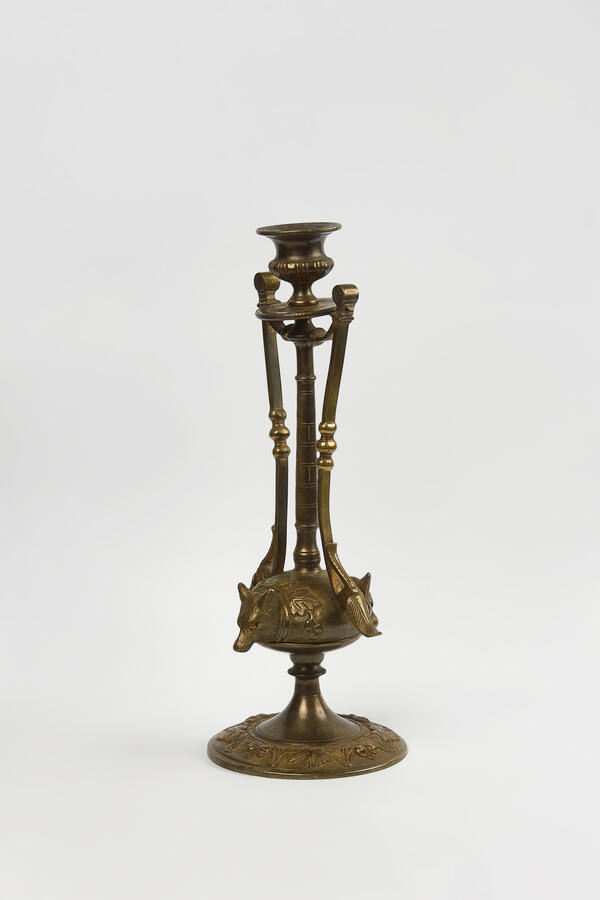
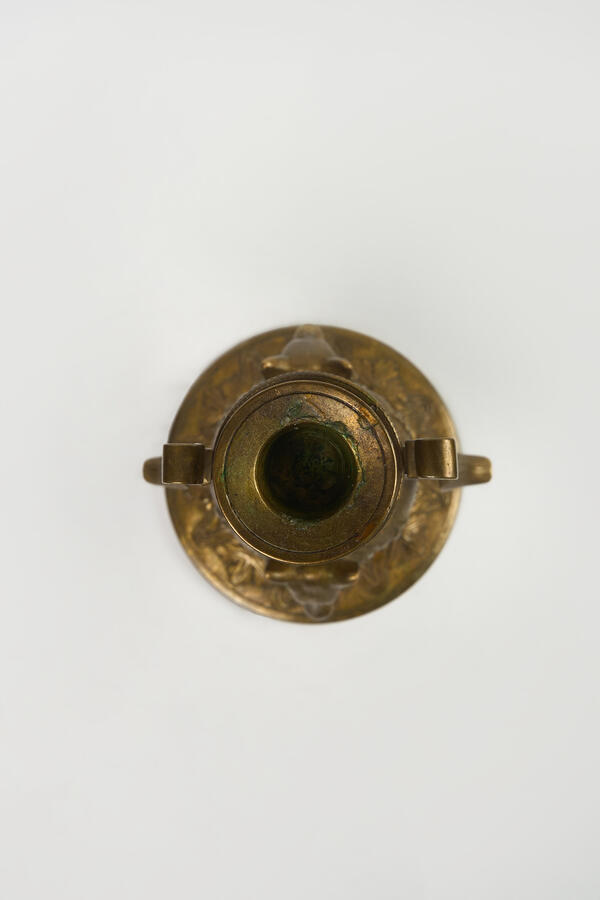
The candlestick, which is presented in the
exhibition, is an example of a product in the hunting style. The round base has
a vegetal pattern, and the middle part features fox heads.