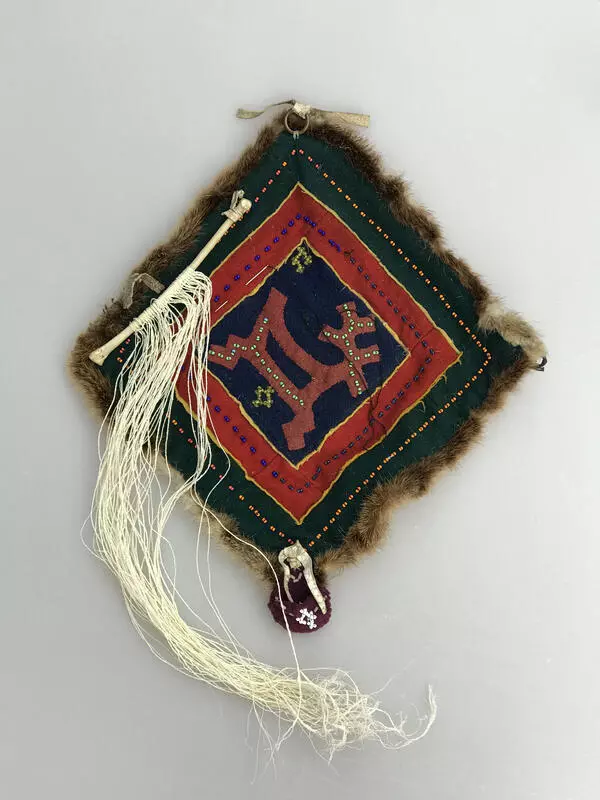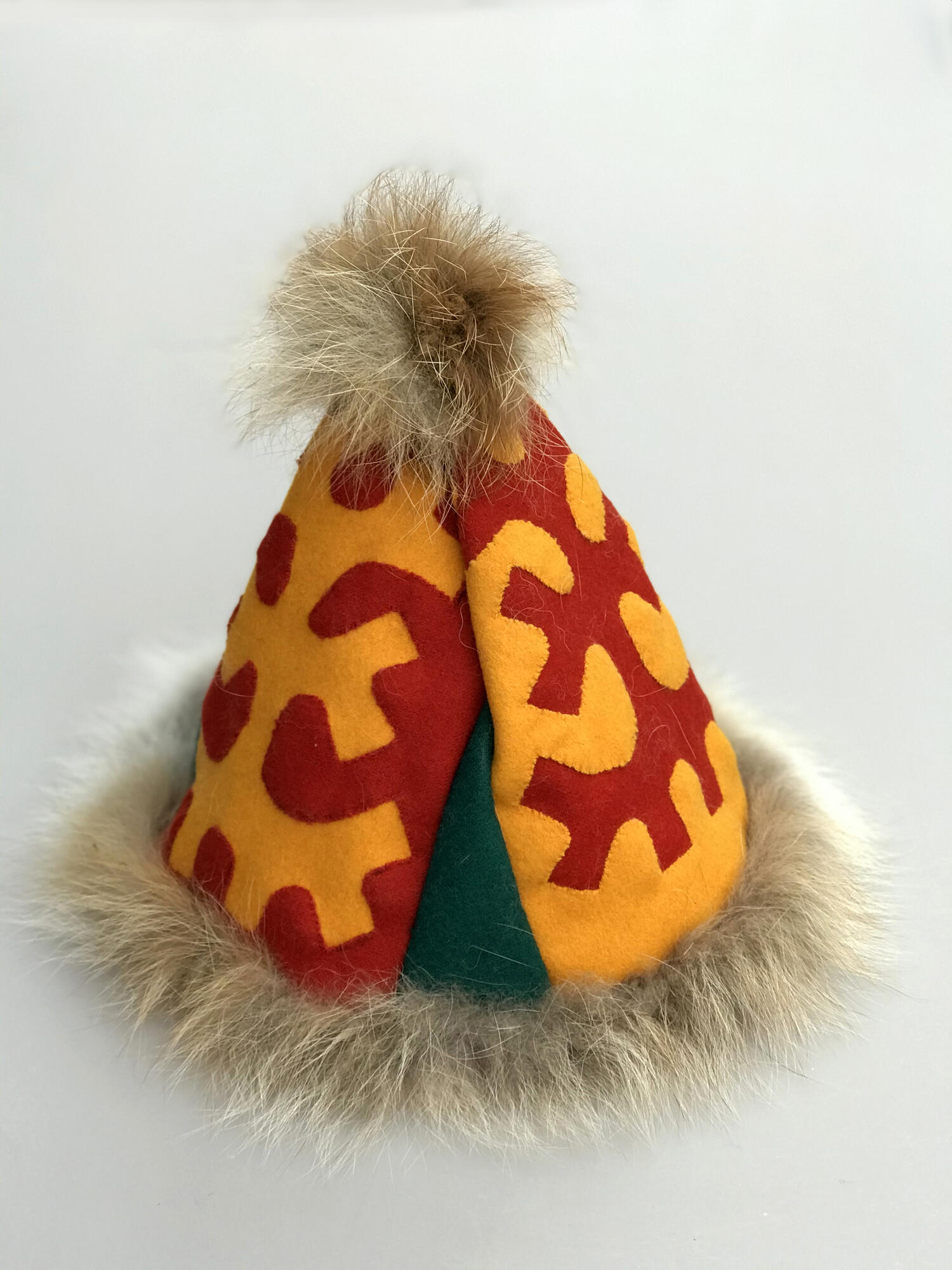


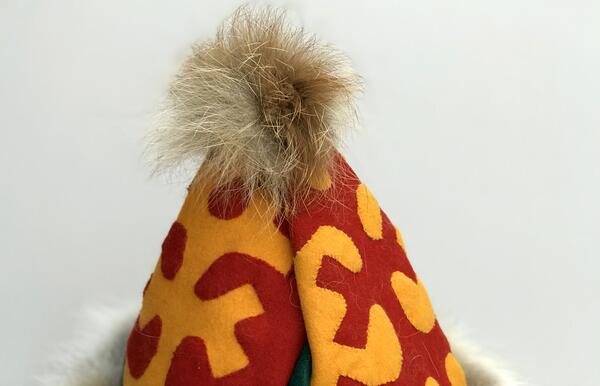
The ritual cap that is on display at the museum is made of seven pieces of cloth. Three triangular pieces are embroidered with the sacred ornament ‘bear’. Such a headdress was worn during the performance of songs-prayers at the traditional feast of the indigenous northern peoples called ‘Bear Games’.
The Khanty and Mansi people worshiped the bear as a sacred animal. According to legend, he was a son of the supreme god Torum and once descended to earth as a human. His father told him to protect people, but the Bear broke the rules, and Torum turned him into a beast. Since then, every hunter had the right to kill a bear, and so that his immortal soul could return to his father, a ritual festival took place called ‘Bear games’.
The festival consisted of a theatrical performance with dances and songs. It was held several times a year in every Khanty village and in every family. The date of the beginning of the festivities was chosen by the hunter who killed a bear. Usually, the games were arranged in winter, when the rivers were covered with ice and it was possible to move freely on deer sleds from one camp to another.
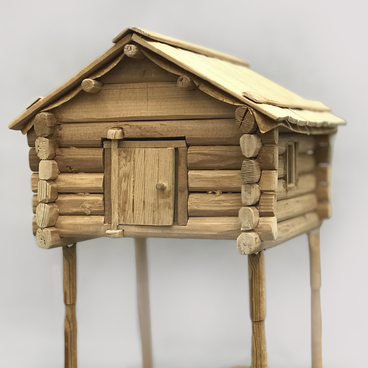
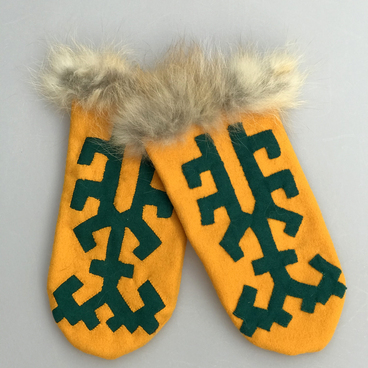
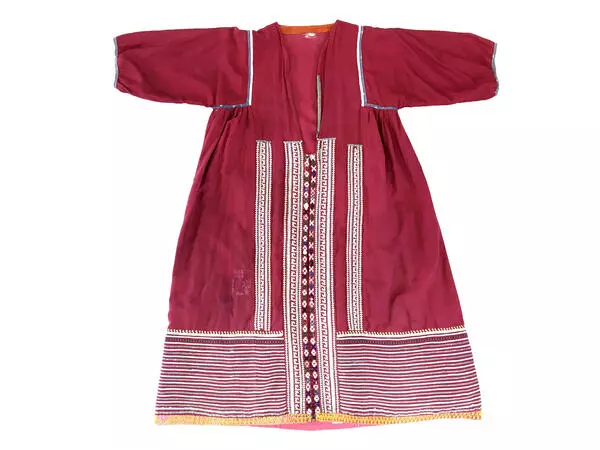
Guests from different settlements joined the festival, bringing gifts for the Bear. The games began in the evening and lasted for four days, if a she-bear was killed, and five — if it was a he-bear. Men took out ritual caps, robes and mittens decorated with a special ornament from the special buildings. Then they stood in a semicircle, holding their little fingers, and singing sacred songs.
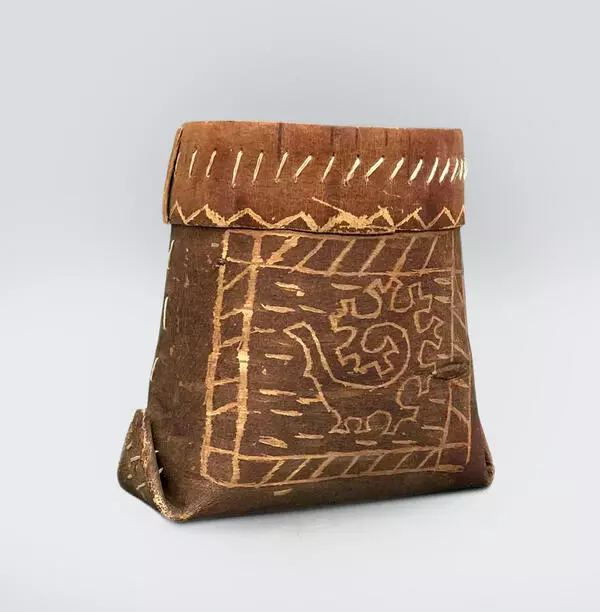
The people were preparing for the festival intensely, and the attributes were made in advance: caps, mittens, dressing gowns and birch bark masks were sewn for the waxing moon, as people said, ‘at the birth of the Moon’.
In their songs, the Khanty people addressed the guardian spirits of their families. In addition to prayers and dances, an important element of the festival was acting out skits that satirized human vices. If someone from the audience recognized himself in the character of the scene, he had no right to be offended. Only men could be actors at the games. For the performance of female roles, they wore women’s costumes over their clothes. Women took part only in a ritual dance, which was performed every day of the games. All participants of the festival had to dance for the bear, otherwise, according to beliefs, the animal could be offended and cause trouble to people.
The Khanty and Mansi people worshiped the bear as a sacred animal. According to legend, he was a son of the supreme god Torum and once descended to earth as a human. His father told him to protect people, but the Bear broke the rules, and Torum turned him into a beast. Since then, every hunter had the right to kill a bear, and so that his immortal soul could return to his father, a ritual festival took place called ‘Bear games’.
The festival consisted of a theatrical performance with dances and songs. It was held several times a year in every Khanty village and in every family. The date of the beginning of the festivities was chosen by the hunter who killed a bear. Usually, the games were arranged in winter, when the rivers were covered with ice and it was possible to move freely on deer sleds from one camp to another.
Guests from different settlements joined the festival, bringing gifts for the Bear. The games began in the evening and lasted for four days, if a she-bear was killed, and five — if it was a he-bear. Men took out ritual caps, robes and mittens decorated with a special ornament from the special buildings. Then they stood in a semicircle, holding their little fingers, and singing sacred songs.
The people were preparing for the festival intensely, and the attributes were made in advance: caps, mittens, dressing gowns and birch bark masks were sewn for the waxing moon, as people said, ‘at the birth of the Moon’.
In their songs, the Khanty people addressed the guardian spirits of their families. In addition to prayers and dances, an important element of the festival was acting out skits that satirized human vices. If someone from the audience recognized himself in the character of the scene, he had no right to be offended. Only men could be actors at the games. For the performance of female roles, they wore women’s costumes over their clothes. Women took part only in a ritual dance, which was performed every day of the games. All participants of the festival had to dance for the bear, otherwise, according to beliefs, the animal could be offended and cause trouble to people.