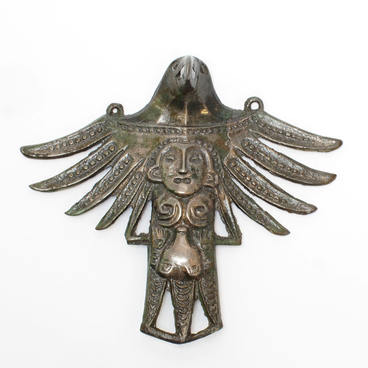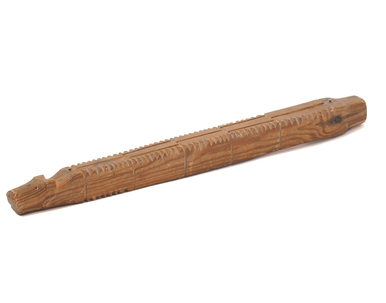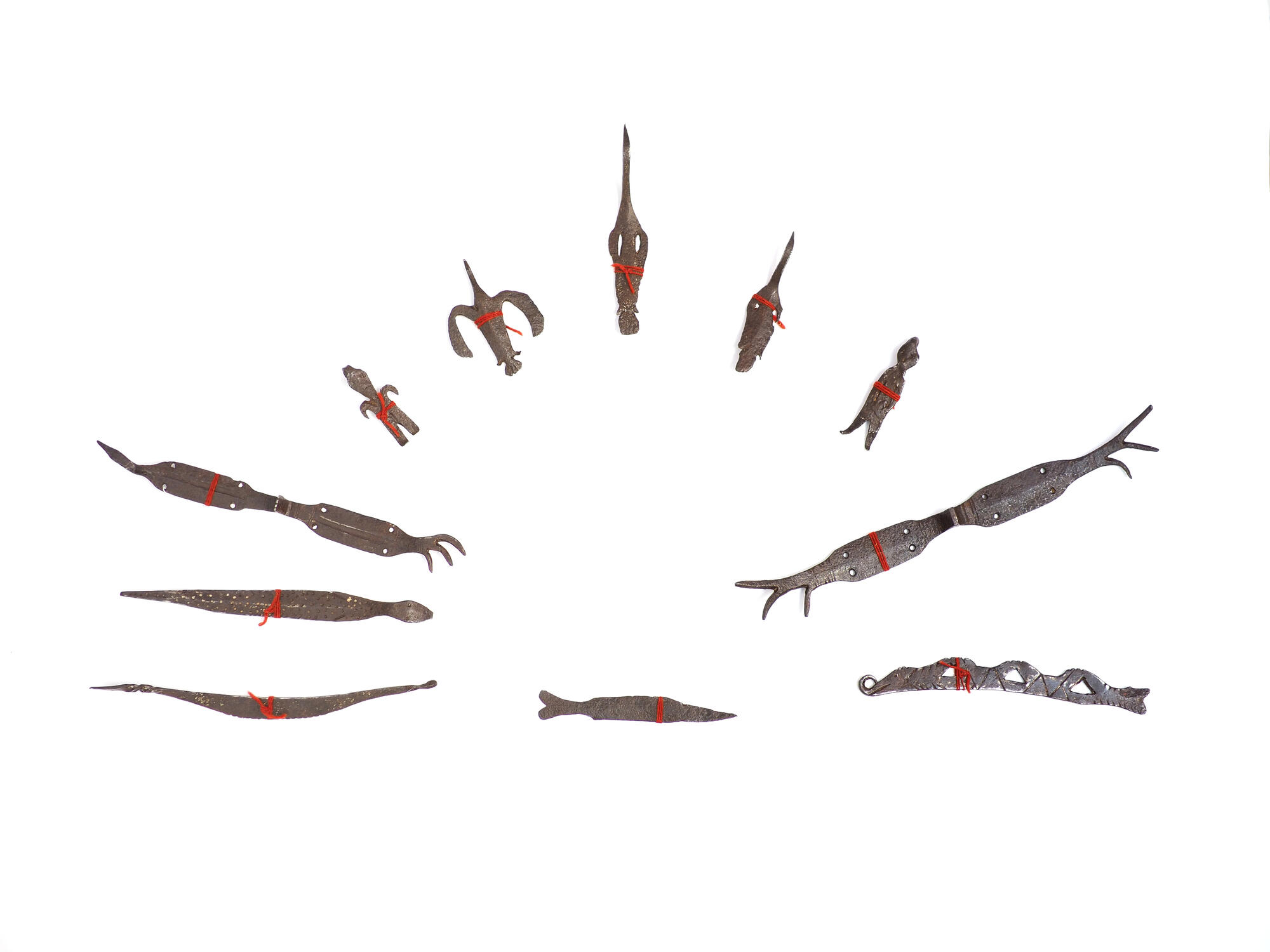


The Evenk shamanic set consists of 11 forged metal objects: three figures of birds, two anthropomorphic (human-like) figures, images of a fish, a snake, and two reptiles, as well as two pendants with branches at the ends.
According to legend, the items were found in Eastern Siberia near a tree, on the branches of which was the burial of an Evenk shaman. The figures were smithed from metal, presumably in the 17th–18th centuries. The collector Alexander Larkin donated the collection to the museum.
According to the Evenks, the universe was divided into the upper world, the middle and lower worlds: they symbolized heaven, earth, and underground. Spirits dwelt in the upper and lower worlds. Shamans were intermediaries between them and the people. They could see the other reality as well as travel around the worlds during the shamanic ritual communication with spirits.
The shamanic set reflected these mythological ideas. The figures of birds — presumably they are loons — have a raised head, spread or folded wings, and a tail. They symbolized the upper world where the deities lived.
The craftsman depicted anthropomorphic figures with straight legs, set apart. The arms of one figure are made in the form of straight grooves, while those of the other are raised. Their heads are marked with eyes and mouths in the form of dotted notches. These images belonged to the middle world with people and all the animals.
Figures of reptiles, snakes, and fish symbolized the lower, underworld, where the souls of the dead went. In reptiles, heads and tails are clearly marked, the nose of one of them is raised, and in the other, the master has outlined the limbs, eyes, and mouth. Scales are marked on the fishtail with notches. The head and tail of the snake are raised and curved, and the eyes and scales are made in the form of dotted notches.
At the ends of two elongated pendants, there are offshoots: they represent deer antlers and a bird’s head. Such pendants were attached to the feet of the shaman during the ritual. The priest also had some other sacred objects like a tambourine and a mallet.
It was believed that the pendants helped the shaman to penetrate each of the three worlds, call spirits for help, and perform the ritual to heal his fellow tribesmen and predict the future.
According to legend, the items were found in Eastern Siberia near a tree, on the branches of which was the burial of an Evenk shaman. The figures were smithed from metal, presumably in the 17th–18th centuries. The collector Alexander Larkin donated the collection to the museum.
According to the Evenks, the universe was divided into the upper world, the middle and lower worlds: they symbolized heaven, earth, and underground. Spirits dwelt in the upper and lower worlds. Shamans were intermediaries between them and the people. They could see the other reality as well as travel around the worlds during the shamanic ritual communication with spirits.
The shamanic set reflected these mythological ideas. The figures of birds — presumably they are loons — have a raised head, spread or folded wings, and a tail. They symbolized the upper world where the deities lived.
The craftsman depicted anthropomorphic figures with straight legs, set apart. The arms of one figure are made in the form of straight grooves, while those of the other are raised. Their heads are marked with eyes and mouths in the form of dotted notches. These images belonged to the middle world with people and all the animals.
Figures of reptiles, snakes, and fish symbolized the lower, underworld, where the souls of the dead went. In reptiles, heads and tails are clearly marked, the nose of one of them is raised, and in the other, the master has outlined the limbs, eyes, and mouth. Scales are marked on the fishtail with notches. The head and tail of the snake are raised and curved, and the eyes and scales are made in the form of dotted notches.
At the ends of two elongated pendants, there are offshoots: they represent deer antlers and a bird’s head. Such pendants were attached to the feet of the shaman during the ritual. The priest also had some other sacred objects like a tambourine and a mallet.
It was believed that the pendants helped the shaman to penetrate each of the three worlds, call spirits for help, and perform the ritual to heal his fellow tribesmen and predict the future.